Industrial Robotics Control Basics for Stable Cycle Times

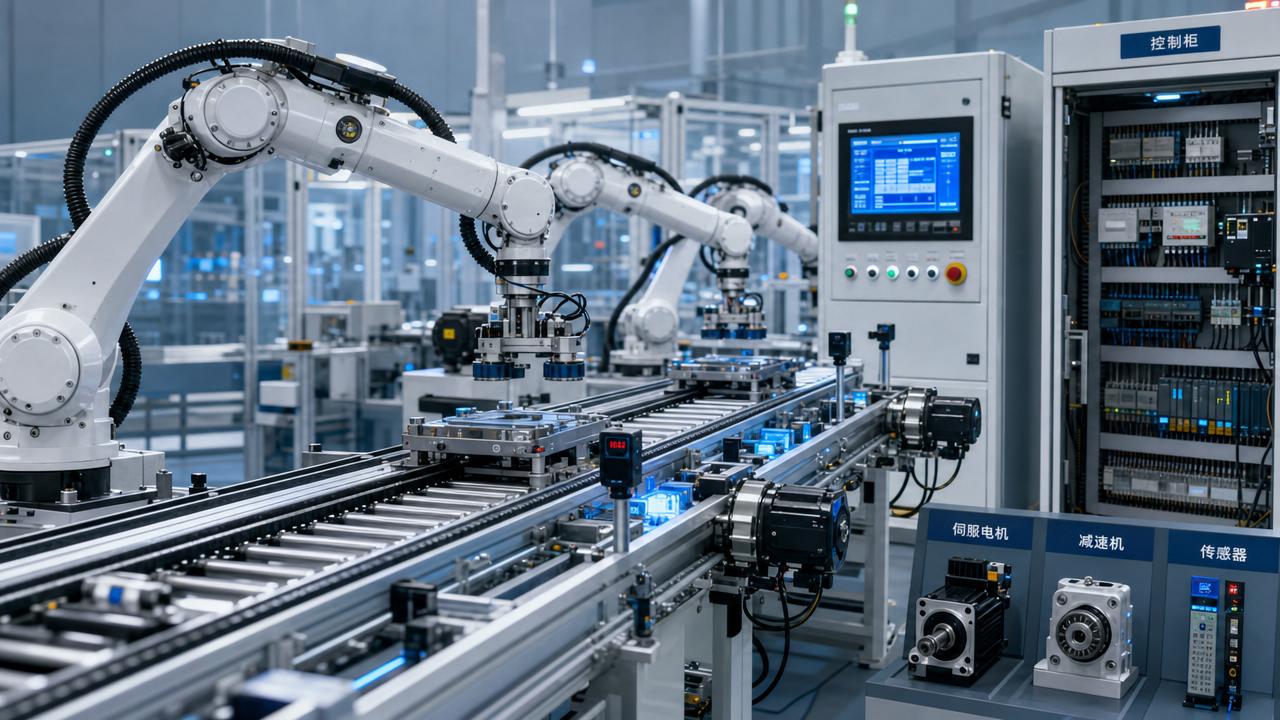
For aftermarket maintenance teams, Industrial Robotics Control is the foundation of stable cycle times, repeatable motion, and predictable output quality across modern automated lines.
When control loops drift, signals degrade, or mechanical transmission loses stiffness, robots may still run, but cycle time consistency quickly disappears.
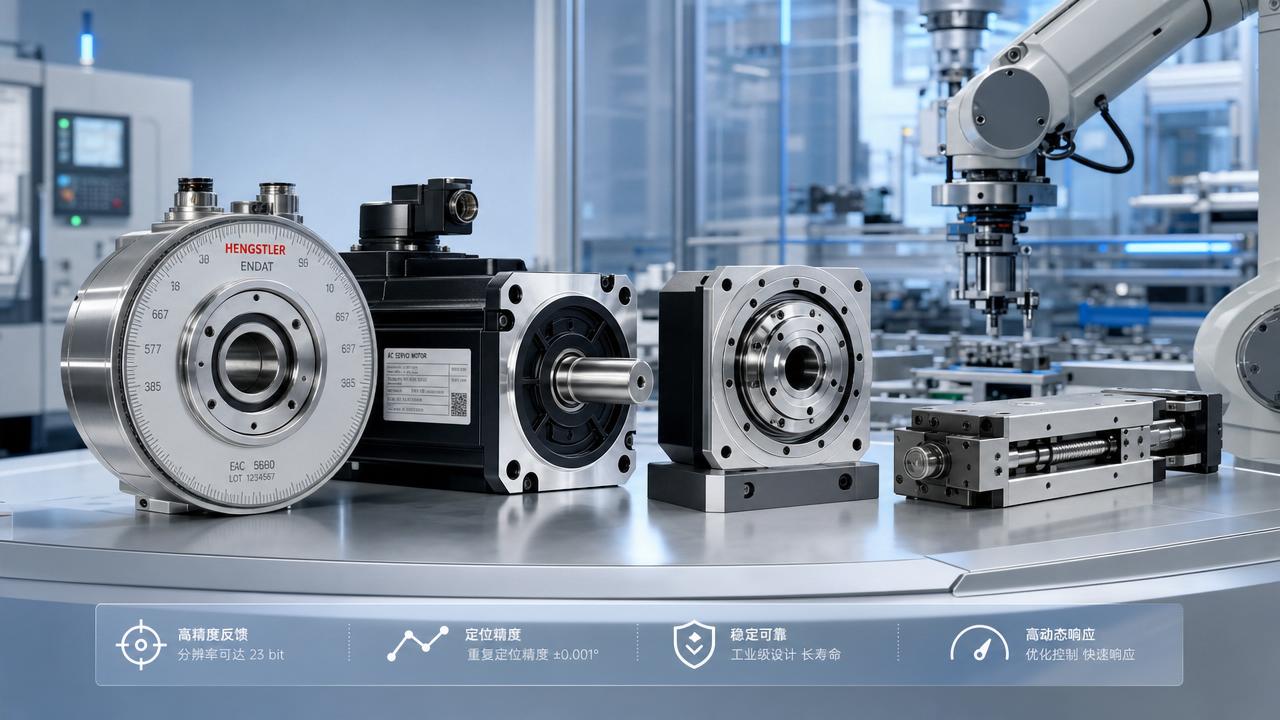
This matters across the broader industrial sector, where servo systems, PLC logic, reducers, guides, and edge control platforms must work as one synchronized system.
Understanding Industrial Robotics Control basics helps maintenance work become faster, more precise, and less reactive during high-load production schedules.
Industrial Robotics Control Fundamentals
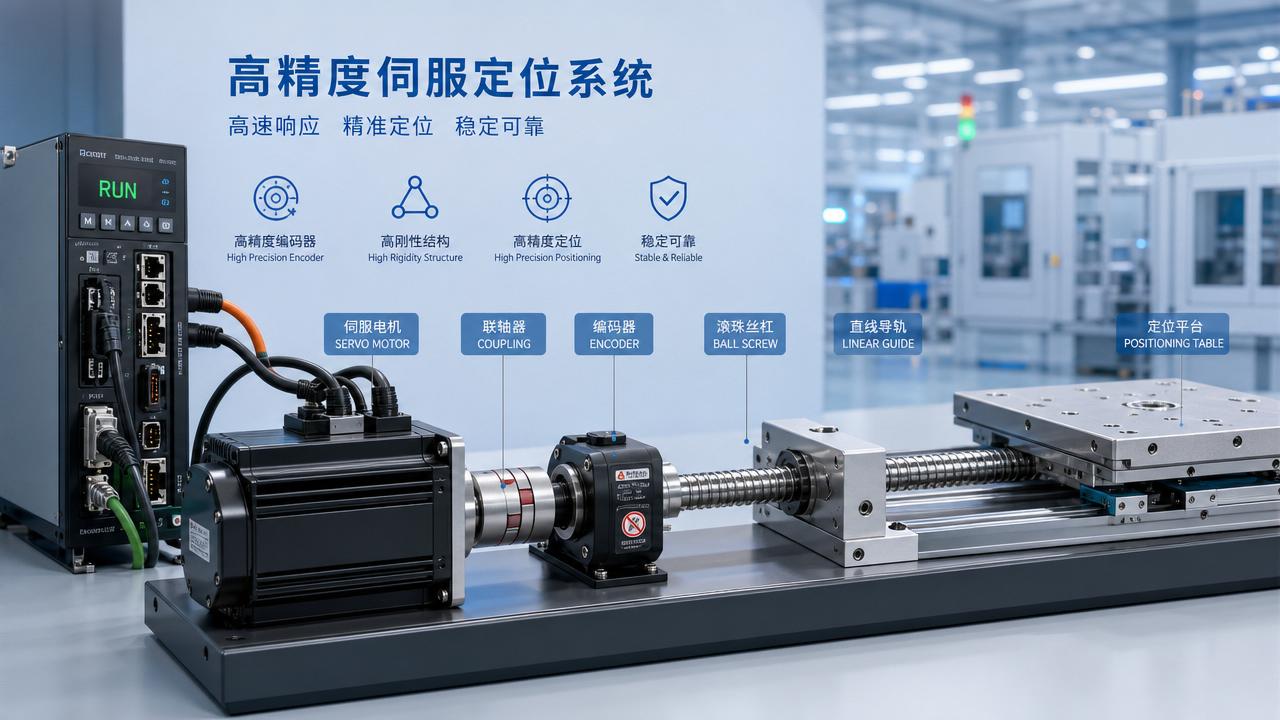
Industrial Robotics Control combines motion commands, feedback signals, logic execution, and drivetrain response into a closed-loop motion system.
Its purpose is simple: move each axis accurately, repeatably, and safely within the expected cycle time window.
In practice, control stability depends on five linked layers.
- Servo drive performance and loop tuning
- Motor encoder feedback quality
- PLC or robot controller scan and communication timing
- Mechanical transmission stiffness and backlash
- Power, grounding, and signal integrity
If one layer weakens, the full motion chain loses rhythm. The result may appear as overshoot, vibration, delayed settling, or inconsistent pick-and-place timing.
Stable Industrial Robotics Control is therefore not only a software task. It is an electrical, logical, and mechanical coordination discipline.
Core control terms
Cycle time is the total time needed to complete one motion sequence or production step.
Repeatability describes how consistently the robot returns to the same position under the same command.
Settling time is the delay between motion completion and stable positional accuracy.
Jitter refers to small timing variation in command execution, communication, or feedback sampling.
These terms are central when diagnosing Industrial Robotics Control problems on active production equipment.
Current Industry Focus Points Affecting Control Stability
Across integrated automation environments, several factors are increasing attention on Industrial Robotics Control reliability and timing precision.
These signals show why Industrial Robotics Control is now viewed as a system-level stability issue, not just a robot programming concern.
Why aftermarket teams see the problem first
Control degradation often appears gradually. A line may pass output checks while hidden timing drift grows inside the motion system.
That is why post-installation service and maintenance work are critical for preserving Industrial Robotics Control performance over equipment life.
Operational Value of Stable Industrial Robotics Control
Stable Industrial Robotics Control protects more than robot motion. It supports throughput, dimensional accuracy, safety margins, and predictable maintenance planning.
- Consistent cycle times reduce line imbalance and buffer accumulation
- Smooth axis response lowers impact loads on reducers and guides
- Reliable feedback improves part placement and process repeatability
- Better timing alignment supports multi-axis and robot-to-conveyor coordination
- Faster fault isolation reduces downtime during abnormal events
In many plants, the visible symptom is unstable output. The hidden cause is weak Industrial Robotics Control discipline across hardware and software boundaries.
Even small improvements in tuning, backlash control, or signal cleanliness can recover meaningful production time over a quarter.
Typical Sources of Cycle Time Instability
Most Industrial Robotics Control issues can be grouped into a few recurring categories that appear across packaging, assembly, machining, and material handling systems.
A useful rule is to verify timing, feedback, and mechanics together. Isolating only one layer often misses the real Industrial Robotics Control fault chain.
Mechanical wear can imitate software faults
A worn harmonic reducer or loose coupling may look like poor tuning. Repeated retuning will not solve a stiffness loss problem.
Likewise, a rough linear guide can create vibration patterns that appear to be servo resonance in Industrial Robotics Control diagnostics.
Practical Diagnostic Sequence for Maintenance Work
A structured sequence helps restore Industrial Robotics Control stability without unnecessary part replacement or repeated trial-and-error tuning.
- Confirm the symptom with trend data, not operator memory alone.
- Check cycle time history and identify when drift began.
- Review servo alarms, following error, torque peaks, and settling time.
- Inspect encoder cables, grounding points, and cabinet shielding.
- Measure backlash, coupling condition, and axis stiffness under load.
- Examine PLC scan time, motion task priority, and network latency.
- Retune only after electrical and mechanical causes are cleared.
This sequence prevents misdiagnosis and improves repeatable Industrial Robotics Control troubleshooting across mixed-vendor equipment.
Useful data to capture
- Axis current and torque trends
- Encoder deviation and missed count events
- Command versus actual position traces
- Controller scan consistency
- Temperature variation near drives and motors
Best Practices to Maintain Stable Cycle Times
Long-term Industrial Robotics Control performance depends on routine discipline, not only emergency repair skill.
- Create baseline motion signatures after commissioning or major overhaul
- Schedule backlash and vibration checks at fixed intervals
- Keep cabinet wiring separated for power and feedback circuits
- Document every parameter change in servo, PLC, and robot controller layers
- Validate replacement parts for encoder resolution and mechanical fit
- Review firmware and communication compatibility before updates
In broader automation environments, Industrial Robotics Control should also be reviewed with connected inverters, IPC platforms, and line coordination logic.
That wider view reflects how modern manufacturing depends on tightly stitched control, transmission, and edge computation performance.
Next-Step Control Review for More Predictable Performance
If cycle times are becoming unstable, start with a focused Industrial Robotics Control review instead of isolated component replacement.
Compare current motion traces with historical baselines. Then inspect servo response, PLC timing, reducer stiffness, guide condition, and signal integrity together.
A disciplined review often reveals that small timing errors, mild backlash, or poor grounding are enough to disturb repeatable motion.
For industrial operations seeking stable throughput, Industrial Robotics Control is not a narrow specialty. It is a practical path to reliable automation performance.
Related Recommendations
 Servo Control Technology Selection: Key Factors for Stable Machine PerformanceTime : Jun 16, 2026
- Servo Motion Control: How to Improve Accuracy Without Over-TuningTime : Jun 16, 2026
- Servo Motion Systems Trends Shaping Machine Design in 2026Time : Jun 15, 2026
- How to Evaluate High Power Density in Servo Motion SystemsTime : Jun 15, 2026
- High-Precision Encoders: Key Specs That Affect Motion AccuracyTime : Jun 12, 2026
- Servo Control Technology Basics: What Improves Positioning StabilityTime : Jun 11, 2026