Precision Motion Components: Common Selection Mistakes

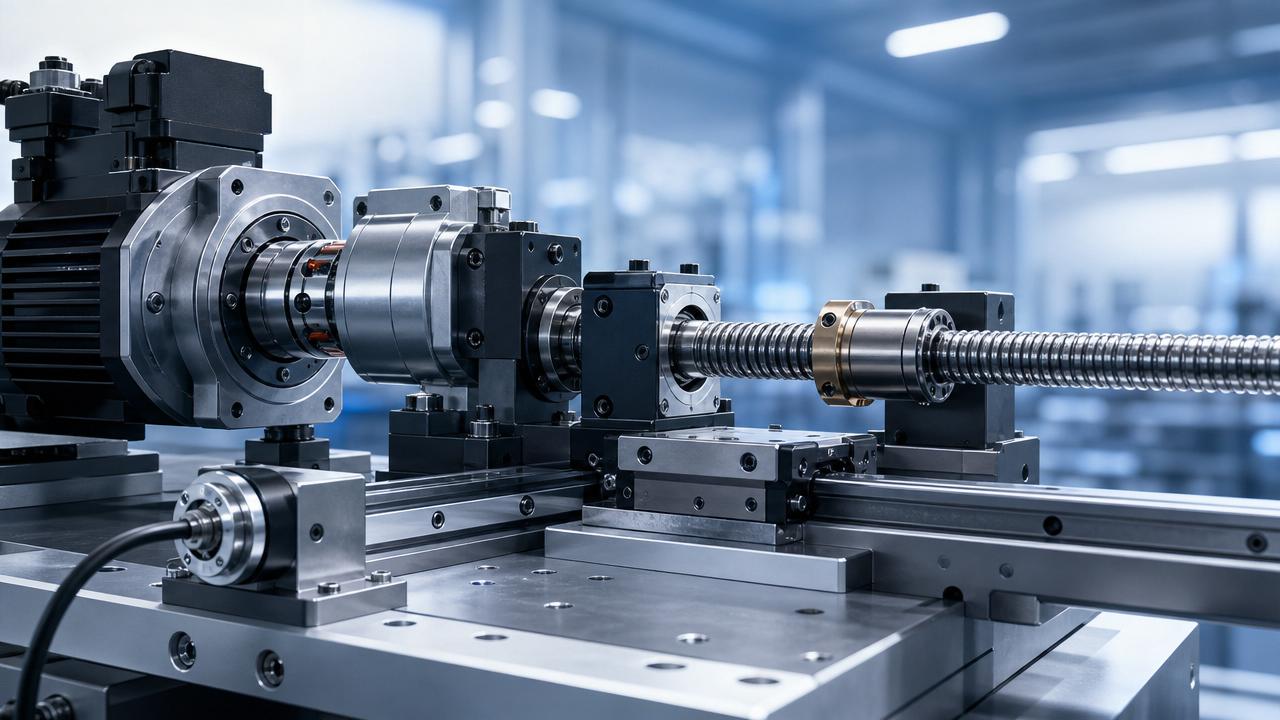
Choosing Precision Motion Components can be deceptively complex, and even small selection mistakes may lead to vibration, positioning errors, reduced efficiency, or premature failure. For researchers evaluating industrial automation solutions, understanding these common pitfalls is essential to comparing technologies, suppliers, and long-term performance with greater confidence and accuracy.
Why do Precision Motion Components get selected incorrectly so often?
Precision Motion Components sit at the intersection of electrical control, mechanical transmission, thermal behavior, and application load. That makes selection harder than choosing a standard motor, gearbox, or guide rail from a catalog.
In industrial automation, a servo motor, PLC, reducer, ball screw, linear guide, inverter, and industrial PC must work as a coordinated system. A component that looks acceptable in isolation may create instability when integrated into the full machine architecture.
This is where many information researchers struggle. Datasheets present nominal torque, speed, accuracy, and efficiency, but field performance depends on resonance, inertia matching, duty cycle, lubrication, mounting rigidity, control loop tuning, and environmental contamination.
- Teams often compare only headline specifications and ignore how Precision Motion Components behave under acceleration, shock load, or repetitive reversal.
- Procurement may focus on unit price while engineering cares about backlash, repeatability, and dynamic stiffness.
- Project schedules can force quick substitutions, even when alternative parts have different control responses, encoder resolution, or bearing preload.
IAMC’s strength lies in connecting these disciplines. Its perspective covers servo control algorithms, precision transmission behavior, PLC/DCS timing, and edge computing conditions, which helps researchers judge component fit beyond marketing claims.
The most common root cause
The most common mistake is treating precision as a single value. In reality, precision includes repeatability, positioning accuracy, backlash, rigidity, thermal drift, interpolation quality, and controllability over time.
Which selection mistakes create the biggest downstream risks?
For buyers, researchers, and cross-functional project teams, the most damaging errors usually appear early. They are easy to miss during sourcing, but expensive to correct after machine assembly or line commissioning.
Mistake 1: Focusing on rated values and ignoring dynamic load
A servo axis may rarely run at steady rated conditions. In pick-and-place, packaging, CNC, or robotic joints, short bursts of acceleration matter more than continuous speed. If peak torque, reflected inertia, or deceleration energy are misjudged, the system may oscillate or trip.
Mistake 2: Underestimating backlash and torsional stiffness
Reducers, couplings, and screw-nut assemblies influence motion accuracy differently. Two gear solutions may have similar reduction ratios yet very different lost motion, compliance, and fatigue characteristics under reversing loads.
Mistake 3: Treating control and mechanics as separate decisions
Mechanical resonance cannot be solved by hardware alone, and control instability cannot be solved by software alone. Servo tuning, encoder feedback, structural rigidity, and notch filter strategy must be considered together when evaluating Precision Motion Components.
Mistake 4: Ignoring environmental stress
Dust, washdown exposure, cutting fluids, vibration, and ambient heat can shorten bearing life, affect encoder reliability, and degrade lubrication film. A component selected for laboratory precision may fail in a real production line.
Mistake 5: Comparing parts without life-cycle context
A lower upfront price may hide higher maintenance, replacement downtime, retuning effort, or scrap losses. Information researchers should compare total operational fit, not just purchase cost.
How should researchers compare Precision Motion Components across applications?
Different applications prioritize different performance criteria. The table below helps structure early-stage evaluation when comparing Precision Motion Components for automation projects across robotics, CNC, packaging, and flexible manufacturing systems.
The key takeaway is simple: application context changes the definition of “best fit.” A component optimized for compact robot joints may not be the right answer for a thermally sensitive linear axis or a high-duty packaging line.
A practical comparison checklist
- Map motion profile first: speed, acceleration, dwell, reversal frequency, and shock events.
- Define precision correctly: repeatability, absolute accuracy, backlash, settling time, and drift.
- Check integration variables: controller scan time, network latency, encoder compatibility, and power quality.
- Review maintenance conditions: lubrication access, replacement interval, contamination risk, and spare strategy.
What parameters matter most when selecting Precision Motion Components?
Researchers often receive long parameter lists from suppliers. The problem is not lack of data. The problem is knowing which parameters directly affect machine behavior, service life, and commissioning difficulty.
The table below groups critical decision parameters into a more useful screening model for Precision Motion Components in industrial automation programs.
For serious evaluation, these parameters should be tied to machine targets, not reviewed as isolated catalog values. IAMC’s multi-domain coverage is valuable here because it links control timing, transmission accuracy, and mechanical tolerance into one decision framework.
Parameters that are often overlooked
- Settling time after rapid move completion, especially in vision-guided handling.
- Micro-vibration sensitivity in lightweight structures and high-speed heads.
- Thermal growth in screws, motors, and surrounding machine frames.
- Real service life under reversing duty rather than continuous one-direction operation.
How can procurement teams avoid cost-driven selection errors?
Budget pressure is real, especially in multi-axis equipment or line-scale automation projects. Still, the lowest-cost Precision Motion Components can become the highest-cost decision if they increase tuning effort, downtime, scrap, or maintenance frequency.
Look beyond purchase price
A lower-priced reducer with higher backlash may require tighter software compensation. A lower-cost guide may demand more maintenance intervals. A cheaper servo package may limit response bandwidth or integration flexibility with existing PLC/DCS systems.
Evaluate substitution risk carefully
When supply constraints force alternatives, check more than mounting dimensions. Researchers should verify encoder type, inertial behavior, communication protocol, heat dissipation, tuning range, and control response during rapid transients.
- Ask whether the substitute changes axis stiffness or repeatability.
- Ask whether software changes are required in motion profiles or PLC logic.
- Ask whether spare parts and maintenance teams can support the new platform.
This is also why IAMC’s intelligence on supply cycles, chip availability, and strategic component trends matters. Selection is no longer only a technical issue. It is a continuity and resilience issue as well.
What standards, validation steps, and review methods should be used?
Precision Motion Components should be screened through a validation process that combines performance review, environmental review, and integration review. Researchers do not need every supplier to use the same format, but they do need a consistent decision method.
Useful review areas
- Dimensional and interface compatibility, including shaft, flange, cable, and communication layers.
- Operational limits, such as temperature, duty cycle, allowable speed, and shock conditions.
- Motion quality metrics, including backlash, repeatability, vibration response, and settling behavior.
- General compliance expectations, which may include CE-related documentation, EMC considerations, and machine safety integration depending on region and system scope.
A practical review sequence
- Confirm load case and motion cycle using real application assumptions.
- Check mechanical fit, control fit, and environmental fit in parallel.
- Request life, accuracy, or thermal behavior evidence relevant to the application, not only generic brochures.
- Review replacement and service implications before final approval.
This structured approach reduces the chance of late-stage redesign. It also helps procurement, engineering, and management discuss trade-offs using a shared framework instead of conflicting assumptions.
FAQ: what do researchers ask most about Precision Motion Components?
How do I know if a precision reducer or direct-drive option is more suitable?
Start with required torque density, space envelope, backlash tolerance, maintenance strategy, and dynamic response. Direct drive can reduce transmission compliance, but it may raise control, thermal, or cost requirements. Precision reducers remain practical where compact torque multiplication and mature integration are priorities.
Are catalog accuracy values enough to compare linear motion parts?
No. Catalog values should be treated as a starting point. Real comparison should include preload, mounting surface quality, lubrication method, contamination protection, thermal expansion, and the machine frame’s rigidity. These factors often determine actual performance more than nominal specifications alone.
What is the biggest red flag during early supplier comparison?
A major red flag is when the discussion stays limited to rated power, rated torque, or price, without examining application cycle, reflected inertia, vibration risk, service conditions, and controller compatibility. That usually signals an incomplete fit assessment.
How important is PLC or IPC behavior in motion component selection?
It is critical. Motion quality depends not only on motors and mechanics but also on scan time consistency, communication latency, edge processing responsiveness, and synchronization across axes. For complex automation, controller architecture can influence how well Precision Motion Components perform in the field.
Why choose us for Precision Motion Components research and selection support?
IAMC supports information researchers by connecting the full decision chain: servo behavior, PLC/DCS logic timing, reducer fatigue considerations, linear transmission precision, inverter energy control, and industrial edge computing constraints. That cross-domain view helps uncover selection mistakes before they become commissioning problems.
If you are comparing Precision Motion Components for a new project, a platform migration, or a supply-risk substitution, you can consult us on specific decision points instead of starting from scattered vendor data.
- Parameter confirmation for torque, backlash, repeatability, rigidity, and environmental limits.
- Product selection support across servo systems, reducers, linear guides, ball screws, PLC/DCS, inverters, and IPC-related architectures.
- Delivery cycle discussion for critical components affected by regional supply constraints.
- Custom solution review for robotics, CNC, packaging, flexible manufacturing, and high-precision handling applications.
- Certification and compliance communication where machine export, EMC, or documentation readiness affects project planning.
- Sample evaluation and quotation communication based on actual duty cycles rather than broad catalog assumptions.
When the cost of a wrong choice includes instability, scrap, redesign, and downtime, better research is not a luxury. It is part of precision itself. Contact us with your target application, required performance, and current comparison shortlist, and we can help structure the next step with greater technical and commercial clarity.
Related Recommendations
 Precision Positioning Solutions for High-Speed Assembly LinesTime : Jul 11, 2026
- Precision Motion Systems vs Servo Setups: What Matters MostTime : Jun 20, 2026
 Precision Motion Control for High-Speed Pick-and-PlaceTime : Jun 04, 2026
- Precision Motion Systems: How to Judge RepeatabilityTime : May 31, 2026
- Precision Motion Components: Common Selection MistakesTime : May 22, 2026
- Why Precision Motion Control Technology Misses RepeatabilityTime : May 15, 2026