Control Precision Gaps That Delay Acceptance Tests

When acceptance tests stall, the problem rarely starts on the final test day. It usually begins much earlier, with small Control Precision gaps hidden across code, drives, mechanics, and edge data flow.
In industrial automation, these gaps turn stable designs into unstable commissioning. They delay sign-off, increase rework, and create disputes over whether the issue is electrical, mechanical, or procedural.
For integrated systems involving servo motors, PLC/DCS platforms, reducers, linear motion parts, and IPC-based supervision, Control Precision is not one setting. It is a chain of aligned tolerances and response behaviors.
A project may pass individual component tests yet still fail acceptance. That happens when the system-level precision target was never translated into measurable conditions for every scene.
Why acceptance delays happen in different operating scenes
Acceptance tests often combine static accuracy, dynamic repeatability, cycle time, and fault recovery. Each scene stresses Control Precision in a different way, and each exposes a different weak link.
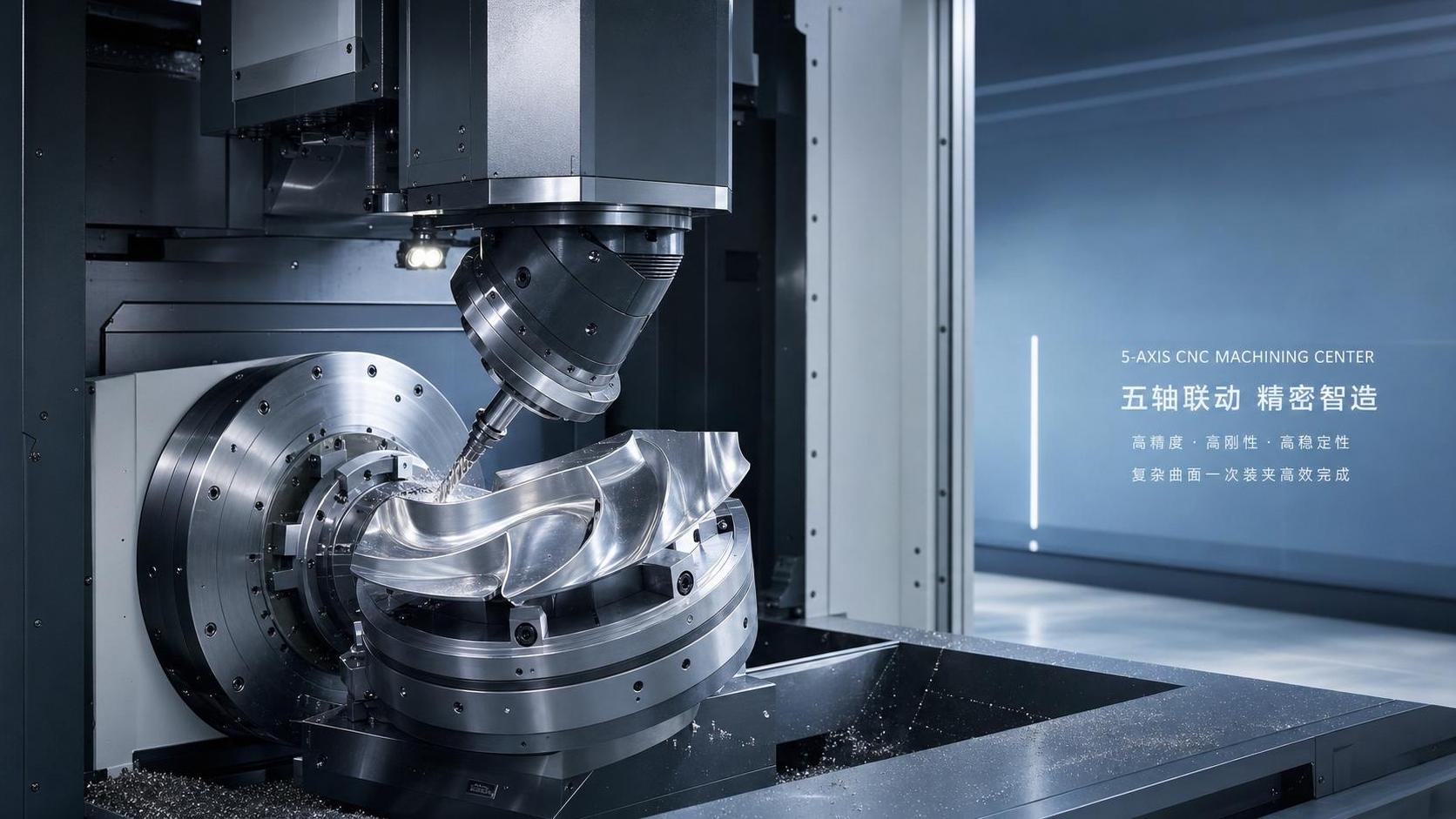
A packaging line may fail on synchronization drift. A robot cell may fail on backlash under load reversal. A CNC axis may fail on thermal growth after continuous running.
This is why scene-based judgment matters. Precision must be evaluated against actual motion profiles, disturbance sources, and acceptance criteria, not only against component datasheets.
Scene judgment starts with the real precision demand
Many projects define precision too broadly. “High accuracy” is not actionable. Control Precision becomes manageable only when linked to position error, settling time, overshoot, jitter, and repeatability windows.
IAMC’s industry observation shows that acceptance risk rises when electrical response and mechanical tolerance are reviewed separately. The missed connection becomes visible only during integrated testing.
Scene 1: Multi-axis synchronization where Control Precision slips under throughput pressure
In coordinated motion systems, acceptance delays usually appear when speed increases. At low speed, the line looks stable. At production speed, phase error, scan delay, and network jitter become measurable.
The core judgment point is whether Control Precision holds during acceleration, deceleration, and load variation. Passing a no-load motion test does not prove synchronized performance under production conditions.
What to check first
- Servo loop bandwidth versus commanded motion profile
- PLC or motion controller scan stability during peak logic load
- Fieldbus update cycle and clock synchronization quality
- Encoder resolution versus required registration tolerance
If one axis compensates for another axis’s lag, the system may appear functional while silently losing Control Precision. Acceptance then fails on repeatability after several hours of running.
Scene 2: Robotic motion where mechanical transmission hides the precision gap
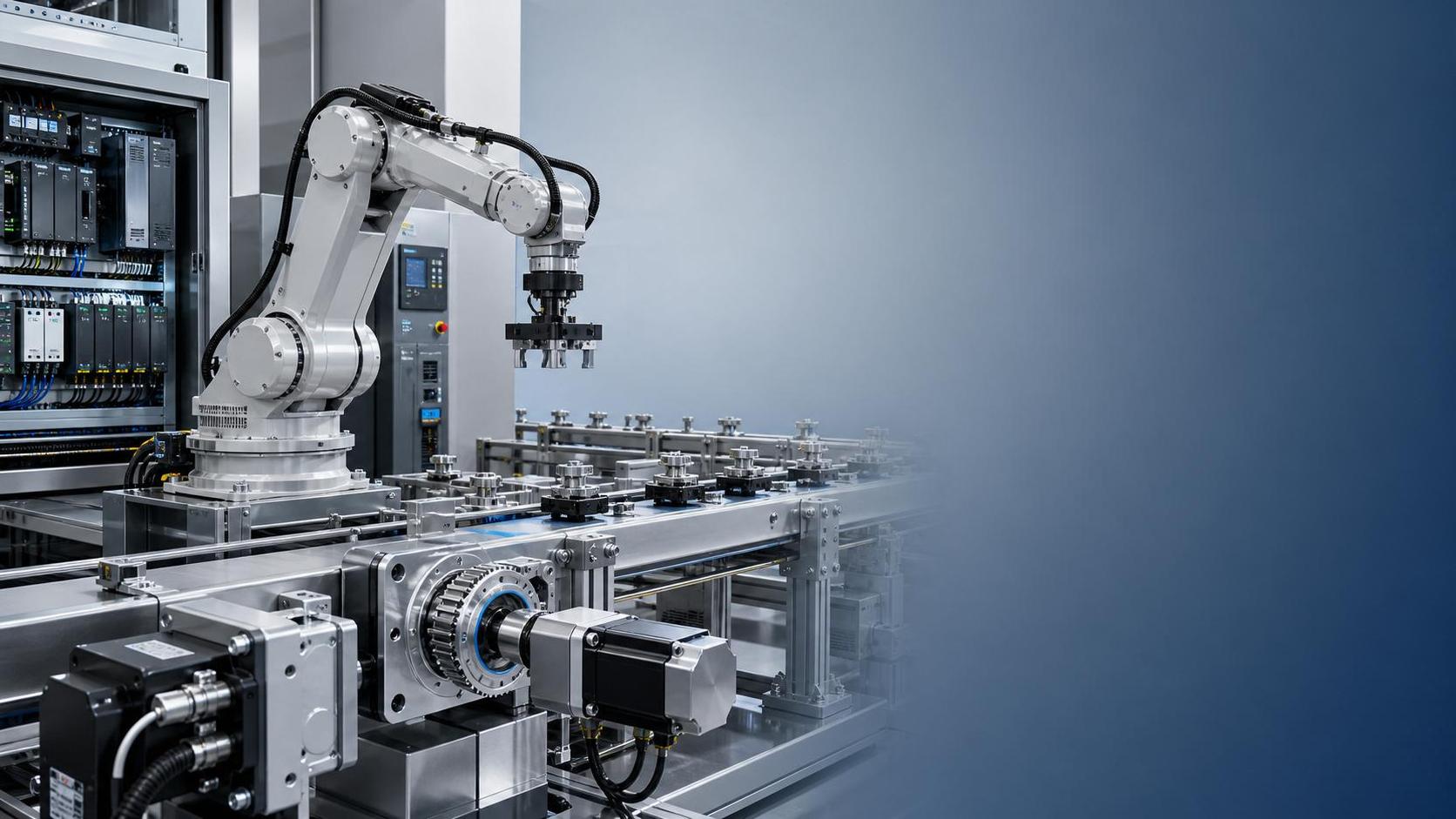
Robot and articulated motion systems often struggle with acceptance when reducers, couplings, and load inertia were matched only by nominal ratings. Real precision loss appears during direction change and contour transitions.
Here, Control Precision depends on both servo tuning and mechanical compliance. A harmonic or RV reducer with early wear, installation misalignment, or preload inconsistency can distort closed-loop performance.
Core judgment points in this scene
Check backlash growth across temperature changes. Check lost motion after repeated reversals. Check whether resonance suppression settings still work when payload changes between test recipes.
A common trap is over-tuning the servo to mask weak mechanics. That may briefly improve Control Precision, but it often creates vibration, noise, and unstable acceptance results.
Scene 3: Linear feed equipment where thermal and structural effects break acceptance
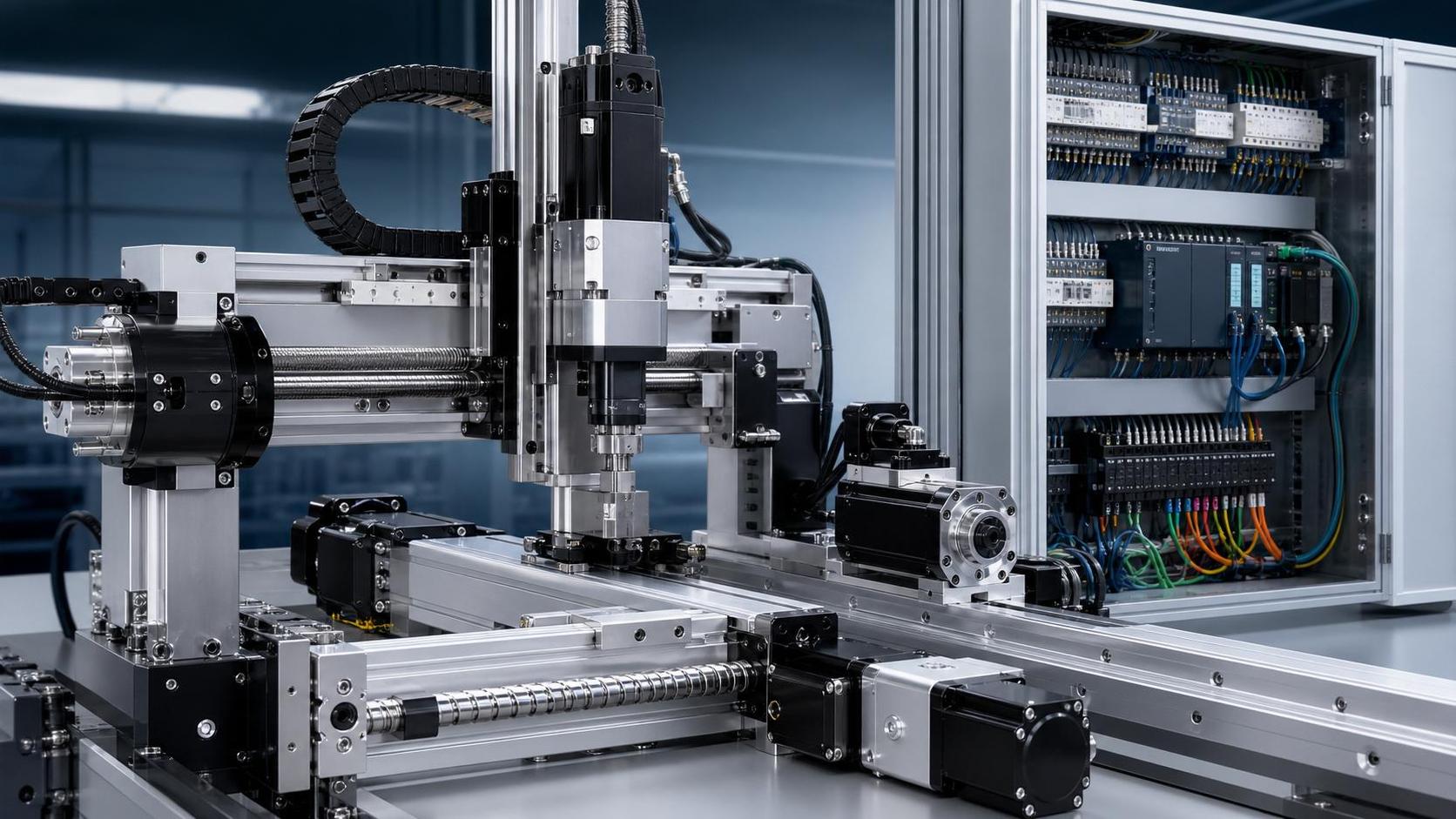
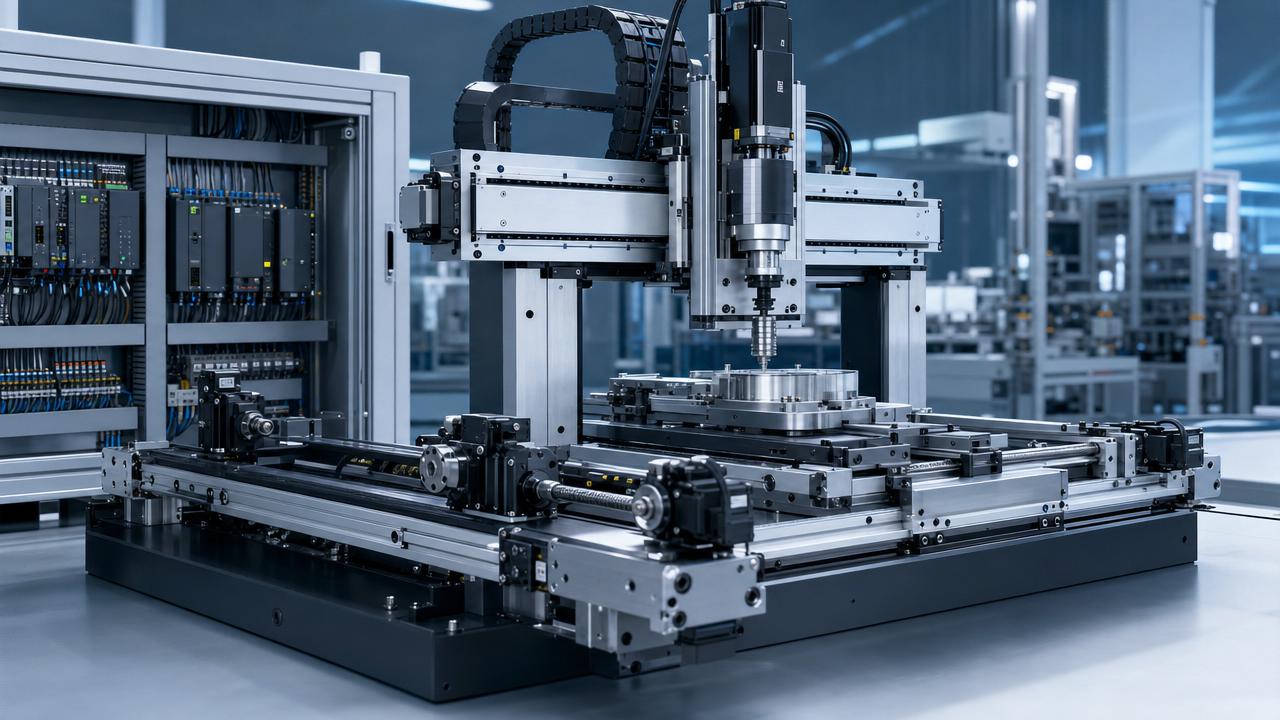
CNC platforms, dispensing gantries, and inspection stages face a different challenge. They may meet precision targets at startup, then drift after sustained motion because the structure changes with heat and load.
In this scene, Control Precision is strongly influenced by ball screws, guides, mounting flatness, lubrication condition, and frame stiffness. Software compensation cannot fully correct a weak mechanical base.
Signals that this scene is at risk
- Accuracy passes cold tests but fails hot tests
- Settling time increases after long cycles
- Position error changes by direction or stroke length
- Surface finish or process quality varies without alarm events
This is where Control Precision must be validated over time, not only at a single point. Acceptance protocols should include thermal stabilization and long-cycle repeatability checks.
How precision needs differ across acceptance scenes
Practical recommendations to close Control Precision gaps early
The fastest way to reduce acceptance delay is to convert precision expectations into a layered verification plan. Each layer should have a measurable boundary and an owner.
Recommended sequence
- Define Control Precision targets by scene, not by generic specification.
- Separate static accuracy, dynamic accuracy, and repeatability in all test documents.
- Validate mechanics before aggressive servo tuning begins.
- Measure controller jitter, bus timing, and IPC task loading under full logic execution.
- Run long-duration tests with realistic payloads, temperatures, and cycle profiles.
- Freeze acceptance metrics early to avoid late interpretation disputes.
This method supports stronger Control Precision because it links servo behavior, PLC timing, transmission quality, and machine structure into one acceptance path.
Common misjudgments that extend commissioning and delay sign-off
One frequent error is assuming high encoder resolution guarantees high Control Precision. Resolution helps measurement, but it does not remove backlash, vibration, thermal drift, or poor loop design.
Another error is using unloaded testing as proof of readiness. Many precision gaps emerge only under torque peaks, rapid reversals, or combined controller workloads.
A third mistake is treating acceptance failure as a tuning issue alone. In many cases, the real cause sits in guide preload, reducer wear pattern, grounding quality, or scan-cycle instability.
Projects also lose time when alarm-free operation is mistaken for precision stability. A machine can run without faults and still miss Control Precision targets needed for final approval.
A clearer next step for stable acceptance outcomes
To reduce acceptance risk, start with a scene-based precision checklist covering motion control, PLC execution, mechanical transmission, and environmental drift. Use one baseline for design, FAT, SAT, and final sign-off.
IAMC continues to track how servo algorithms, PLC/DCS timing, precision reducers, linear motion hardware, inverters, and industrial IPCs shape Control Precision in modern automation systems.
When precision is stitched across every layer early, acceptance becomes a confirmation step instead of a discovery process. That shift protects schedules, improves confidence, and supports reliable industrial delivery.
Related Recommendations
 Industrial Networking IEC 62443: Common Compliance Gaps to FixTime : Jul 04, 2026
- Industrial Sensor Networks Supplier Checklist for Stable DeploymentsTime : Jul 04, 2026
- How to Compare Smart Industrial Automation Systems by ROI and RiskTime : Jul 02, 2026
- Motion Control Integrator Selection: 7 Risks That Delay Automation ProjectsTime : Jul 01, 2026
- How Multi Axis CNC Control Improves Precision in Complex MachiningTime : Jul 01, 2026
- Automation Control Technology for Process Control: What Matters Most in System SelectionTime : Jun 29, 2026