Industrial Control Components Failure Risks

Industrial Control Components Failure Risks in a More Automated Factory Landscape
Industrial Control Components sit at the center of modern automated production, but even minor failures can trigger quality drift, downtime, and safety exposure.
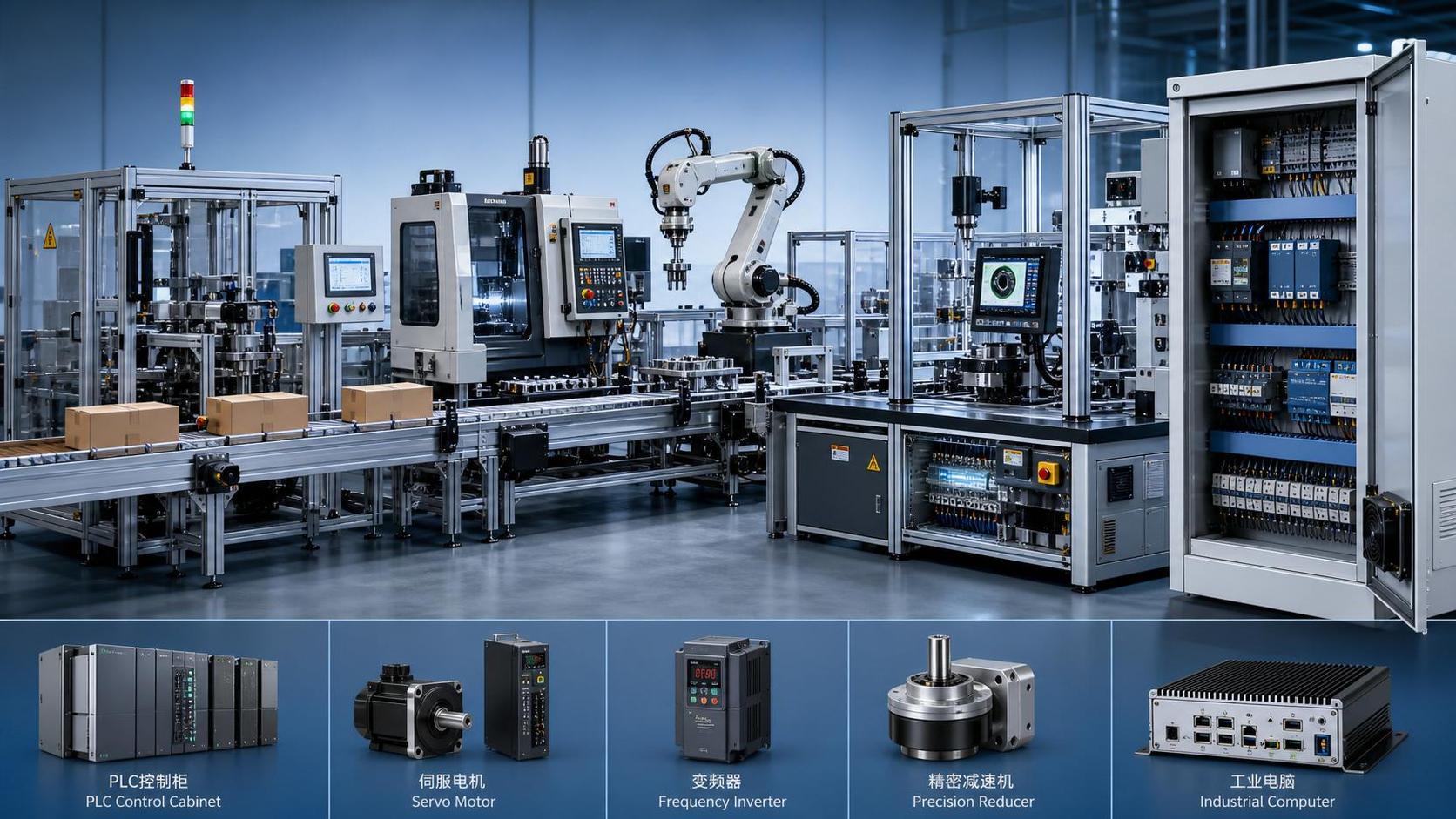
Servo drives, PLC/DCS systems, reducers, guides, inverters, and IPCs now carry heavier responsibility across flexible manufacturing environments.
As factories pursue higher speed, tighter tolerance, and continuous data visibility, Industrial Control Components must remain accurate under stress.
Failure risk is no longer only a maintenance concern. It directly affects traceability, product consistency, energy efficiency, and operational resilience.
Automation Growth Is Raising the Consequence of Small Failures
The current shift toward full automation makes every control node more critical than before.
A delayed servo response can deform a precision part. A PLC scan anomaly can interrupt synchronized machine sequences.
Industrial Control Components now operate inside dense networks of sensors, actuators, edge computers, and safety logic.
This interconnection improves productivity, but it also allows one unstable component to spread risk across multiple process stages.
In machining, packaging, robotics, energy equipment, and logistics, tolerance windows are becoming narrower.
That trend makes Industrial Control Components failure risks more visible, more expensive, and harder to isolate after production losses occur.
Key Trend Signals Behind Rising Failure Exposure
Several signals show why reliability pressure is increasing across industrial automation platforms.
- Motion systems are shifting from simple positioning to microsecond-level synchronization.
- PLC/DCS platforms are handling more safety, quality, and energy data simultaneously.
- Precision reducers face higher cycle counts in robotics and automated handling.
- Linear guides and ball screws carry heavier loads while maintaining micron-level repeatability.
- Inverters and IPCs work closer to harsh field conditions, including dust, heat, and vibration.
These changes mean Industrial Control Components must be evaluated through performance drift, not only complete breakdown.
The earliest warning is often a small deviation in current, temperature, vibration, scan time, or positioning error.
What Is Driving Industrial Control Components Failure Risks?
The common pattern is clear. Industrial Control Components fail under combined electrical, mechanical, environmental, and software pressures.
Risk control therefore requires cross-domain monitoring, not isolated replacement after visible damage.
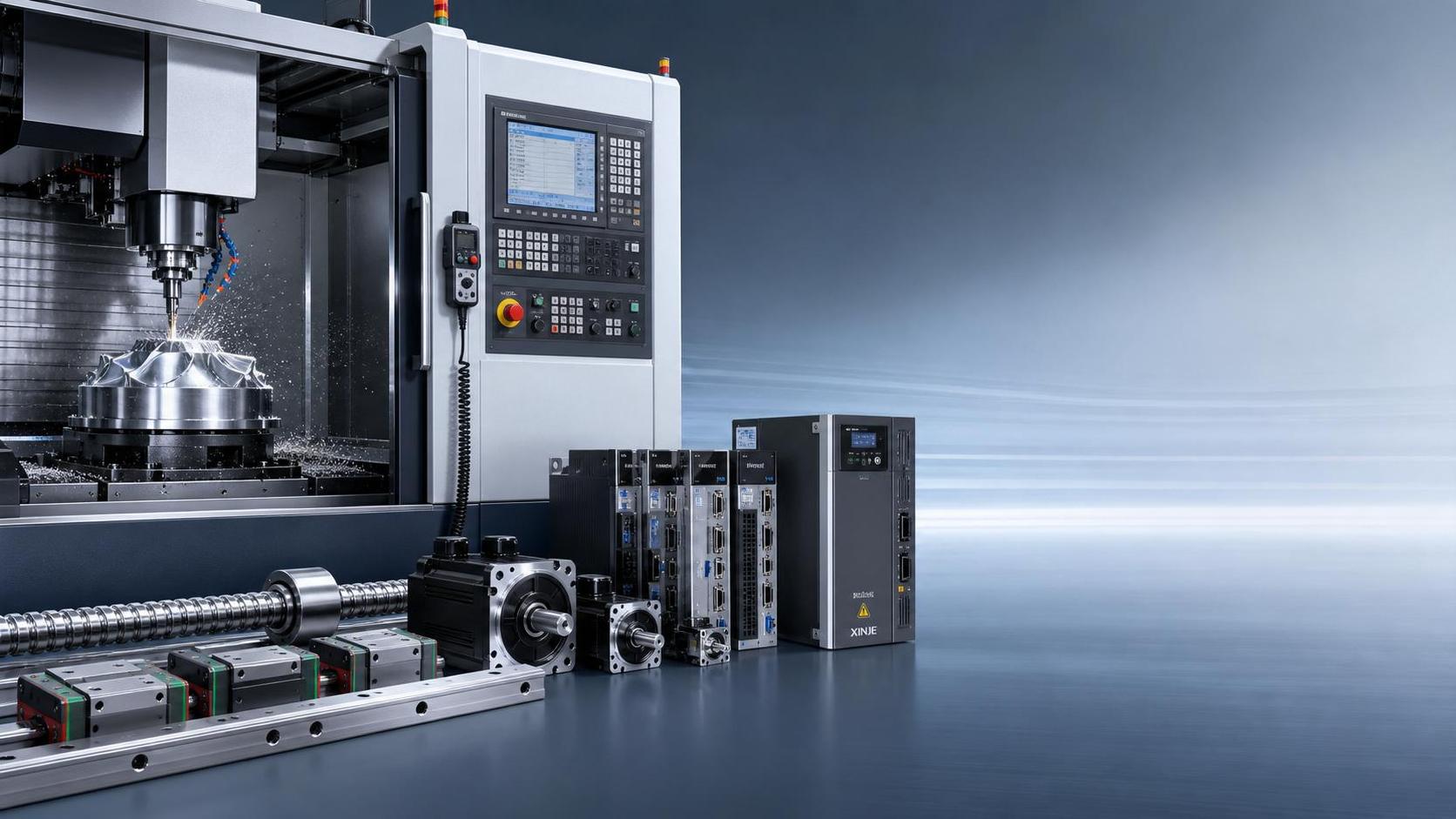
Servo Drives and Motors: Accuracy Loss Before Hard Failure
Servo systems are among the most sensitive Industrial Control Components in high-precision equipment.
Typical risks include encoder signal degradation, bearing wear, overheating, current loop instability, and mechanical resonance.
A servo may continue running while producing subtle position deviation, torque ripple, or abnormal following error.
These early symptoms can damage product geometry before alarms appear on the drive panel.
- Track following error trends under identical load conditions.
- Compare motor temperature against ambient and duty-cycle changes.
- Monitor encoder feedback quality and cable shielding condition.
- Investigate new vibration frequencies after tooling or speed changes.
For Industrial Control Components used in motion axes, stable data trends often matter more than single alarm events.
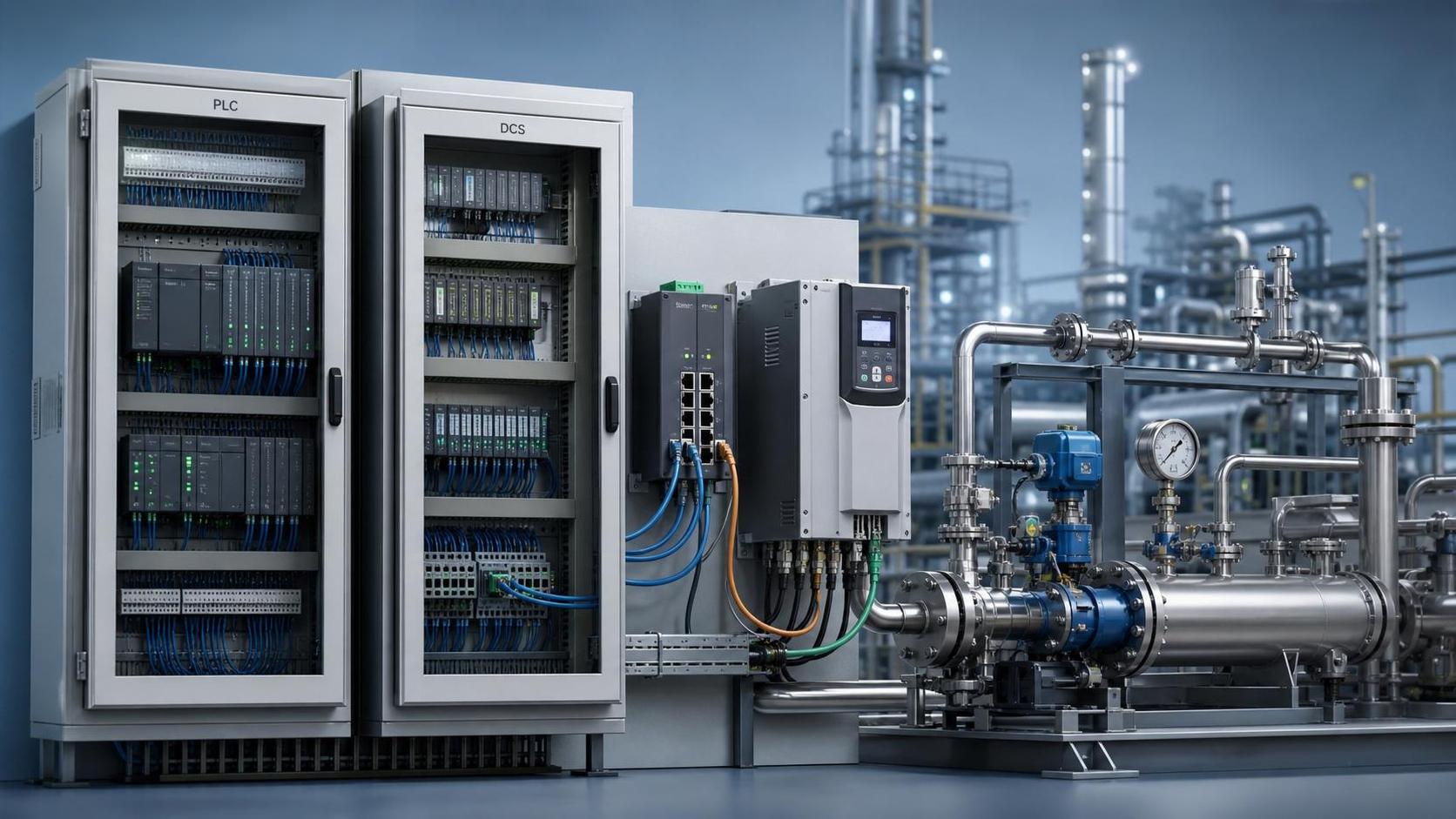
PLC/DCS Systems: Logic Stability Under Electromagnetic Pressure
PLC/DCS platforms are the nerve centers of automated production.
Their failure risks often appear as intermittent I/O errors, scan-time fluctuation, communication loss, or corrupted field signals.
Industrial Control Components in control cabinets face electromagnetic interference from drives, contactors, welders, and grounding defects.
A system may remain online, yet execute unstable logic because sensor states arrive late or incorrectly.
Scan-cycle monitoring, redundant communication checks, and disciplined grounding audits reduce hidden exposure.
Firmware control is also important. Unplanned version differences can change behavior during fault recovery or network reconnection.
Reducers, Linear Guides, and Ball Screws: Mechanical Drift Becomes Control Risk
Mechanical transmission failures directly affect the effectiveness of Industrial Control Components.
A controller cannot compensate indefinitely for worn gears, insufficient lubrication, preload loss, or rail contamination.
Precision reducers may develop backlash, flexspline fatigue, abnormal temperature, or uneven torque transmission.
Linear guides and ball screws can suffer pitting, brinelling, lubrication breakdown, and installation misalignment.
The trend toward compact machines increases load density on these transmission elements.
Once mechanical drift grows, servo tuning may mask symptoms while accelerating wear elsewhere.
- Measure backlash at defined service intervals.
- Analyze vibration signatures across speed bands.
- Inspect lubrication quality, contamination, and delivery consistency.
- Validate installation alignment after collisions or foundation changes.
Inverters and IPCs: Energy Control Meets Edge Computing Risk
Inverters influence energy use, motor protection, and process stability.
Common failure risks include capacitor aging, cooling fan degradation, harmonic distortion, overvoltage events, and parameter misconfiguration.
Industrial PCs bring another risk layer because production decisions increasingly depend on edge data processing.
IPC failures may involve storage wear, operating system instability, thermal throttling, network latency, or dust-induced cooling loss.
When Industrial Control Components depend on real-time data, computing jitter can become a production quality issue.
Monitoring should include CPU load, disk health, cabinet temperature, packet loss, and application response time.
How Failure Risks Affect Quality, Safety, and Continuity
The impact of Industrial Control Components failure is rarely limited to one machine.
Quality drift may appear as dimensional variation, inconsistent sealing, unstable torque, surface defects, or incorrect batch traceability.
Safety exposure may rise when sensor feedback, interlock timing, braking control, or emergency logic becomes unreliable.
Continuity risk increases when spare parts, firmware backups, parameter files, or diagnostic records are incomplete.
The most damaging failures often combine several weak signals that were previously treated as unrelated.
A practical risk view connects component health with product data, alarm history, environment, and maintenance actions.
Priority Indicators Worth Watching Closely
Industrial Control Components should be monitored through leading indicators that reveal degradation before shutdown.
- Servo following error, torque ripple, encoder errors, and motor temperature.
- PLC scan time, I/O fault frequency, network retries, and power quality.
- Reducer backlash, vibration peaks, abnormal heat, and lubrication condition.
- Guide and screw preload, contamination, noise, and repeatability deviation.
- Inverter DC bus condition, fan status, harmonics, and trip history.
- IPC temperature, storage health, CPU load, latency, and software logs.
These indicators support condition-based maintenance and reduce dependence on reactive replacement.
Response Strategies for a More Resilient Automation Architecture
A resilient strategy treats Industrial Control Components as a connected reliability system.
Parameter governance, spare-part planning, version control, and diagnostic discipline should be built into daily operations.
Root-cause reviews should examine both the failed component and the conditions that accelerated its degradation.
Practical Next Steps for Reducing Failure Exposure
Start by ranking Industrial Control Components according to production criticality, replacement difficulty, and safety relevance.
Next, define measurable warning thresholds for motion accuracy, electrical stability, mechanical wear, and computing performance.
Then connect alarms with trend records, maintenance notes, process changes, and product quality data.
This approach turns scattered symptoms into actionable intelligence before production loss becomes severe.
Industrial Control Components will keep evolving toward higher precision, higher density, and deeper connectivity.
The strongest operations will not wait for visible failure. They will identify drift early, verify causes, and control risk systematically.
For deeper insight, track servo behavior, PLC reliability, transmission health, inverter performance, and IPC stability as one integrated automation picture.
Related Recommendations
 How Industrial Control Technology Solutions Cut Downtime in Mixed Automation LinesTime : Jul 15, 2026
- Smart Industrial Components for Packaging: Common Integration Mistakes to AvoidTime : Jul 14, 2026
- Motion Control Components for Packaging: How to Choose for Speed and StabilityTime : Jul 13, 2026
- CNC Control Software: Key Features That Improve Machining AccuracyTime : Jul 13, 2026
- PLC-DCS Integration Solutions for Brownfield Plant UpgradesTime : Jul 11, 2026
- Motion Control Technology for Machine Tools: Key Setup PrioritiesTime : Jul 10, 2026