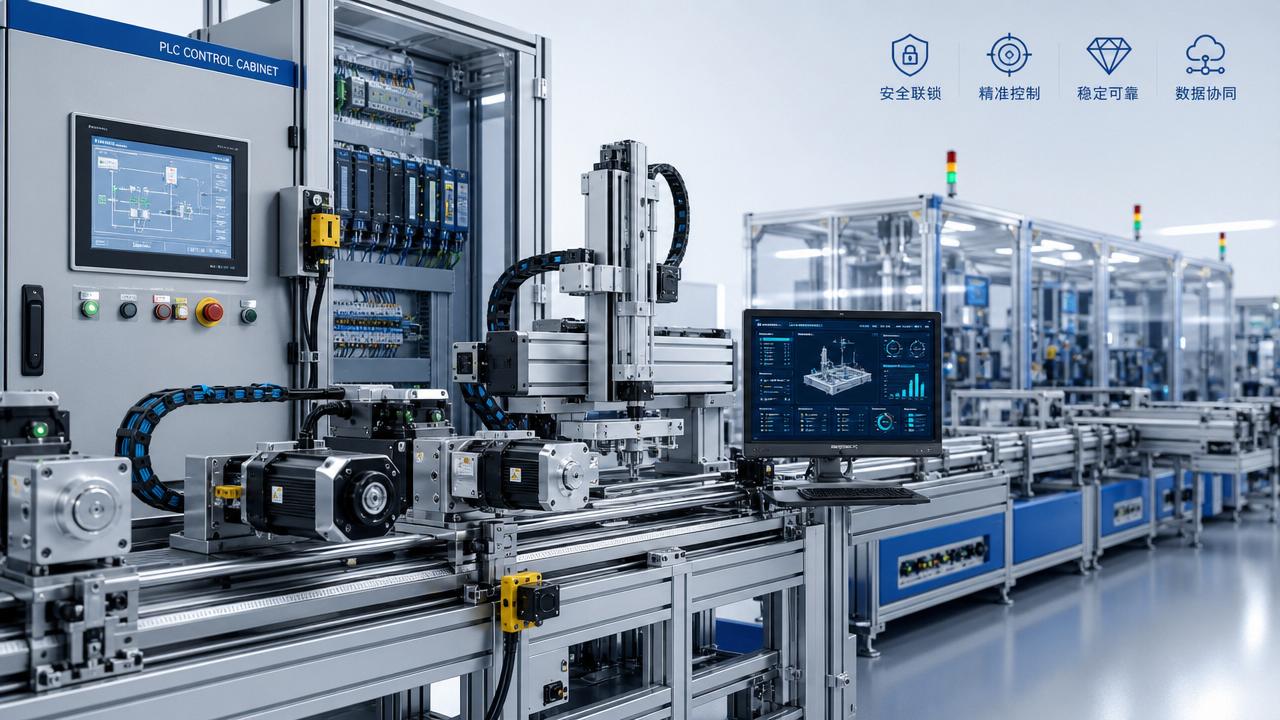
CNC Control Systems: 5 Issues That Hurt Machining Accuracy

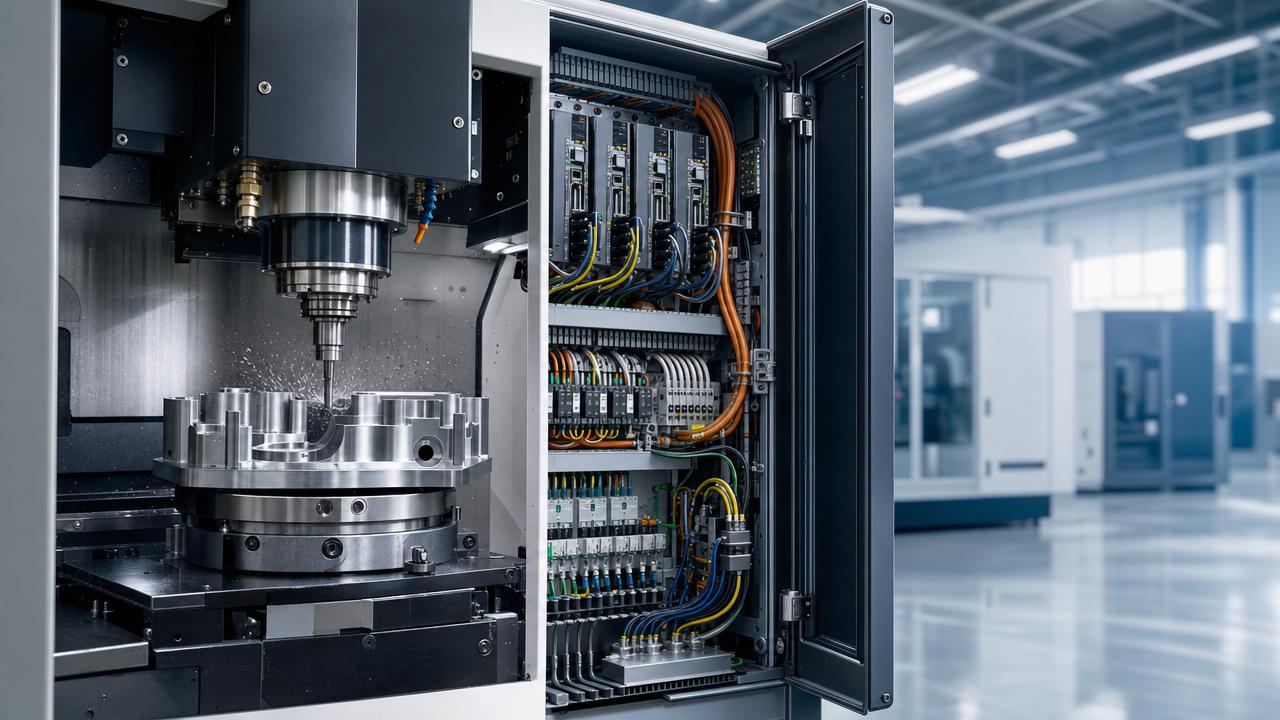
Even the best machine tool can miss tolerance when CNC Control Systems are weakened by hidden control faults. Accuracy loss rarely comes from one dramatic failure. It usually grows from small, compounding issues inside feedback, motion tuning, electrical integrity, thermal behavior, and software logic.
As machining moves toward tighter tolerances, mixed-batch production, and faster cycle expectations, CNC Control Systems face a heavier burden. Stable output now depends on how well the control layer manages speed, position, vibration, and data timing under real factory conditions.
For industrial automation, this shift matters far beyond one machine. It affects surface finish, repeatability, scrap rate, spindle utilization, tool life, and downstream assembly quality. Understanding the five issues below helps reveal where precision is truly being lost.
Why CNC Control Systems are under greater precision pressure
Today’s machining environment is changing quickly. Parts are more complex. Materials are harder. Tolerance windows are narrower. Production also demands shorter setup time and more flexible switching between jobs.
These changes mean CNC Control Systems must coordinate servo loops, mechanical transmission, encoder feedback, and interpolation accuracy with less room for drift. A minor weakness that once seemed manageable can now cause visible dimensional error.
The trend is clear across modern workshops. Precision is no longer defined only by the machine frame or spindle. It is increasingly determined by how intelligently CNC Control Systems handle real-time motion and disturbance control.
Key signals driving this shift
- Higher part complexity increases contouring demands.
- Fast job changeovers expose weak parameter management.
- Advanced materials amplify vibration and thermal effects.
- Digital production requires traceable, repeatable machine behavior.
- Integrated automation raises dependence on synchronized control timing.
Five hidden issues that quietly reduce machining accuracy
Not all control problems trigger alarms. Many stay hidden while slowly damaging precision. The table below summarizes the main issues, their causes, and their observable effects in machining.
1. Poor servo tuning creates unstable motion
Servo performance is the foundation of CNC Control Systems. If gain values are too aggressive, the axis may oscillate. If too conservative, the machine lags behind command position during fast moves.
This problem becomes worse when mechanical inertia changes after tool replacement, fixture changes, or part variation. A parameter set that worked yesterday may no longer protect contour accuracy today.
2. Feedback errors distort the machine’s sense of position
CNC Control Systems rely on clean encoder data. When feedback is contaminated by noise, scaling mismatch, connector wear, or alignment issues, the control cannot judge actual position correctly.
The result may appear as random size variation, axis mismatch, or lost repeatability after warm-up. In many cases, the mechanical structure gets blamed first, while the true problem starts in the signal path.
3. Interpolation limits show up on complex paths
Modern parts often include dense curves, tiny radii, and frequent directional changes. CNC Control Systems that lack sufficient look-ahead or smoothing struggle to maintain commanded feed without creating path deviation.
This issue often appears as visible marks near corners, inconsistent feed sound, or measurable contour error. Surface finish suffers because the control cannot blend motion smoothly at high speed.
4. Thermal drift silently moves dimensions
Heat affects ball screws, spindle assemblies, guideways, and machine structures. If CNC Control Systems use limited thermal models or outdated compensation values, dimensions begin to shift during longer production runs.
This is especially harmful in precision machining because the first parts may pass, while later parts drift outside tolerance. Without trend monitoring, thermal growth can be mistaken for inconsistent operator setup.
5. Electrical noise and timing jitter break consistency
CNC Control Systems operate in harsh electrical environments. Drives, inverters, spindle motors, and nearby switching devices can introduce electromagnetic interference that disturbs communication and control timing.
Even microsecond-level timing instability can affect coordinated axes. When this happens, the machine may show intermittent accuracy faults that are difficult to reproduce, making troubleshooting slow and expensive.
Why these CNC Control Systems issues are becoming more common
The rise in accuracy problems is linked to deeper industry changes. The control layer now carries more responsibility because manufacturing systems are faster, more connected, and less tolerant of hidden variation.
Main driving factors
- Higher spindle speeds expose dynamic instability sooner.
- Multi-axis machining raises synchronization complexity.
- Smaller batch sizes reduce time for manual optimization.
- Edge computing and digital monitoring increase data dependence.
- Global quality expectations leave less room for process drift.
In this context, CNC Control Systems are no longer passive command platforms. They are active precision managers. Their ability to suppress disturbance, interpret signals, and adapt parameters now directly shapes machining competitiveness.
How accuracy losses affect production, quality, and business flow
When CNC Control Systems lose precision, the impact spreads beyond one dimension on one drawing. Rework increases. Tool wear becomes less predictable. Inspection loads rise because confidence in process stability decreases.
Production planning also suffers. Machines that should run unattended require extra checks. Delivery risk grows because output becomes harder to forecast. In high-mix environments, this instability can reduce the value of automation itself.
Typical downstream effects
- Reduced first-pass yield
- More tool marks and poorer surface finish
- Longer setup verification time
- Greater scrap and material loss
- Lower confidence in unmanned or lights-out running
What deserves closer attention inside CNC Control Systems now
Improving accuracy starts with disciplined observation. The goal is not just to react to defects, but to detect control weakness before it becomes visible on the part.
- Track servo lag, overshoot, and following error by axis.
- Review encoder health, cable condition, and shielding quality.
- Compare commanded path against actual contour data.
- Monitor thermal drift by time, spindle load, and ambient change.
- Audit grounding, cabinet layout, and communication stability.
- Validate parameter changes after maintenance or retrofit work.
Practical next steps for stronger CNC Control Systems performance
The most effective strategy combines diagnostics, motion expertise, and mechanical understanding. That is where industrial intelligence platforms such as IAMC add value by connecting servo control, transmission precision, PLC timing, and edge-side analysis into one practical view.
If machining accuracy has become harder to hold, the answer may not be a new machine alone. It may begin with a clearer assessment of CNC Control Systems, their hidden failure points, and the trend signals already visible in daily production data.
Start by reviewing one unstable process, one difficult contour, or one drifting dimension. Measure the control behavior behind it. Better CNC Control Systems decisions often start with that single, disciplined next step.
Related Recommendations
 How to Choose Motion Control for High-Speed Packaging LinesTime : Jun 21, 2026
- Machine Control Systems: Common Failure Points and How to Prevent DowntimeTime : Jun 19, 2026
- Industrial Control Solutions vs PLC Systems: What Matters Most on the FloorTime : Jun 14, 2026
- Advanced Control Systems: Common Integration Risks and FixesTime : Jun 13, 2026
- Industrial Control Algorithms That Improve Stability and Response TimeTime : Jun 10, 2026
- Industrial Control Systems Solutions for Safer Multi-Line IntegrationTime : Jun 07, 2026