
Industrial Motion Control Risks in Harsh Plants
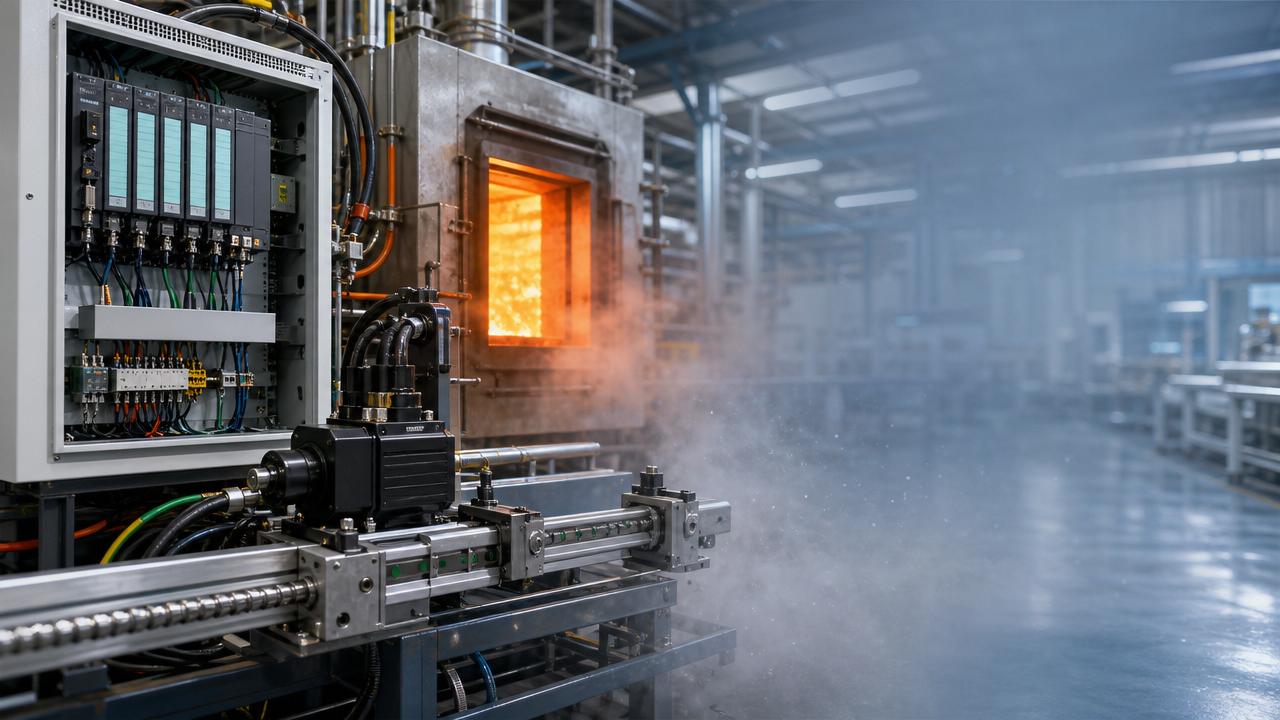
In harsh plants, Industrial Motion Control is not just a performance issue—it is a quality, safety, and uptime risk. Heat, dust, vibration, moisture, electromagnetic interference, and unstable power can turn servo drives, PLCs, reducers, linear guides, and industrial PCs into hidden failure points. For quality control and safety managers, understanding these risks is essential to prevent inaccurate positioning, unexpected stoppages, equipment damage, and worker hazards before they escalate into costly incidents.
Why Industrial Motion Control Fails Differently in Harsh Plants
A clean laboratory motion axis may fail slowly and visibly. A packaging line, steel workshop, chemical area, mining conveyor, or outdoor process skid often fails through combined stress.
Industrial Motion Control depends on electrical precision, mechanical rigidity, feedback accuracy, and deterministic control. When any layer degrades, the whole control loop becomes unstable.
The risk is usually systemic, not isolated
Servo motors, PLC/DCS systems, harmonic or RV reducers, ball screws, linear guides, inverters, and industrial PCs do not operate as separate islands.
A loose grounding point may create encoder noise. Encoder noise may cause positioning drift. Positioning drift may trigger scrap, emergency stops, or unsafe manual intervention.
- Quality teams face dimensional deviation, repeatability loss, unstable inspection results, and rising rework rates.
- Safety managers face unexpected axis movement, stalled actuators, overheated drives, and poor fault visibility.
- Maintenance teams face ambiguous alarms, intermittent faults, and difficult root-cause analysis under production pressure.
For plants moving toward flexible manufacturing, the margin for hidden control risk is smaller. Faster changeovers and higher axis density increase exposure.
Which Harsh Conditions Create the Highest Motion Control Risk?
Industrial Motion Control risk should be assessed by environment, load behavior, control architecture, and maintenance access. The same servo axis may be safe in one plant and fragile in another.
The table below helps quality and safety teams translate site conditions into practical inspection points before procurement or retrofit approval.
The most dangerous cases combine two or more conditions. Dust plus humidity, for example, can create conductive contamination inside cabinets and accelerate failures.
Component-Level Risks: From Servo Pulse to Mechanical Output
Industrial Motion Control reliability depends on the full chain. IAMC views this chain as the muscles, nerve centers, core joints, rails, and edge computing layer of Industry 4.0.
Servo motors and drives: accuracy can degrade before failure
A servo motor may still rotate while losing precision. Thermal expansion, encoder contamination, poor shielding, or incorrect tuning can create small but costly errors.
For quality control teams, the key question is not only whether the axis moves. It is whether it moves repeatably under the worst shift conditions.
PLC/DCS and industrial networks: logic must remain deterministic
A PLC or DCS cabinet in a noisy plant must execute logic with stable scan cycles. EMI, grounding defects, and network congestion weaken deterministic behavior.
Safety managers should pay attention to late interlocks, delayed emergency signals, and inconsistent alarm timestamps. These issues often appear before a major event.
Reducers, guides, and ball screws: mechanical wear changes control behavior
Precision reducers and linear transmission parts convert control commands into physical motion. Backlash, lost preload, lubrication failure, or rail contamination changes the control loop.
When mechanical resistance rises, servo current rises. If teams only reset alarms, they may miss the underlying failure path.
Industrial PCs and edge devices: data visibility can become the weak point
Industrial PCs process sensor data, machine vision results, recipes, and motion diagnostics. Vibration, dust, heat, and poor storage protection can corrupt insight.
If the edge system is unstable, the plant may lose the evidence needed for traceability, defect analysis, and safety investigation.
How to Evaluate Industrial Motion Control Before Procurement
Procurement pressure often focuses on price, delivery, and compatibility. In harsh plants, selection must also include environmental resilience and diagnostic depth.
The following evaluation table supports cross-functional discussion among quality, safety, maintenance, engineering, and purchasing teams.
A strong specification is not a long list of premium features. It is a risk-based match between site exposure, required precision, safety impact, and lifecycle cost.
Comparison: Standard Components or Hardened Motion Control Architecture?
Many plants ask whether hardened Industrial Motion Control components are worth the cost. The answer depends on stoppage cost, defect cost, safety severity, and replacement access.
This comparison is useful when budget is limited but risk exposure is high.
In many cases, the best answer is hybrid. Standard components may be acceptable for auxiliary axes, while critical axes need hardened feedback, better sealing, and deeper diagnostics.
Safety and Quality Checks That Should Not Be Skipped
Industrial Motion Control failures rarely announce themselves clearly. A practical checklist helps teams identify small deviations before they become major incidents.
Pre-installation checks
- Map heat, dust, washdown, vibration, and electrical noise zones before selecting motors, drives, cabinets, and cable routes.
- Confirm that the selected components match the required duty cycle, peak torque, braking frequency, and safety stopping distance.
- Review grounding, shielding, bonding, and separation of power, feedback, and communication cables before commissioning begins.
Commissioning checks
- Record baseline torque, following error, temperature, vibration, and cycle time under normal and high-load conditions.
- Validate emergency stops, safe torque off functions, interlocks, and recovery procedures with realistic machine states.
- Test repeatability after thermal stabilization, not only during a short and clean acceptance run.
In-service checks
Once production starts, trend data is more valuable than isolated alarms. Rising current, longer settling time, or recurring minor faults indicate control degradation.
Quality teams should correlate defect patterns with machine data. Safety teams should correlate near-miss reports with axis alarms and manual reset events.
Standards and Compliance Considerations for Risk-Based Decisions
Compliance does not remove risk, but it gives teams a shared language. Industrial Motion Control projects commonly reference machine safety, EMC, functional safety, and enclosure protection principles.
Useful reference areas
- IEC 60204-1 for electrical equipment of machines, including wiring, protection, and control circuit considerations.
- IEC 61800 series for adjustable speed electrical power drive systems and related EMC or safety requirements.
- ISO 13849 or IEC 62061 when safety-related control functions must be evaluated and validated.
- IEC 60529 when enclosure protection against dust and water ingress must be discussed with suppliers.
For procurement, the practical requirement is evidence. Ask suppliers for environmental ratings, wiring guidance, safety manuals, EMC installation notes, and diagnostic capabilities.
Common Misconceptions About Industrial Motion Control in Harsh Plants
Misjudgment often comes from treating harsh environments as simple packaging problems. In reality, environmental stress changes electrical behavior, mechanical friction, and control stability.
Misconception 1: A higher power rating solves most problems
Oversizing may reduce load stress, but it does not fix encoder noise, poor lubrication, cabinet heat, backlash, or unstable network timing.
Misconception 2: If the axis passes factory acceptance, it is safe for the plant
Factory acceptance often lacks real dust, heat, vibration, and electromagnetic exposure. Site acceptance must include worst-case operating conditions.
Misconception 3: Motion alarms are only maintenance issues
Motion alarms can indicate quality drift or unsafe behavior. They should be reviewed by quality, safety, and engineering teams together.
FAQ: Practical Questions from Quality and Safety Teams
How do we know whether a motion axis is becoming unsafe?
Watch for increasing following error, rising torque, repeated homing failures, delayed stops, inconsistent alarms, and operator reports of unusual sound or motion.
One indicator may be tolerable. A pattern across shifts, temperatures, or specific production recipes deserves immediate investigation.
What should procurement prioritize when budget is tight?
Prioritize critical axes first. Focus on environmental rating, feedback reliability, EMC installation quality, spare availability, and diagnostic visibility.
A cheaper component can become expensive if it increases scrap, creates emergency downtime, or forces unsafe manual recovery.
Can software tuning compensate for harsh mechanical conditions?
Tuning can reduce resonance and improve response, but it cannot fully compensate for worn guides, contaminated screws, loose couplings, or failing reducers.
IAMC often recommends reviewing mechanical condition and servo data together, especially where notch filters or vibration suppression are repeatedly adjusted.
How often should harsh-environment motion systems be reviewed?
Review frequency depends on risk. Safety-critical or high-value axes may need monthly trend review, while lower-risk axes may follow quarterly inspection.
After any major process change, cleaning method change, load increase, or cabinet relocation, reassess Industrial Motion Control exposure.
Why Choose IAMC for Motion Control Risk Intelligence?
IAMC connects servo control, PLC/DCS logic, precision transmission, linear motion, inverters, and industrial edge computing into one decision framework.
Our Strategic Intelligence Center focuses on microsecond control behavior, mechanical tolerance, resonance suppression, reducer fatigue, SoftPLC jitter, and supply-chain signals.
For quality control and safety managers, this means clearer risk interpretation before equipment selection, retrofit planning, supplier discussion, or incident review.
Consult IAMC when you need specific answers
- Parameter confirmation for servo drives, PLC/DCS scan requirements, reducers, ball screws, linear guides, inverters, or IPCs.
- Product selection support for dusty, hot, humid, high-vibration, high-EMI, or safety-sensitive plant environments.
- Procurement comparison involving lifecycle cost, diagnostic needs, certification references, delivery risk, and spare part strategy.
- Custom intelligence for motion control architecture, harsh-plant retrofits, supplier evaluation, and quality-risk reduction plans.
- Discussion of sample support, quotation communication, implementation priorities, and compliance documentation expectations.
Industrial Motion Control in harsh plants should be judged by safety margin, quality stability, maintainability, and evidence—not only by catalog specifications.
If your plant is facing repeated motion alarms, unclear supplier claims, difficult procurement choices, or rising defect risk, IAMC can help structure the technical conversation.
Related Recommendations
 How to Size High Torque Servo Systems for Heavy-Duty MotionTime : Jul 18, 2026
- Automation Control Systems Price: Cost Drivers and Budget BenchmarksTime : Jul 17, 2026
- Japan Robot Joint Reducers Market: 2026 Supply, Pricing, and Share ShiftsTime : Jul 16, 2026
- When Low Noise Precision Gearboxes Solve Vibration Problems Better Than Standard UnitsTime : Jul 15, 2026
- Industrial Servo Motors Cost Breakdown: What Drives Price in 2026Time : Jul 15, 2026
- DCS Systems IEC 61850: What to Check Before a Power Plant UpgradeTime : Jul 15, 2026
- Motion Control
- Servo Control
- DCS Systems
- Industrial Edge Computing
- Precision Reducers
- RV Reducers
- Linear Guides
- Ball Screws
- Industrial PCs
- Industry 4.0
- Flexible Manufacturing
- Precision Transmission
- Machine Vision
- Servo Drives
- Industrial Motion Control Components
- Motion Control Components
- Industrial Motion Control