Micron-Tolerance Components: What Really Affects CNC Accuracy

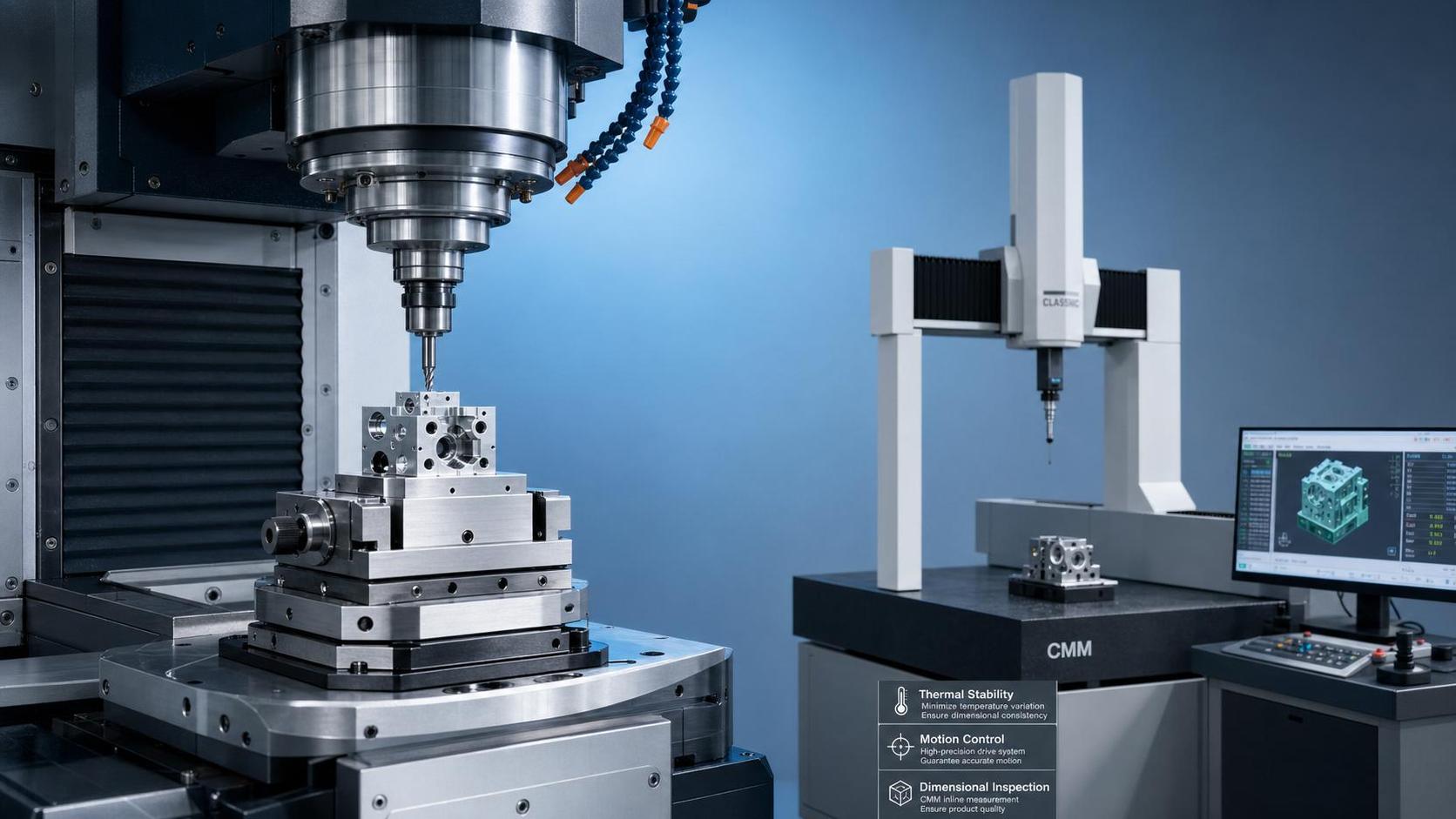
Micron-Tolerance Components: What Really Affects CNC Accuracy
When CNC parts are specified in microns, accuracy depends on far more than machine branding alone.
True precision engineering components micron tolerance results come from a tightly linked production system.
That system includes spindle behavior, thermal drift, servo tuning, guideway condition, tooling, workholding, programming, and inspection discipline.
A shop may own an advanced machine and still miss tolerance if one of these variables is unstable.
This is why technical accuracy reviews should focus on process capability, not brochure claims.
In practical evaluation, the question is simple: can the process repeatedly hold micron-level geometry under real production conditions?
Why Micron Accuracy Is a System Outcome
Micron tolerance is rarely the result of one exceptional component.
It is the accumulated outcome of many small errors, managed before they add up.
In precision engineering components micron tolerance applications, even tiny variation can shift a final dimension out of range.
A few microns of spindle growth, a slight fixture distortion, or servo lag during direction change can all matter.
More importantly, these effects interact.
Thermal expansion changes machine geometry, which changes cutting load, which then changes vibration and surface quality.
The Main Error Sources Usually Stack Together
- Geometric machine error from alignment, squareness, and backlash
- Thermal error from spindle heat, motors, coolant, and room change
- Dynamic error from acceleration, resonance, chatter, and cutting forces
- Material response from stress release, hardness variation, and deformation
- Measurement error from probing, gaging, temperature mismatch, and operator method
That is the baseline for any serious CNC accuracy assessment.
Machine Structure and Motion Control
The machine frame sets the mechanical foundation for precision engineering components micron tolerance performance.
If stiffness is weak, the structure bends under cutting load and the axis path no longer matches the programmed path.
Linear guides, ball screws, spindle bearings, and casting design all influence this behavior.
Motion control is just as critical.
Servo motors, encoders, feedback resolution, and control loop tuning determine how faithfully the axis follows command motion.
Poorly tuned servos can create overshoot, settling delay, contour error, and inconsistent reversal behavior.
What to Check in Motion Accuracy Reviews
- Axis repeatability under bidirectional movement
- Interpolation accuracy during circular and complex contour paths
- Encoder resolution and actual feedback loop stability
- Backlash compensation strategy and long-term wear behavior
- Spindle runout at operating speed, not only at idle inspection
Recent industry changes make this more important as higher feed rates increase dynamic error sensitivity.
Thermal Stability Often Decides the Result
Thermal control is one of the least visible but most decisive factors in CNC accuracy.
A machine can be geometrically correct at startup and drift away after warm-up.
That drift affects hole position, flatness, profile, and center distance.
In precision engineering components micron tolerance machining, thermal growth is not a minor correction issue.
It is often the dominant error source over a full production shift.
Spindle bearings generate heat.
Servo drives and ball screws generate heat.
Coolant temperature changes part temperature too, which affects measurement after machining.
This also means room control matters more than many buyers expect.
Practical Thermal Control Questions
- Is there a defined warm-up routine before qualification parts are cut?
- Are spindle and axis temperatures monitored over time?
- Is thermal compensation active, validated, and regularly recalibrated?
- Are measurement and machining performed at compatible temperatures?
- Does the plant control seasonal and day-night variation effectively?
Without clear answers, quoted micron tolerance capability should be treated carefully.
Tooling, Fixturing, and Cutting Dynamics
Even a stable machine cannot deliver precision engineering components micron tolerance results with weak tooling strategy.
Tool overhang, holder balance, insert wear, and runout directly affect the cutting edge position.
As tools wear, cutting force rises and heat increases.
That changes part size before visible tool failure appears.
Fixturing creates another common risk.
Excessive clamp force can distort thin walls or precision faces.
Too little clamp force allows micro-movement during finishing passes.
Both situations damage repeatability.
Cutting Dynamics That Commonly Shift Size
In actual production, these factors usually explain why trial samples pass but batch consistency falls off.
Material Behavior and Process Planning
Material condition strongly affects precision engineering components micron tolerance outcomes.
Residual stress inside the blank may release during roughing or finishing.
That can bend a part after it leaves the fixture.
Heat treatment variation can also change machinability and final stability.
Process planning needs to account for this early.
A balanced sequence often works better than an aggressive one-pass strategy.
Roughing, stress relief, semi-finishing, rest time, and final finishing may all be necessary.
Planning Signals That Support Stable Accuracy
- Documented stock allowance for each stage
- Controlled rest cycles for stress-sensitive materials
- Separate roughing and finishing tools
- Defined datum transfer strategy between operations
- Material certification linked to machining route
These details may sound ordinary, but they usually separate stable suppliers from risky ones.
Inspection, Standards, and Real Capability Proof
Inspection cannot rescue a weak process, but it can reveal whether claimed capability is credible.
For precision engineering components micron tolerance programs, metrology discipline should match machining ambition.
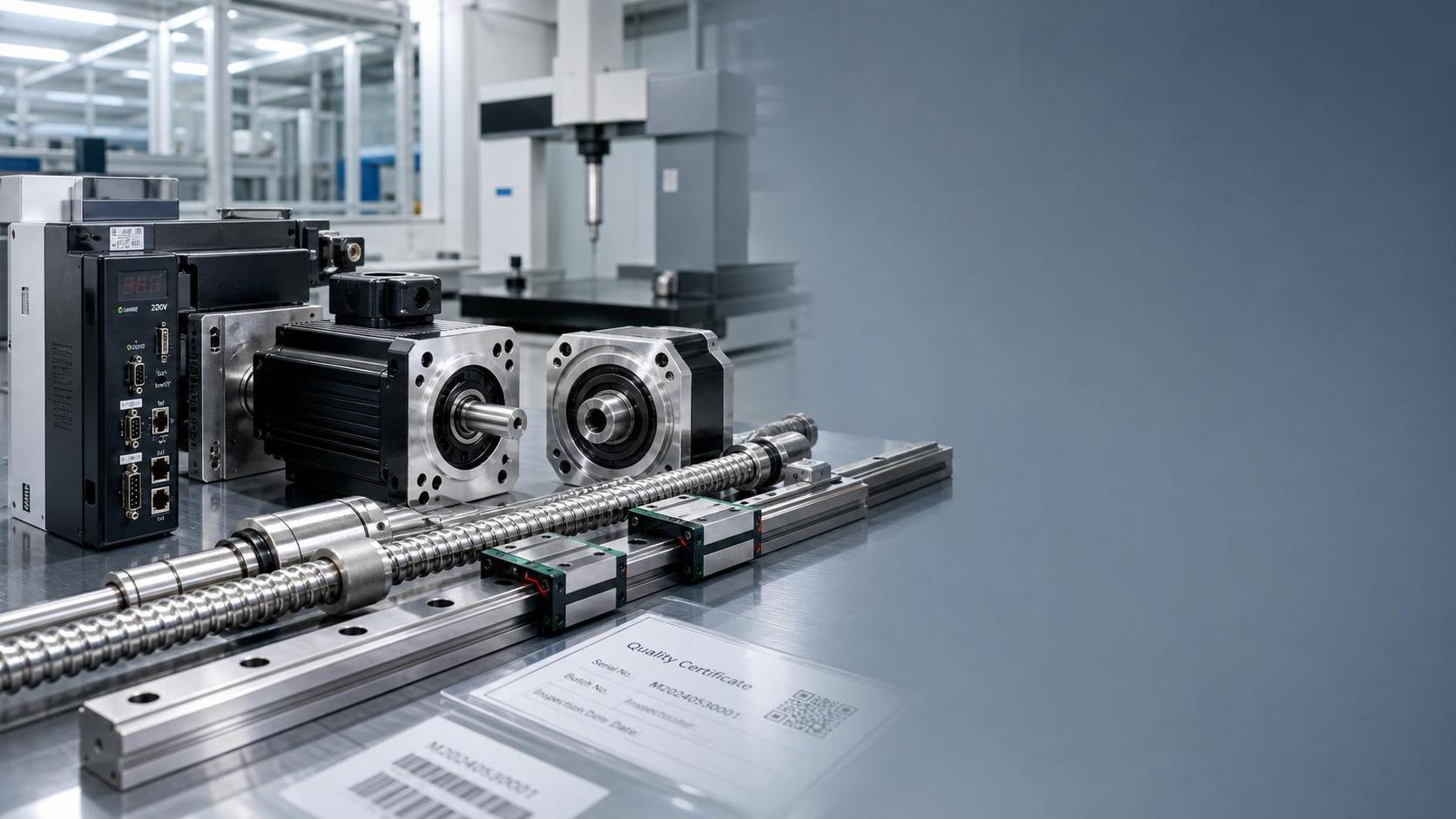
That includes CMM calibration, probe strategy, gage R&R, temperature control, and traceable records.
The stronger signal is not one perfect sample.
The stronger signal is statistical consistency across time, operators, and machine states.
Evidence Worth Requesting
- Capability data such as Cp or Cpk on the critical dimensions
- First article and in-process inspection reports
- Machine calibration records and compensation history
- Tool change criteria and offset adjustment rules
- Environmental monitoring and measurement traceability
Relevant standards may vary by sector, but the logic stays the same.
Good documentation should prove repeatable control, not just final inspection success.
A Practical Evaluation Framework
A useful CNC review starts by asking how the supplier controls the full chain of accuracy.
Machine model matters, but process control matters more.
For precision engineering components micron tolerance sourcing, the best decisions usually come from five checks.
- Verify structural and servo capability under real cutting conditions
- Confirm thermal management across startup, steady production, and ambient change
- Review tooling, workholding, and wear control in detail
- Check material stability and process routing for distortion risk
- Request statistical evidence, not isolated demonstration parts
That approach gives a much clearer view of technical risk, production consistency, and long-term supplier reliability.
In the end, CNC accuracy at the micron level is never accidental.
It is engineered through motion control, thermal discipline, mechanical stiffness, process planning, and measurement rigor.
Any evaluation model that treats precision engineering components micron tolerance as a machine label misses the real source of performance.
Related Recommendations
 Micron-Tolerance Components: What Really Affects CNC AccuracyTime : Jul 03, 2026
- How ISO-Certified CNC Motion Components Reduce Supply RiskTime : Jul 03, 2026
- When Motion Control Solutions Fail: Common Integration Gaps to FixTime : Jul 02, 2026
- Manufacturing Automation ROI: Where Operating Costs Drop FirstTime : Jul 01, 2026
- Industrial Equipment Solutions Provider: What to Check Before You CommitTime : Jul 01, 2026
- Industrial Control Electronics Catalog: How to Compare Product Lines and SpecsTime : Jun 30, 2026