Precision Transmission Failures: 7 Causes Behind Lost Position Accuracy

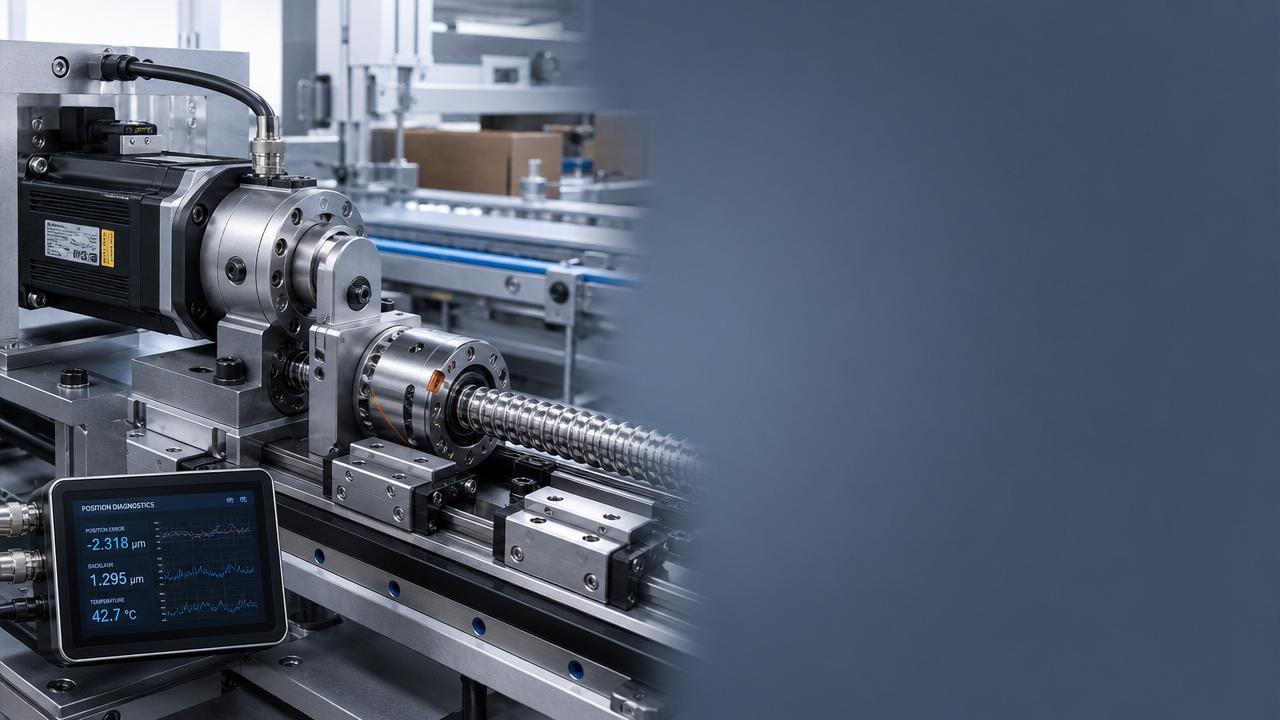
When lost position accuracy starts as a small drift
Precision Transmission problems rarely begin with a dramatic failure. More often, a machine starts missing its taught point by a fraction, then repeats the error under load.
In packaging, CNC, robotics, battery assembly, and automated handling, that small drift quickly becomes scrap, collision risk, or unstable cycle times.
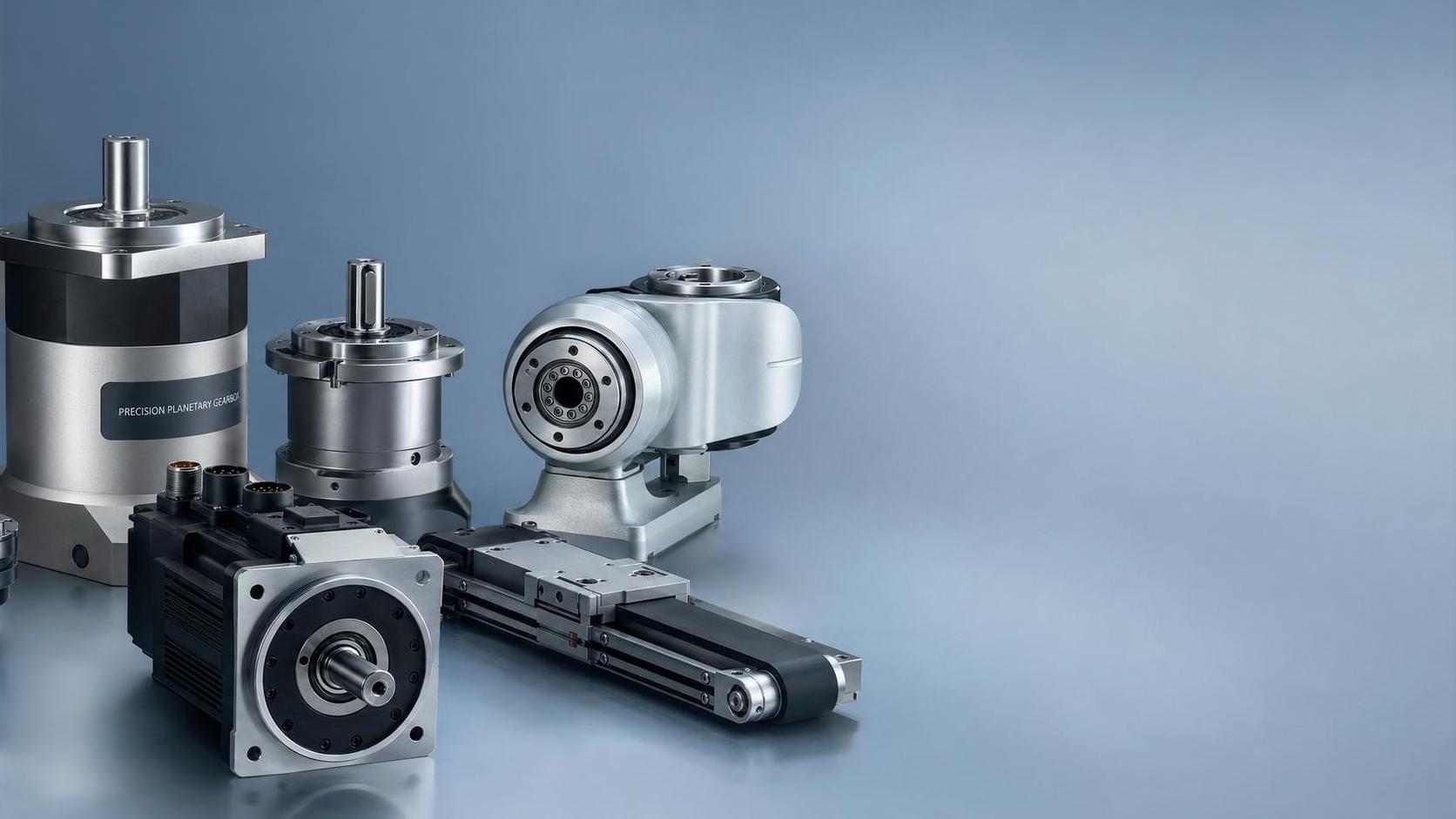
This matters because position accuracy is never created by one part alone. It comes from the combined behavior of servo motors, reducers, ball screws, guides, PLC timing, and installation quality.
That system view is exactly how IAMC looks at industrial motion control. Microsecond electrical response and micron-level mechanical repeatability have to stay aligned in the field, not just on paper.
When Precision Transmission accuracy is lost, the useful question is not only what failed, but under which operating condition the error became visible.
Different operating scenes expose different weak points
The same transmission architecture can behave very differently across applications. A pick-and-place robot highlights backlash during rapid reversals. A CNC axis reveals thermal growth during long cuts.
In conveyor indexing, timing mismatch between drive and control often appears before mechanical wear becomes obvious. In clean assembly lines, tiny encoder or coupling issues may show up faster than lubrication failure.
So diagnosis works better when it starts with scene-based questions. Is the error directional, load-dependent, speed-dependent, temperature-related, or intermittent after restart?
Those distinctions narrow the root cause much faster than replacing parts one by one.
Where Precision Transmission accuracy is usually lost first
1. Backlash grows after repeated reversal duty
This is common in robotic joints, indexing tables, and reciprocating axes. The machine still runs, but return-to-zero consistency gets worse.
Harmonic and RV reducers, couplings, and screw-nut interfaces are typical suspects. In high-cycle applications, backlash may rise gradually long before operators hear abnormal noise.
2. Mechanical wear changes the real transmission ratio
Wear does not always look dramatic. Ball screw preload loss, guide clearance growth, and bearing fatigue can shift actual motion away from commanded motion.
This is more visible in equipment that carries variable loads or runs long shifts. Position drift often becomes worse near the end of travel or under peak acceleration.
3. Servo matching is acceptable at no-load, unstable in production
A common field mistake is assuming a motor and reducer are compatible because jog motion looks smooth. Real instability appears only with process load, faster ramps, or quick direction changes.
If inertia ratio, gain setting, encoder resolution, or notch filtering are poorly matched, Precision Transmission accuracy will degrade through overshoot, hunting, or missed settling windows.
4. Installation errors create hidden geometric deviation
Misalignment between motor shaft and reducer, uneven base flatness, or poor guide parallelism can introduce side load and elastic deformation.
This tends to appear after maintenance, relocation, or rushed replacement work. The transmission part may be healthy, but the assembly condition forces it out of precision.
5. Thermal expansion shifts the reference during long cycles
In machining, printing, laser processing, and battery lines, heat buildup changes the mechanical length chain. A cold machine can pass inspection, then drift during continuous operation.
Ball screws, frames, reducers, and motor housings all contribute. Precision Transmission errors caused by heat usually follow time and workload patterns rather than random events.
6. Feedback errors distort what the controller believes
Encoders, cables, grounding, and connector stability matter as much as the mechanical path. If feedback pulses are lost or noisy, the control system may command correction in the wrong direction.
This issue is more common in high-EMI environments, mobile gantries, and lines with repeated cable flexing. It often looks mechanical at first, but the real fault sits in signal integrity.
7. Control timing and load interaction break repeatability
Some position errors come from the coordination layer. PLC scan timing, motion bus jitter, inverter response, and asynchronous device triggers can shift the effective move endpoint.
IAMC often emphasizes this crossover zone between mechanics and control. A Precision Transmission system can appear mechanically precise while system timing still causes repeatability loss.
In actual maintenance, the judgment focus is not the same
A useful shortcut is to classify the symptom before selecting tools or spare parts. The table below helps separate common field patterns.
This kind of sorting prevents a common waste of time: tuning the servo when the reducer is worn, or replacing the reducer when the encoder cable is unstable.
Some applications need tighter judgments than others
Not every industry penalizes the same error source equally. A robot transfer axis may tolerate minor thermal drift but not reversal backlash.
A grinding machine usually demands the opposite. Long-duration thermal stability and guide condition matter more than brief dynamic oscillation.
In semiconductor, electronics, and battery assembly, Precision Transmission diagnosis often has to include environmental cleanliness, cable management, and fine settling behavior.
In heavy automation, shock load history, lubrication contamination, and structural rigidity may dominate the decision. Treating these as identical scenes leads to repeated faults.
- High-speed indexing: prioritize backlash, settling time, and bus timing.
- Long-stroke axes: prioritize thermal drift, alignment, and screw wear.
- Heavy-load handling: prioritize bearing stress, shock load, and reducer fatigue.
- Fine assembly: prioritize encoder quality, vibration isolation, and repeatability windows.
Where field teams often misread Precision Transmission failures
One frequent misjudgment is trusting catalog precision without checking site conditions. Rated backlash, encoder resolution, or nominal repeatability do not guarantee machine-level accuracy.
Another is evaluating only the failed component. Precision Transmission is a chain. A perfect reducer cannot correct poor frame stiffness or unstable PLC motion timing.
It is also easy to ignore time-based change. Lubrication breakdown, flexspline fatigue, cable fatigue, and preload decay usually appear after thousands of cycles, not during commissioning.
Cost misreading is common as well. The cheapest replacement may restore movement, yet still leave long troubleshooting hours, repeated shutdowns, and unresolved accuracy complaints.
Practical steps that restore stable accuracy faster
A better response starts with evidence collection under real operating conditions. Measure cold and hot behavior, loaded and unloaded behavior, and both travel directions.
Then review the whole motion chain rather than one part number. On many lines, the root cause sits between servo tuning, reducer condition, and installation geometry.
- Trend backlash, repeatability, and temperature together.
- Verify alignment after every reducer, motor, or screw replacement.
- Compare commanded position with independent measurement, not feedback alone.
- Check servo gain and filter settings under production load.
- Inspect cable movement, shielding, and grounding in high-noise zones.
- Set maintenance intervals by cycle count and load history, not calendar only.
When the fault remains unclear, map it against application type first. That usually reveals whether the main risk is mechanical wear, thermal behavior, feedback integrity, or control coordination.
A useful next step is to standardize the scene before the fix
Precision Transmission failures become easier to solve when every event is described with the same field logic: load, speed, direction change, temperature, run time, and controller status.
That approach fits the broader IAMC view of Industry 4.0 motion systems. Precision is not only a component property. It is the result of coordinated mechanics, control, and operating context.
Before the next repair decision, sort the actual application scene, compare the conditions that trigger the error, and confirm which accuracy limit is being exceeded.
Once that baseline is clear, maintenance actions become more targeted, replacement choices become more defensible, and lost position accuracy stops returning as the same unresolved problem.
Related Recommendations
 Industrial Automation Applications in Food Processing: Key Use Cases and ROI FactorsTime : Jul 21, 2026
- Industrial Component Selection Checklist: Key Specs, Risks, and Cost FactorsTime : Jul 20, 2026
- How to Evaluate High Precision Manufacturing for Medical DevicesTime : Jul 19, 2026
- Automation Control Systems Price: Cost Drivers and Budget BenchmarksTime : Jul 17, 2026
- Reducer Selection Guide: How to Balance Torque, Cost, and LifespanTime : Jul 11, 2026
- How to Evaluate an Industrial Automation Parts Supplier for Lead Time and RiskTime : Jul 10, 2026