2026 Automation Technology Trends That Cut Downtime

Automation Technology Trends in 2026 are reshaping how project managers reduce downtime, improve asset reliability, and keep production targets on track. From smarter servo systems and PLC control to edge computing and predictive maintenance, the latest advances are helping industrial teams turn data into faster decisions and more resilient operations.
For project managers and engineering leads, the issue is no longer whether to automate, but which automation upgrades can reduce stoppages within 3 to 12 months, protect asset life, and support flexible manufacturing without creating integration risk.
In industrial environments shaped by servo motion, PLC/DCS control, precision transmission, inverters, and industrial edge computing, unplanned downtime often comes from a chain of small failures: encoder drift, backlash growth, scan-cycle delays, thermal stress, unstable power quality, or delayed maintenance response.
That is why the most important Automation Technology Trends in 2026 are not isolated product stories. They are coordinated system strategies that link control precision, mechanical reliability, data visibility, and maintenance execution across the full production line.
Why Downtime Reduction Is Driving 2026 Automation Investment
Across mixed manufacturing sectors, a 10-minute stop can trigger 30 to 90 minutes of schedule recovery work. For project teams managing multi-station lines, downtime now affects throughput, labor utilization, spare parts planning, and on-time delivery at the same time.
The strongest Automation Technology Trends therefore focus on shortening failure detection from hours to seconds, reducing repeat faults by improving motion stability, and cutting changeover disruption from one shift to a controlled 15 to 30 minute window.
The 4 main downtime sources project managers should track
- Control instability in PLC, DCS, or SoftPLC layers, especially under high I/O load or network latency.
- Mechanical wear in reducers, guides, ball screws, and couplings that slowly increases vibration and positioning error.
- Servo tuning issues, including resonance, overshoot, and heat buildup during high-cycle operation.
- Low visibility at the edge, where data exists but is not turned into actionable maintenance or process alarms.
For IAMC-focused sectors, these causes are closely tied to the five core pillars of equipment performance. If one pillar underperforms, the entire line can lose micron-level precision, millisecond timing discipline, or torque continuity during critical production stages.
What changes in 2026
In 2026, downtime reduction is becoming more cross-disciplinary. Electrical control teams, motion specialists, and mechanical transmission engineers are increasingly expected to work from the same diagnostic view, not separate maintenance logs or isolated subsystem alarms.
This shift matters because many failures emerge gradually over 4 to 16 weeks. A servo may compensate for growing reducer backlash, or a PLC scan time increase may remain invisible until line speed rises by 12% to 18% during peak demand.
The Most Important Automation Technology Trends That Cut Downtime
Not every new platform delivers practical value for project execution. The most useful Automation Technology Trends are the ones that improve reliability at the level of cycle time, fault response, mechanical life, and maintenance predictability.
1. Smarter servo systems with faster feedback and better resonance control
Modern servo systems are doing more than following motion commands. With high-resolution encoders, faster current loops, and improved notch filtering, they help suppress resonance before it develops into repeated alarms, bearing wear, or unstable positioning.
For equipment running at 24/7 duty or above 60 cycles per minute, improved servo tuning can reduce micro-stoppages, lower peak vibration, and extend component inspection intervals from weekly checks to biweekly or monthly routines, depending on load profile.
Why it matters for project delivery
When motion tuning is unstable, commissioning often overruns by 2 to 5 days. Better servo analytics reduce trial-and-error during startup and help teams document acceptable torque ripple, settling time, and thermal thresholds before production handover.
2. PLC and DCS modernization for deterministic control under load
Another of the leading Automation Technology Trends is tighter timing control in PLC/DCS architectures. As production lines add more sensors, vision tasks, and synchronized axes, scan cycle consistency becomes a direct uptime variable rather than a background technical metric.
In practical terms, project managers should monitor whether the controller can maintain stable performance during 70% to 85% I/O utilization, network traffic spikes, and recipe changes without adding command delay that affects downstream stations.
The table below compares four automation upgrades commonly evaluated when downtime reduction is the primary objective.
The key conclusion is that downtime is rarely solved by one device alone. The strongest results usually come from one control-layer upgrade plus one mechanical or monitoring-layer improvement, implemented in a phased plan over 6 to 20 weeks.
3. Edge computing that moves diagnostics closer to the machine
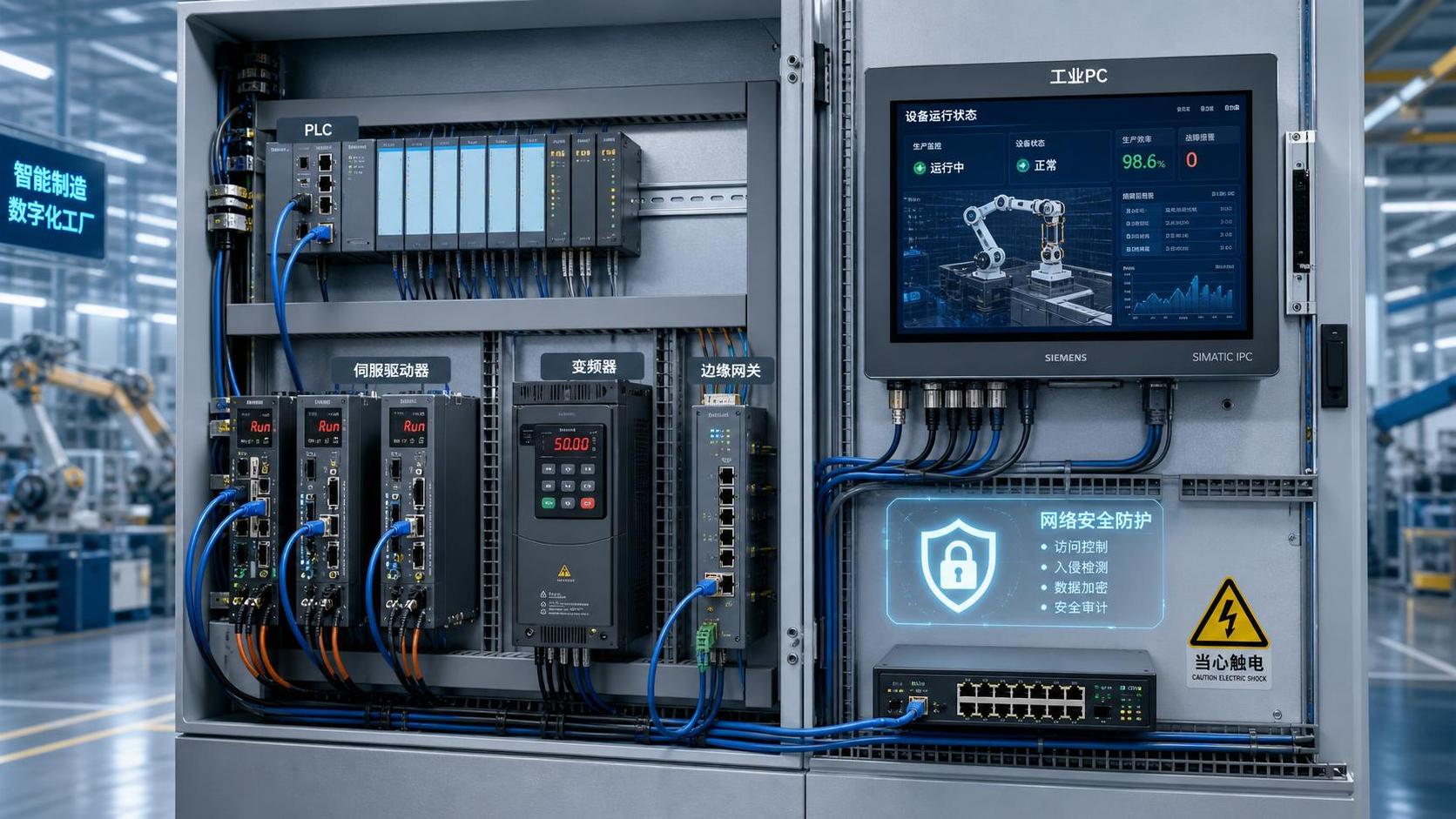
Industrial PCs and edge nodes are becoming central to Automation Technology Trends because they process vibration, current, temperature, and event logs locally. That reduces analysis delay and helps maintenance teams respond before a warning becomes a full line stop.
For example, if an IPC identifies a repeat temperature rise of 8°C to 12°C above baseline during the same production recipe, engineers can investigate lubrication, load imbalance, or ventilation before the next scheduled run.
4. Predictive maintenance linked to real operating conditions
Predictive maintenance is maturing beyond simple calendar replacement. In 2026, stronger models combine run hours, acceleration patterns, torque demand, and fault history so that service windows are triggered by actual stress rather than fixed dates.
This is especially useful for harmonic reducers, ball screws, and servo-driven axes where fatigue behavior depends heavily on cycle count and load variation. A machine running 18 hours per day at variable torque does not age like a machine running one stable shift.
How Project Managers Should Evaluate Automation Upgrades
The fastest way to lose ROI is to buy advanced automation without defining the downtime problem in measurable terms. Project managers should build a decision model that starts with production loss patterns, not supplier brochures or isolated component specifications.
Use these 5 evaluation criteria
- Failure frequency: count stops per shift, per week, and per asset family.
- Recovery time: measure whether restart takes 3 minutes, 20 minutes, or one full hour.
- Precision sensitivity: define acceptable error bands such as ±0.01 mm, ±0.05 mm, or ±0.1 mm.
- Integration complexity: estimate software, wiring, mechanical adaptation, and validation effort.
- Support readiness: confirm spare parts, tuning support, and data access for at least 12 months ahead.
These five criteria make Automation Technology Trends easier to compare in real project terms. A solution with slightly higher capital cost may still be the better choice if it cuts recovery time by 40% and lowers repeat service visits over two production quarters.
What to ask before approving a retrofit
Before approving a servo, PLC, IPC, or transmission upgrade, ask whether the existing bottleneck is electrical, mechanical, data-related, or procedural. Many lines suffer from mixed-cause faults, so the approval process should involve maintenance, controls, and operations leaders together.
A practical pre-approval review should cover 6 checkpoints: baseline cycle time, alarm history, vibration trend, spare part lead time, installation window, and acceptance test method. Without these, even strong technology can underdeliver after installation.
The following table gives project managers a useful screening framework for selecting among common automation investments.
The main takeaway is that technical fit and implementation fit must be reviewed together. A high-spec component is only valuable if the plant can install it, tune it, and support it under actual operating pressure.
Implementation Priorities for Servo, PLC, Transmission, and Edge Systems
Once project teams identify the right Automation Technology Trends, the next challenge is sequencing. Downtime reduction projects work best when they move in staged layers instead of attempting a full line overhaul in a single shutdown period.
Phase 1: Stabilize the failure point
Start with the asset or station responsible for the highest downtime minutes per week. In many plants, fixing one unstable servo axis, one overloaded PLC routine, or one worn transmission assembly can recover more production than broad but shallow upgrades.
Phase 2: Build local visibility
Add edge monitoring around current, vibration, temperature, and event timing. Even 4 to 6 key signals per critical asset can reveal repeat patterns that were hidden in manual logs or operator memory.
Phase 3: Standardize alarm and maintenance response
Data only cuts downtime when it triggers action. Define response thresholds, assign owners, and set service steps such as inspection within 2 hours, intervention within 24 hours, and root-cause review after the second repeat event.
A common mistake to avoid
One frequent mistake is upgrading the controller while ignoring the mechanical chain. A faster PLC cannot fully offset backlash growth, rail contamination, or ball screw wear. Likewise, a new reducer cannot solve poorly structured logic or unstable command timing.
Common Questions About 2026 Automation Technology Trends
Which trend usually delivers the fastest downtime impact?
In many cases, the fastest gains come from combining servo optimization with condition monitoring on the most failure-prone axis or station. This can often produce measurable improvements within 30 to 60 days if baseline data is available.
How much data is needed before launching predictive maintenance?
A practical starting point is 8 to 12 weeks of consistent machine data, plus maintenance records and alarm history. More time is better, but many useful thresholds can be set earlier when engineering teams understand the machine duty cycle.
Should project managers prioritize edge computing or controller upgrades first?
If the line suffers from poor visibility and unclear fault causes, edge computing may come first. If the root cause is already known and tied to scan timing, motion control, or logic performance, controller modernization may deliver faster ROI.
What role does precision transmission play in downtime reduction?
A major one. RV reducers, harmonic drives, linear guides, and ball screws directly affect repeatability, vibration, and mechanical stability. When wear crosses tolerance, downtime often rises gradually through quality loss, alarm frequency, and longer restart tuning.
The most valuable Automation Technology Trends in 2026 are the ones that connect control intelligence, precision motion, mechanical transmission health, and edge-level diagnostics into one uptime strategy. For project managers, the goal is not just digital modernization, but fewer stops, faster recovery, and more predictable delivery performance.
IAMC’s focus on servo control, PLC/DCS systems, precision reducers, linear motion components, inverters, and industrial PCs aligns directly with the assets that decide whether production lines stay stable under real industrial stress. If you are planning a retrofit, line expansion, or reliability program, now is the right time to assess where downtime actually starts and which upgrade path fits your operating conditions.
To explore tailored recommendations for motion control, industrial edge monitoring, or precision transmission strategy, contact us today, request a customized solution, or learn more about the automation options best suited to your project goals.
Related Recommendations
 Japan Robot Joint Reducers Market: 2026 Supply, Pricing, and Share ShiftsTime : Jul 16, 2026
- Factory Automation Technology Trends in 2026: What Will Change FirstTime : Jul 14, 2026
- Automation Technology Trends: Cybersecurity Risks Now Shaping UpgradesTime : Jul 13, 2026
- Factory Automation Technology Trends Shaping 2026 Upgrade PlansTime : Jul 02, 2026
- 2026 Industrial Motion Systems Trends Shaping Throughput and Energy UseTime : Jun 27, 2026
- Industrial Cyber Physical Systems: What Changes on the Factory FloorTime : Jun 26, 2026