

As project managers and engineering leads prepare for 2026, Automation Industry Insights offer a practical lens on where precision motion control, PLC/DCS architectures, edge computing, and flexible manufacturing are heading next.
From servo response and reducer reliability to industrial PCs and energy-efficient drives, the decisions made today will shape equipment performance, project risk, and long-term competitiveness.
This article highlights the key automation trends, component strategies, and planning signals that matter most for building smarter, more resilient industrial systems.
What Project Leaders Are Really Searching For
Most readers searching for Automation Industry Insights are not looking for abstract technology forecasts. They want planning signals that reduce uncertainty before budgets harden.
For 2026 projects, the core question is simple: which automation choices will improve throughput, reliability, flexibility, and maintainability without creating hidden integration risks?
Engineering leads also need language that connects technical specifications with business outcomes. Servo bandwidth, PLC scan time, reducer backlash, and edge latency must become project decisions.
The most useful insight, therefore, is not a trend list. It is a framework for deciding where automation investments will protect performance under real factory conditions.
The 2026 Automation Planning Baseline
Automation planning for 2026 will be shaped by three forces: flexible production demand, component supply volatility, and rising expectations for measurable operational resilience.
Factories are no longer optimizing only for maximum speed on stable product lines. They must support faster changeovers, smaller batches, traceability, and adaptive quality control.
This changes how project managers should evaluate automation. The best system is not always the fastest; it is often the most controllable and recoverable.
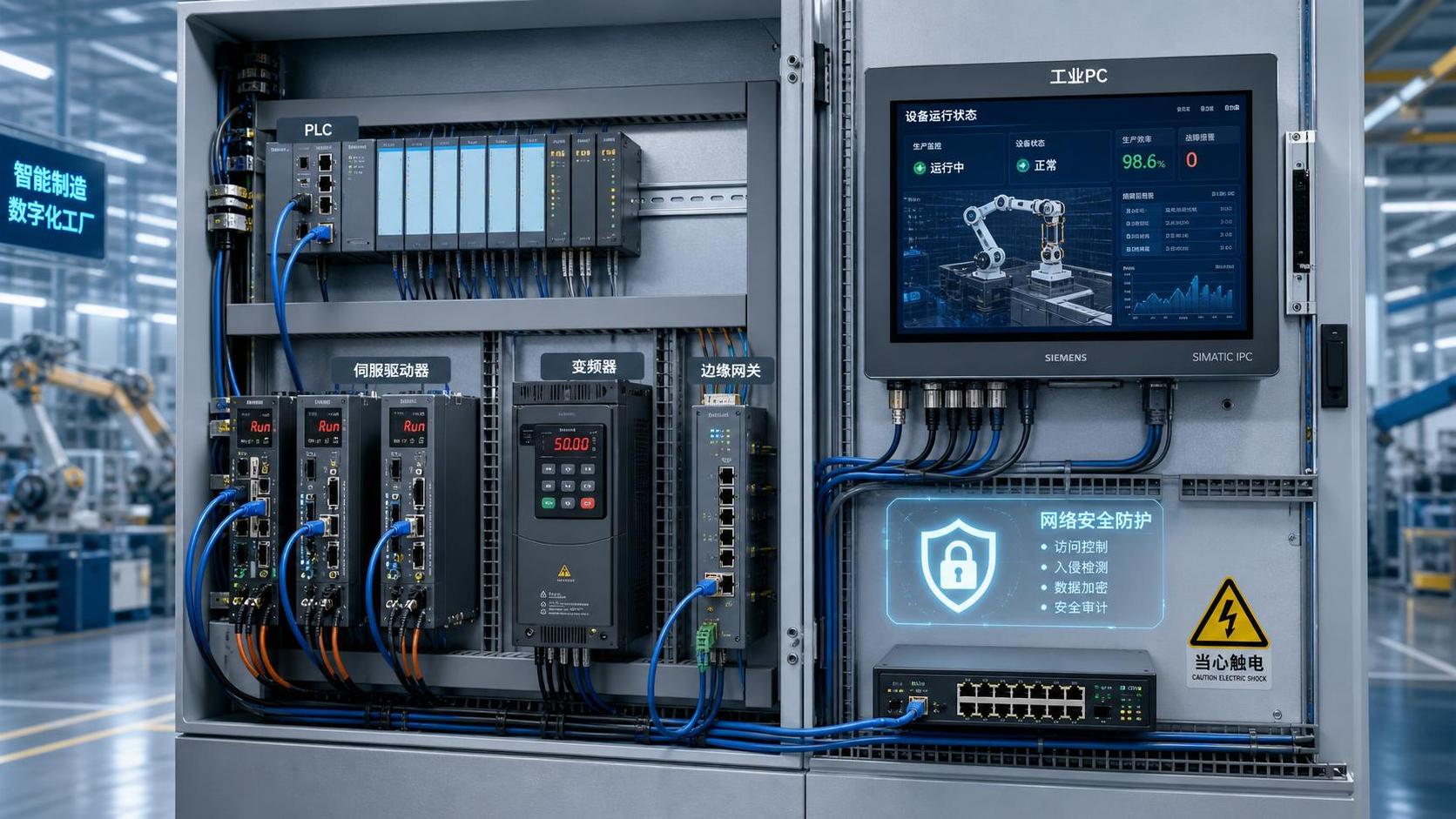
High-performance motion control, reliable PLC/DCS logic, and industrial edge computing will increasingly be judged as one integrated capability rather than separate procurement categories.
For project leaders, the practical baseline is clear. Design for precision, diagnostics, energy visibility, cybersecurity, and maintainability from the beginning, not after commissioning.
Precision Motion Control Becomes a Project Risk Lever
Servo systems are often treated as equipment details, yet they strongly influence cycle time, positioning accuracy, scrap rates, and long-term mechanical stability.
In 2026 planning, engineering teams should look beyond nominal torque and speed. Current loop response, encoder resolution, tuning flexibility, and resonance suppression deserve attention.
A servo system with stronger algorithms can compensate for difficult load conditions, but it cannot fully rescue weak mechanical design or poorly selected reducers.
Project managers should ask vendors how motion performance is validated under acceleration, thermal drift, emergency stops, vibration, and continuous duty cycles.
The goal is not buying the most advanced servo drive available. The goal is matching dynamic response to process tolerance and production economics.
When motion control is specified correctly, projects gain shorter stabilization time, fewer commissioning surprises, improved product consistency, and better confidence in scaling duplicate lines.
PLC/DCS Architecture Must Support Change, Not Just Control
PLC and DCS systems remain the operational cortex of industrial automation, but their role is expanding beyond deterministic control and interlock execution.
Modern projects require control platforms that support modular programming, remote diagnostics, secure data exchange, version control, and faster integration with upstream planning systems.
For engineering leads, scan cycle speed still matters, especially in high-speed packaging, semiconductor equipment, robotics, and precision assembly applications.
However, a 2026-ready architecture also depends on how easily logic can be reused, audited, simulated, updated, and maintained across multiple sites.
Project leaders should avoid architectures that look cheaper initially but create dependency on scarce specialists or proprietary workflows during every future modification.
The strongest automation programs standardize PLC/DCS libraries, naming conventions, alarm philosophies, and test procedures before projects enter late-stage commissioning pressure.
Edge Computing Moves From Pilot Projects to Operating Infrastructure
Industrial PCs and edge controllers are becoming essential because factories generate more data than centralized systems can process with acceptable latency.
For 2026, edge computing should be planned as operating infrastructure, not as an experimental analytics layer added after mechanical acceptance.
Real-time vibration monitoring, servo anomaly detection, predictive maintenance, quality inspection, and energy optimization all benefit from local computation near machines.
Project managers should evaluate IPC platforms by thermal design, storage reliability, expansion interfaces, cybersecurity hardening, lifecycle availability, and resistance to dust and vibration.
The value of edge computing appears when teams can detect drift before failure, compare lines objectively, and reduce unplanned downtime with evidence.
Still, edge systems must not become uncontrolled islands. Data models, ownership rules, network segmentation, and update policies should be defined early.
Precision Reducers and Mechanical Transmission Need Earlier Attention
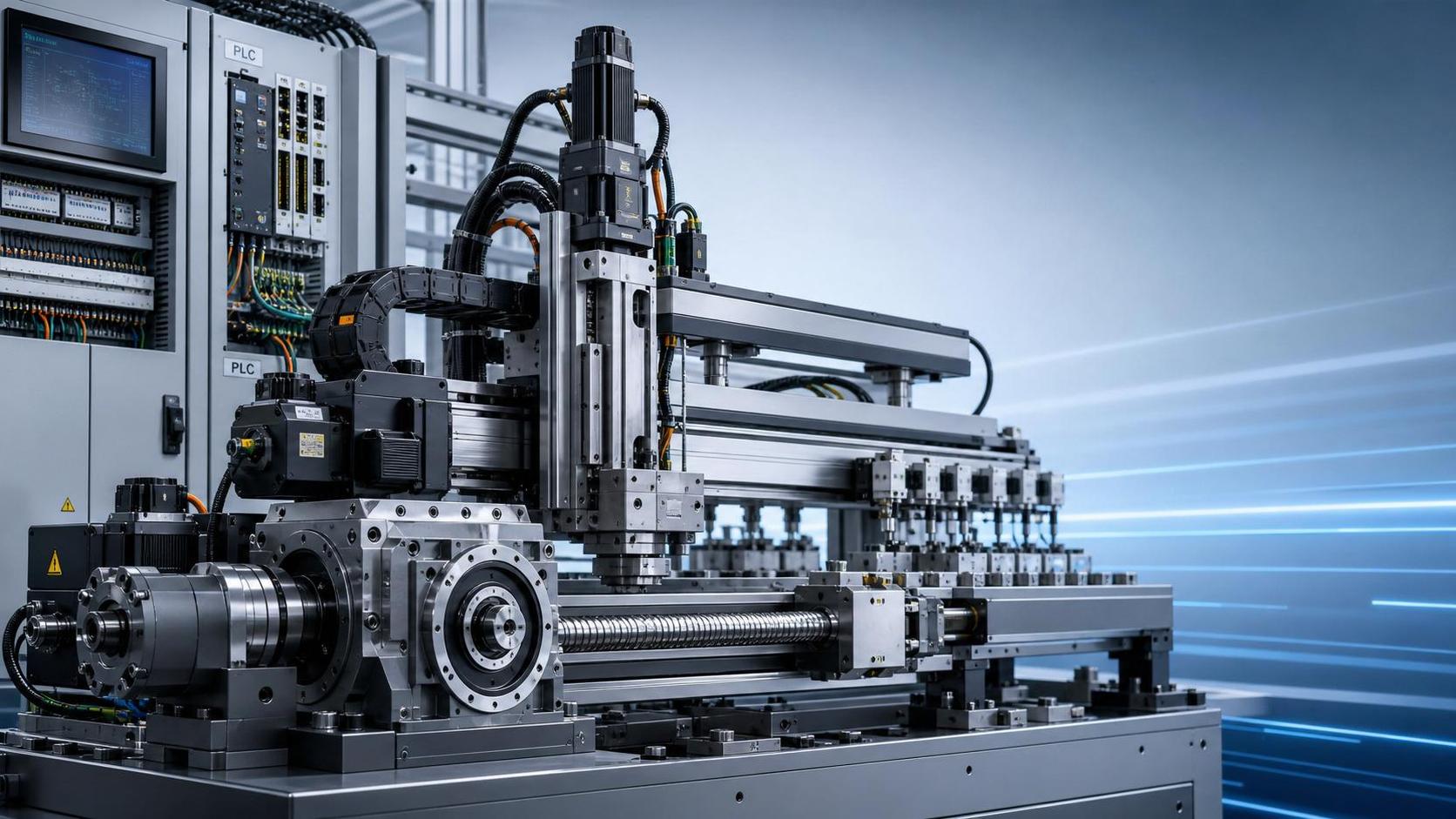
Precision reducers, linear guides, and ball screws are sometimes finalized after control strategies, but that sequence can create avoidable performance limits.
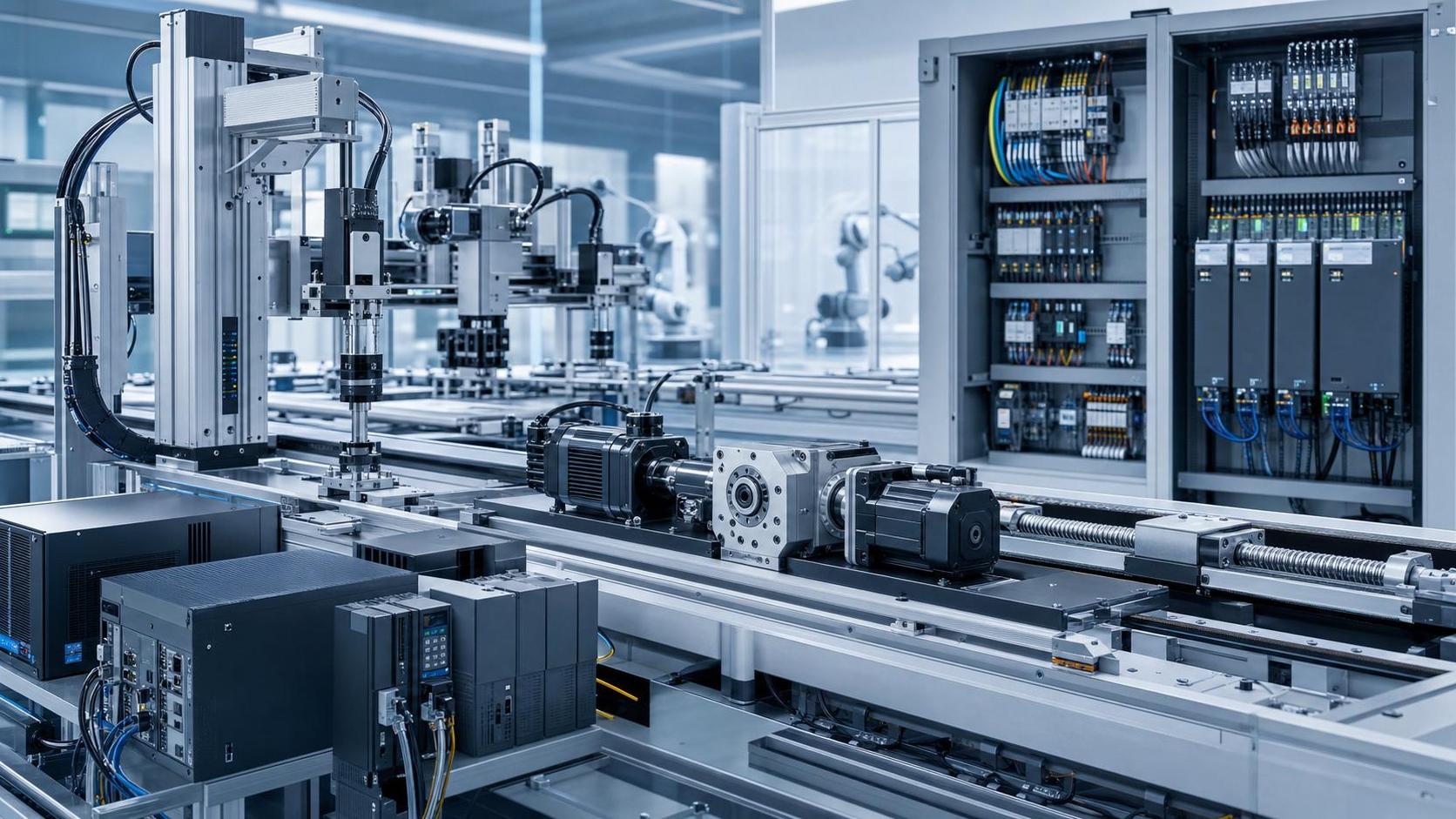
Robot joints, CNC axes, battery equipment, and high-speed handling systems depend on mechanical transmission quality as much as drive intelligence.
Backlash, torsional stiffness, service life, lubrication stability, and fatigue behavior directly affect repeatability, vibration, energy consumption, and maintenance intervals.
For harmonic and RV reducers, engineering teams should request life testing assumptions, load spectra, shock tolerance, and derating guidance for demanding cycles.
For linear motion components, evaluate preload, straightness, sealing, contamination resistance, installation sensitivity, and supplier support for rail alignment or screw selection.
Early mechanical-transmission decisions reduce late-stage tuning problems. They also prevent teams from overcompensating with software for fundamentally unstable physical behavior.
Energy Efficiency Is Becoming a Financial Planning Metric
Inverters and high-efficiency drive systems are no longer only sustainability tools. They are increasingly important financial levers for plants with energy-intensive equipment.
Pumps, fans, compressors, conveyors, presses, and large machining systems can produce measurable savings when variable frequency control is applied correctly.
For 2026 budgets, project managers should calculate total energy impact across duty cycles rather than relying on nameplate efficiency comparisons.
The business case should include demand charges, regenerative braking opportunities, power quality, harmonic mitigation, thermal reduction, and maintenance benefits from smoother starts.
Energy-focused automation also improves resilience. Facilities with better drive visibility can identify abnormal loads before they become mechanical failures or production bottlenecks.
Procurement teams should therefore compare inverter platforms on diagnostics, communication support, serviceability, spare-part continuity, and compatibility with plant energy management systems.
Flexible Manufacturing Requires Standardization Before Flexibility
Many organizations want flexible manufacturing, but flexibility becomes expensive when every line, cell, and equipment supplier follows a different automation philosophy.
The paradox is important: flexibility usually depends on standardization. Common interfaces, reusable modules, consistent data structures, and shared commissioning checklists reduce complexity.
Project managers should define automation standards before equipment purchasing begins. Otherwise, suppliers will optimize locally while the plant inherits integration burdens.
Useful standards include communication protocols, safety requirements, servo parameter templates, recipe structures, alarm categories, historian tags, and cybersecurity expectations.
Standardization also improves vendor competition. When interfaces and acceptance criteria are clear, buyers can compare suppliers on performance rather than interpretation.
For 2026 projects, the winners will not merely automate tasks. They will build platforms that adapt faster than product and market changes.
Supply Chain and Lifecycle Risk Must Be Built Into Technical Choices
Automation components now carry strategic supply risk, especially for high-end servo drives, industrial chips, precision reducers, and specialized sensors.
Project leaders should treat lifecycle availability as a design parameter. A technically excellent component can become risky if replacement lead times are unpredictable.
Before approving key components, teams should ask about second-source options, firmware continuity, regional service coverage, backward compatibility, and long-term spare-part commitments.
Global trade barriers and semiconductor cycles can affect delivery schedules more severely than internal engineering delays. This risk belongs in project planning.
A practical mitigation strategy is to classify components by criticality. High-criticality items require buffer stock, approved alternatives, and documented substitution procedures.
Lifecycle planning may feel conservative, but it prevents small procurement disruptions from becoming major commissioning delays or extended production stoppages.
How to Evaluate Automation Vendors for 2026 Projects
Vendor selection should move beyond price, brand reputation, and brochure specifications. The most valuable suppliers reduce integration uncertainty and support measurable outcomes.
Project managers should request evidence from comparable applications, including commissioning timelines, failure modes encountered, tuning records, and maintenance data where possible.
For motion control vendors, ask how they support resonance analysis, multi-axis synchronization, safe motion, encoder compatibility, and difficult load commissioning.
For PLC/DCS suppliers, examine programming environment maturity, simulation tools, cybersecurity documentation, lifecycle support, and integration with industrial networks.
For mechanical transmission suppliers, prioritize quality consistency, inspection transparency, load calculation support, and field feedback from similar duty conditions.
The best partners will not simply confirm requirements. They will challenge weak assumptions before those assumptions become expensive field problems.
Key Metrics Project Managers Should Track
Automation Industry Insights become useful when they translate into measurable project and operating metrics. Without metrics, trends remain interesting but unmanageable.
Useful technical metrics include positioning accuracy, repeatability, settling time, vibration amplitude, PLC scan reserve, network latency, and edge processing availability.
Operational metrics include overall equipment effectiveness, mean time between failures, mean time to repair, energy per unit, changeover time, and scrap rate.
Project execution metrics are equally important. Track supplier response time, commissioning defect density, software change requests, training completion, and unresolved risk items.
Finance teams should see lifecycle cost, not only capital cost. Maintenance labor, downtime exposure, energy consumption, and upgrade cost influence real returns.
When these metrics are visible from design through ramp-up, project teams can make trade-offs earlier and defend investments with stronger evidence.
Practical Planning Checklist for 2026 Automation Projects
Start by defining the production problem in measurable terms. Clarify tolerance, speed, availability, flexibility, energy, traceability, and maintenance requirements before choosing technology.
Next, map the automation stack from mechanics to control, drives, networks, edge computing, data systems, and service procedures.
Identify which layers are performance-critical and which are standard utilities. Spend more engineering attention where failure would damage throughput or quality.
Run design reviews that include operations, maintenance, controls engineering, IT security, procurement, and finance. Automation risk rarely belongs to one department.
Require vendors to demonstrate integration paths, not only component capabilities. A strong isolated product may still create weak system performance.
Finally, protect commissioning time. Many automation projects fail to capture value because validation, operator training, and documentation are compressed too aggressively.
Where IAMC Adds Value to Planning Decisions
For project managers, IAMC’s value lies in connecting component-level engineering realities with broader automation investment decisions and market signals.
Servo algorithms, PLC architectures, reducer fatigue models, linear motion accuracy, inverter efficiency, and industrial edge computing are not separate discussions.
They form the muscles, joints, rails, energy systems, and nerve centers of modern industrial performance under Industry 4.0 conditions.
IAMC focuses on the details that determine whether automation systems remain accurate, stable, maintainable, and commercially justified after installation.
That perspective helps engineering leaders avoid two common mistakes: overbuying fashionable technology and underinvesting in components that silently define performance.
By following rigorous Automation Industry Insights, project teams can compare options more intelligently and align technical choices with strategic manufacturing goals.
Conclusion: Plan for Control, Resilience, and Adaptability
Automation planning for 2026 should not begin with a list of devices. It should begin with the operating capabilities the business needs.
Precision motion control improves process confidence. PLC/DCS architecture protects operational discipline. Edge computing makes equipment behavior visible before problems escalate.
Mechanical transmission quality determines whether digital control can translate into stable physical motion. Energy-efficient drives turn automation into measurable financial value.
For project managers and engineering leads, the strongest approach is to evaluate automation as an integrated system of performance, risk, and lifecycle economics.
The clearest Automation Industry Insights point toward one conclusion: 2026 success will belong to teams that plan earlier, standardize wisely, and validate deeply.
Those teams will build industrial systems that are not only automated, but precise, resilient, flexible, and ready for the next manufacturing cycle.