Industrial IoT Integration: Key Costs Before Scaling

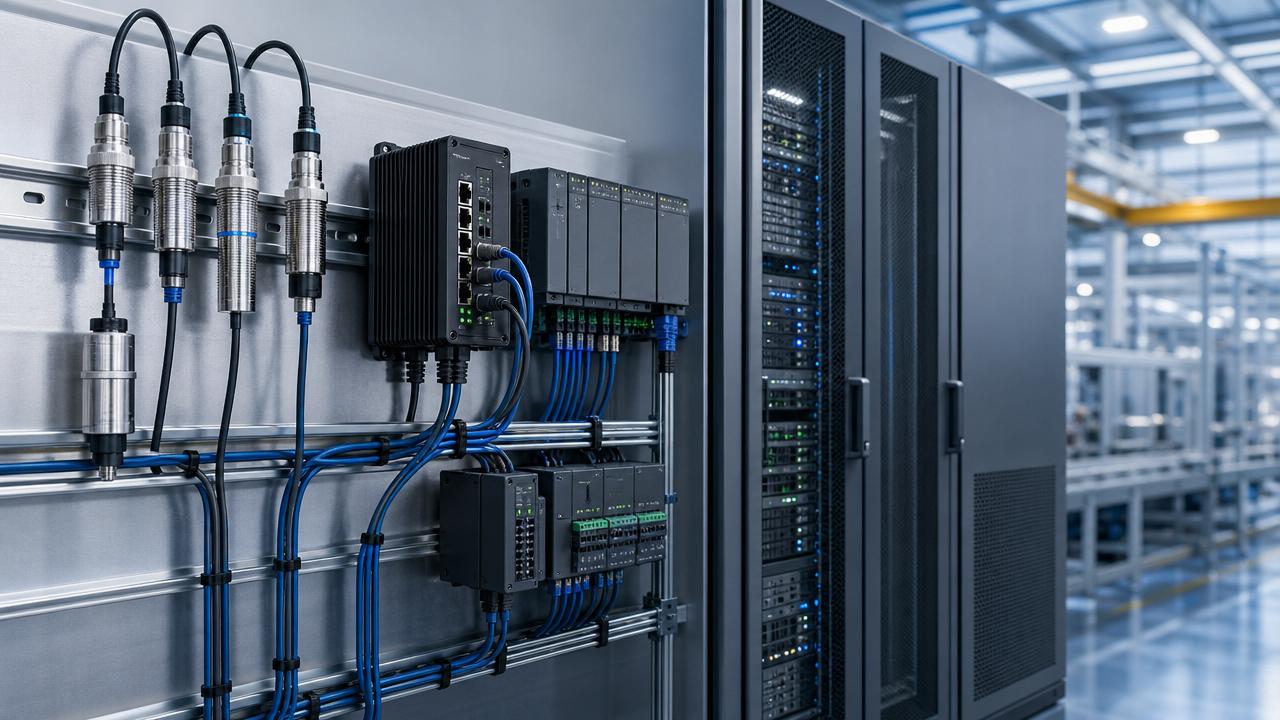
Before a company scales connected operations across plants, the biggest budgeting mistake is to treat Industrial IoT Integration as a sensor-and-software purchase. For financial approvers, the real question is broader: what total cost must be absorbed before scale can produce reliable returns?
The answer usually includes six cost layers: data acquisition, network and compute infrastructure, system integration, cybersecurity, workforce enablement, and lifecycle support. In many industrial environments, these indirect or underestimated items outweigh the first wave of hardware spending.
For manufacturers pursuing automation, flexible production, and tighter performance visibility, Industrial IoT Integration can unlock measurable value. But value appears only when decision-makers understand where capital expense ends, where operating expense begins, and which hidden costs can delay ROI.
This article focuses on the financial view. It explains the major cost drivers before scaling, where overruns typically occur, and how approval teams can evaluate whether an integration roadmap is economically sound rather than strategically attractive but financially vague.
What financial approvers are really trying to verify before scaling
When finance leaders evaluate Industrial IoT Integration, they are rarely asking whether connectivity is useful in theory. They want evidence that expansion beyond a pilot will lower downtime, improve asset utilization, reduce scrap, or support throughput gains at a cost the business can defend.
That means the core search intent behind this topic is practical and decision-oriented. Readers want to know the key cost categories before scale, which expenses are often hidden in early proposals, and how to separate one-time integration spending from recurring operational commitments.
They also need to understand risk. A pilot can look affordable because it touches one line, one site, and a limited dataset. Scaling across plants introduces architectural complexity, support obligations, compliance exposure, and change management demands that materially alter the business case.
For this audience, a useful article must go beyond general Industry 4.0 language. It should show how costs build from the plant floor upward, explain what creates variance, and offer a framework for comparing anticipated returns against deployment maturity and execution risk.
Why pilot economics often fail to predict scale economics
Many Industrial IoT projects begin with a narrow proof of concept connected to a critical machine, a servo-driven cell, a PLC-controlled line, or an energy monitoring use case. Pilot spending stays low because teams reuse existing networks, accept manual workarounds, and rely on specialist attention.
Those conditions rarely hold at scale. Once a company extends integration to multiple lines or facilities, it must standardize protocols, improve data quality, harden network architecture, and support a wider variety of equipment ages, firmware states, and operating conditions.
Finance teams should therefore treat pilot ROI as directional, not definitive. A pilot proves technical feasibility and early value signals. It does not automatically reveal enterprise rollout costs such as plant-wide segmentation, historian expansion, API development, governance tooling, or multi-site support labor.
The most common budgeting error is assuming unit economics stay constant as the number of connected assets increases. In reality, some costs scale linearly, some scale in steps, and some emerge only after a threshold of complexity is reached.
The first visible cost: sensors, gateways, and edge data acquisition
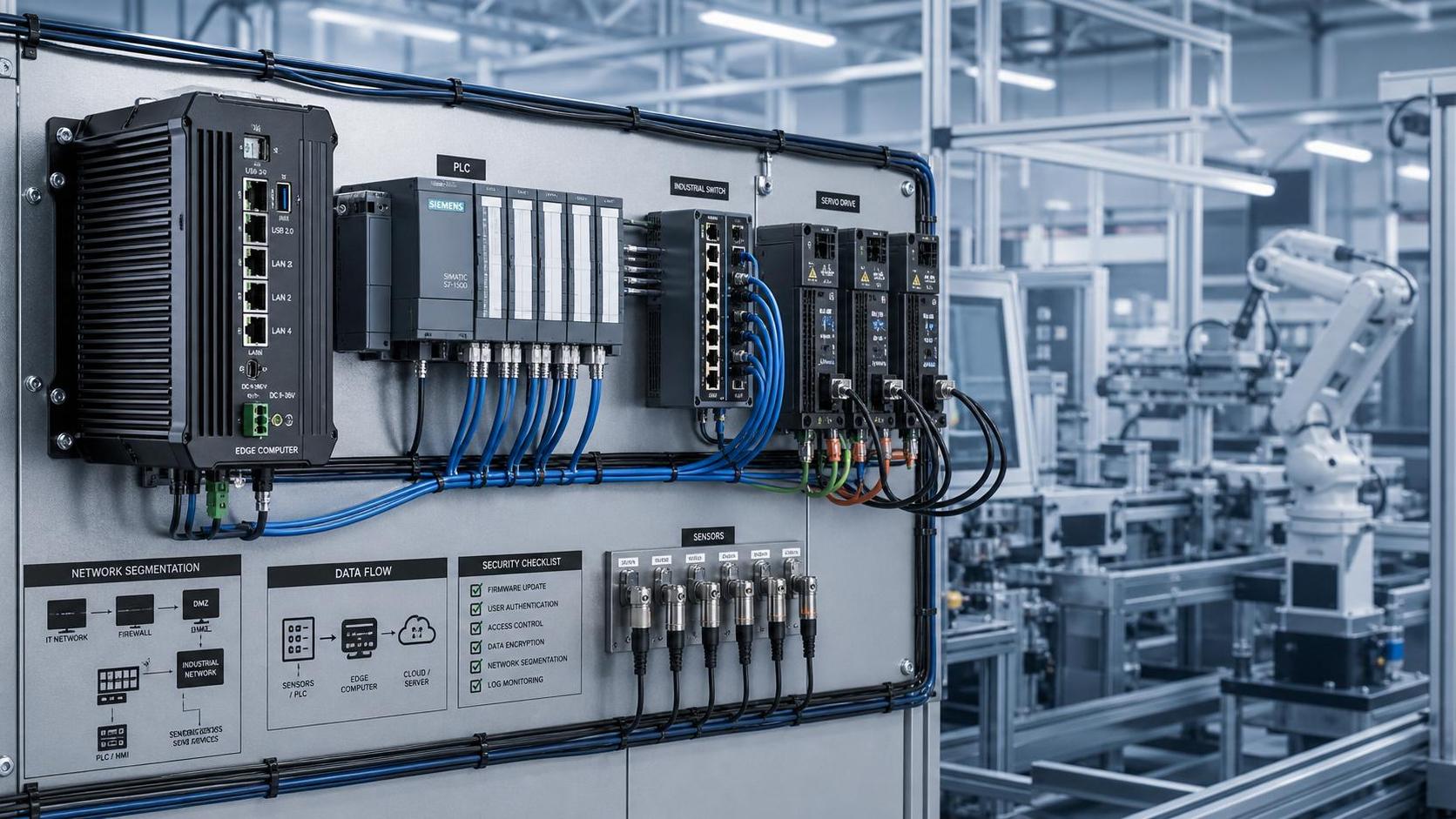
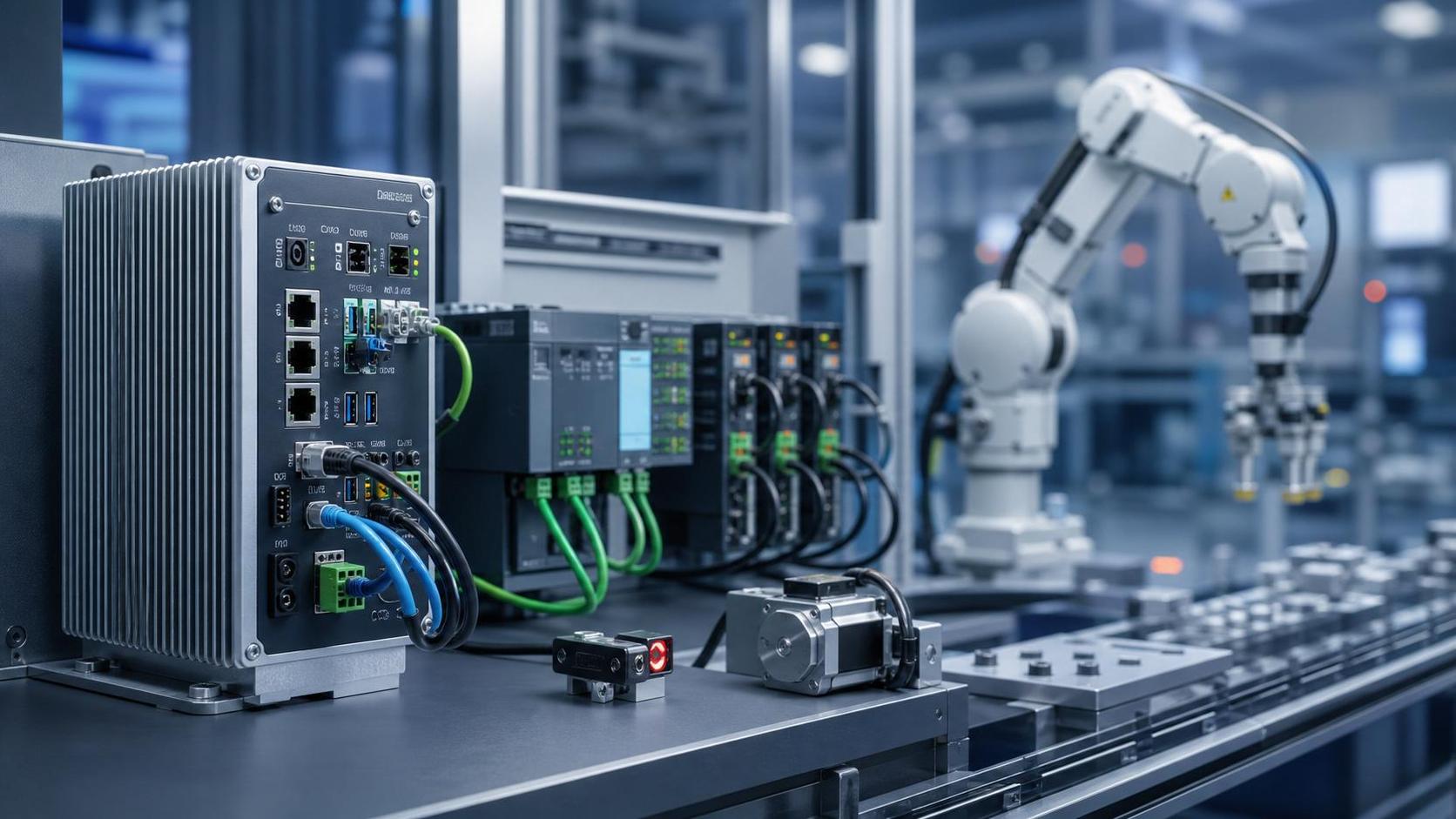
The most obvious line item in Industrial IoT Integration is data capture. This includes sensors, retrofit kits, industrial gateways, I/O modules, condition-monitoring devices, and the installation labor required to connect legacy and modern assets into a common data environment.
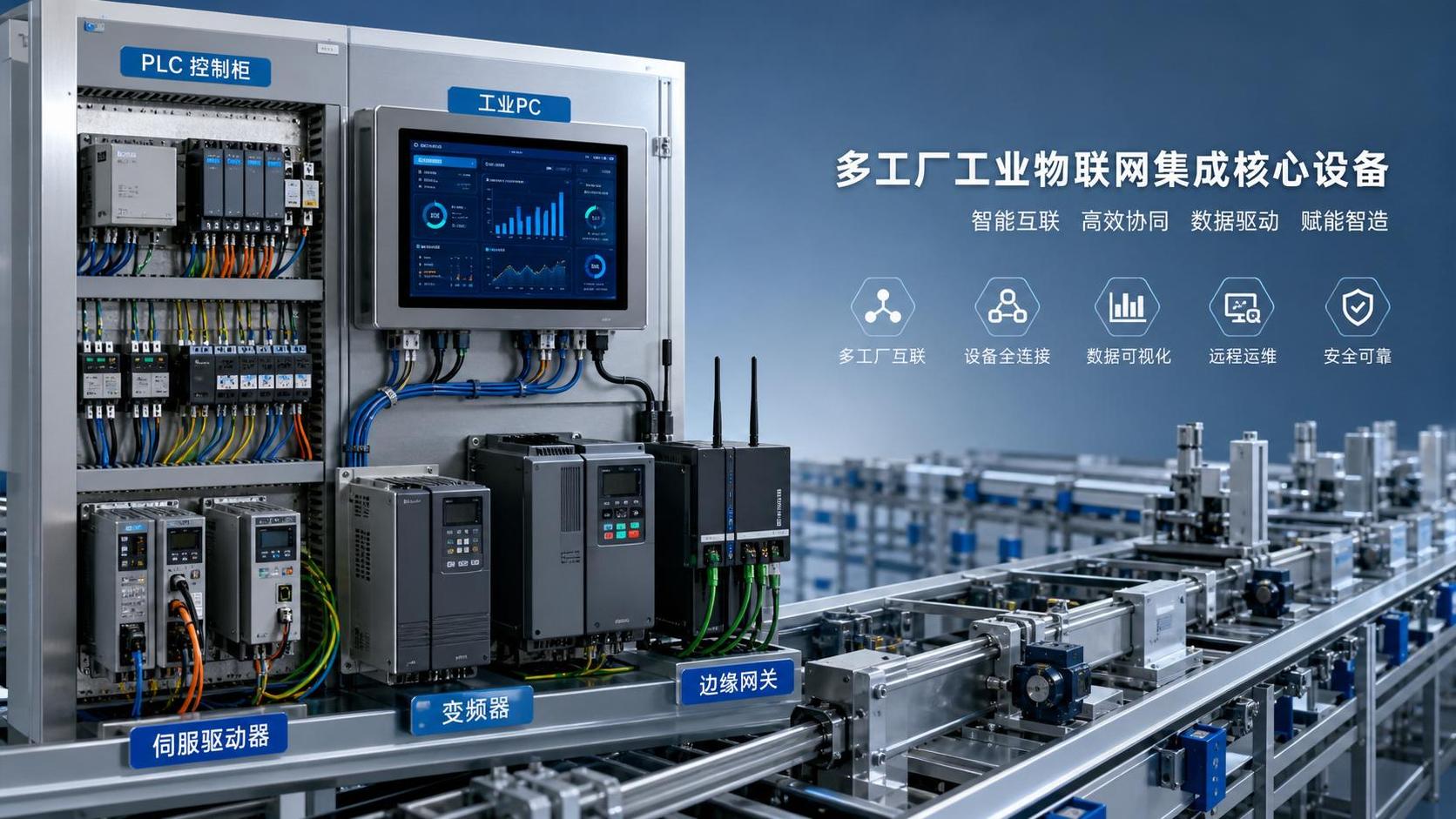
In advanced automation environments, acquisition costs vary sharply by machine type. A modern servo system, inverter, IPC, or PLC may already expose useful operational data. Older mechanical transmission systems, stand-alone drives, or non-networked machines often require retrofitting, signal conditioning, or custom interfaces.
Approvers should ask whether the proposal covers only hardware purchase or the full installed cost. Wiring, enclosure modifications, calibration, mounting, environmental protection, validation downtime, and commissioning labor can significantly change the total cost per asset.
It is also important to distinguish between “nice to have” data and decision-grade data. Over-collecting signals creates unnecessary spending in hardware, storage, and analytics. The lowest-cost architecture is usually one designed around business outcomes, not maximum data volume.
Infrastructure upgrades are often the real budget escalator
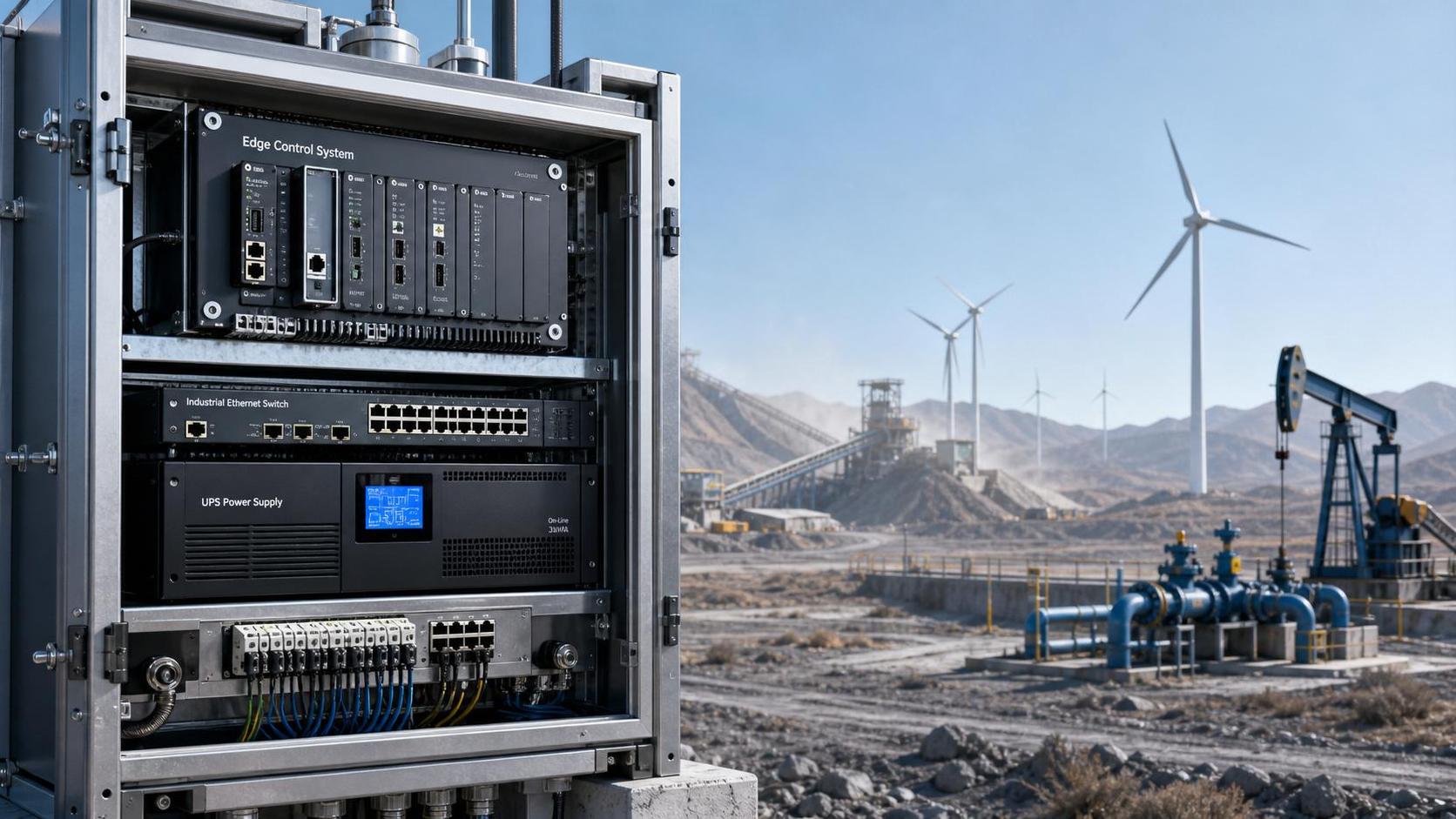
Once machines begin generating data continuously, underlying infrastructure becomes the next major cost center. Many plants need network upgrades, industrial Ethernet expansion, wireless redesign, power conditioning, edge servers, storage improvements, and resilience measures before scaling is reliable.
In facilities with high electromagnetic noise, strict latency requirements, or mission-critical motion control systems, the quality of industrial networking matters as much as availability. Cheap connectivity choices can undermine data integrity, create blind spots, or increase troubleshooting costs later.
Edge computing is another major consideration. If use cases include local analytics, machine coordination, quality inspection, or low-latency event processing, industrial PCs or hardened edge nodes may be required. These are not optional accessories; they are operational infrastructure with lifecycle implications.
Financially, infrastructure costs often arrive in clusters rather than smooth increments. A company may connect ten machines using existing capacity, but the eleventh may force network segmentation, switch replacement, or expanded compute resources. Budgets should account for these step-change thresholds.
Integration with existing PLC, DCS, MES, ERP, and historian systems
Industrial IoT Integration becomes expensive when data must move across disconnected software and control layers. Connecting sensors to a dashboard is the easy part. Creating trusted workflows between PLCs, DCS platforms, historians, MES applications, CMMS systems, and ERP environments is where complexity grows.
Each interface may require protocol conversion, API development, middleware licensing, data modeling, tag mapping, time synchronization, exception handling, and testing. In plants with mixed vendors and multiple generations of automation technology, interoperability work can consume a substantial share of the project budget.
This is especially relevant in motion-intensive manufacturing. Data from servo drives, precision reducers, linear axes, and inverter systems may have high operational value, but only if it can be normalized and linked to maintenance, quality, or production planning systems.
Approvers should request a clear integration map: what systems are being connected, how many interfaces are custom, which standards are being used, and what ongoing support is needed after go-live. If these details are missing, the cost estimate is probably incomplete.
Cybersecurity spending is not a side item
For financial decision-makers, cybersecurity should be treated as a core cost of Industrial IoT Integration, not a compliance add-on. Every newly connected asset expands the attack surface across operational technology and information technology environments.
Meaningful protection usually requires secure remote access, identity and access controls, network segmentation, patch management processes, endpoint hardening, logging, anomaly detection, backup design, and incident response planning. These controls have both implementation and recurring operating costs.
In highly automated environments, the financial consequences of weak security can exceed the full integration budget. Production loss, recovery expense, regulatory exposure, and customer trust damage can quickly erase the projected value of a low-cost deployment strategy.
Approval teams should therefore ask a direct question: what cybersecurity controls are included in the proposed architecture, and which are being deferred? Deferred controls are not avoided costs. They are future liabilities, often paid under less favorable conditions.
Software licensing and data platform costs can compound quietly
Another area that deserves close scrutiny is software economics. Industrial IoT Integration may involve cloud services, edge orchestration tools, SCADA extensions, historian licenses, analytics platforms, visualization dashboards, device management tools, and middleware subscriptions.
Vendors may price these by device count, tag volume, user seat, compute consumption, storage usage, or site count. A pilot may fit comfortably within entry pricing, while a multi-plant rollout crosses licensing tiers and changes the financial model.
Finance teams should insist on a three- to five-year cost view. That model should include not only deployment licenses but also support contracts, software updates, cloud consumption growth, retention policies, backup charges, and vendor service dependencies.
The key issue is predictability. A platform that looks inexpensive initially can become structurally costly if it scales poorly with data density or connected assets. Approval should favor architectures with transparent long-term economics over attractive introductory pricing.
Workforce readiness and change management are real project costs
Industrial IoT Integration does not scale on technology alone. Operators, maintenance staff, controls engineers, IT teams, and plant managers must learn new workflows, data responsibilities, and decision routines. Training and change management are therefore budget items, not soft assumptions.
If teams cannot trust alerts, interpret dashboards, or act consistently on insights, the organization pays for connectivity without capturing business value. In many factories, low adoption rather than technical failure is the reason expected returns do not materialize.
Costs in this area may include formal training, operating procedure updates, documentation, outside implementation support, internal project management time, and temporary productivity loss during transition. These should be planned explicitly rather than buried in departmental overhead.
For financial approvers, this is an ROI protection issue. Money spent on adoption often delivers a better return than money spent on additional data features that users are not ready to operationalize.
Maintenance, support, and obsolescence drive the long-term total cost
Before approving scale, decision-makers should look beyond deployment. Connected industrial environments create long-lived obligations: firmware updates, device replacement, sensor recalibration, spare inventory, gateway support, cybersecurity maintenance, integration troubleshooting, and vendor coordination.
Legacy equipment creates another challenge. As plants modernize incrementally, some assets remain difficult to support or integrate cleanly. Over time, patchwork architectures raise maintenance labor and increase dependence on specialized knowledge, which carries both cost and continuity risk.
Obsolescence should also be considered. A low-cost device or software tool may save budget today but force expensive migration later if vendor support weakens, standards change, or the platform cannot support broader analytics and orchestration requirements.
For this reason, total cost of ownership is a better approval lens than initial project price. The cheapest deployment path can become the most expensive operating model once maintenance and architecture debt are included.
How to judge whether the expected ROI is financially credible
A credible ROI case for Industrial IoT Integration should tie each spending category to a measurable operational lever. Common examples include reduced downtime, faster troubleshooting, energy savings, lower scrap, longer asset life, improved scheduling, and reduced manual inspection effort.
Approvers should challenge benefits that are broad but weakly measured. “Better visibility” is not enough. The proposal should explain how visibility changes action, how action changes performance, and over what timeline the gain becomes financially visible.
It is also wise to separate hard returns from strategic returns. Hard returns affect P&L or working capital directly. Strategic returns may still matter, especially in advanced manufacturing, but they should not be used to disguise uncertain economics in the near term.
One practical approach is stage-gated approval. Fund the architecture and use cases that have the clearest economics first, then release expansion capital only after performance data confirms assumptions. This reduces risk while preserving long-term transformation potential.
A practical cost checklist before approving scale
Before signing off, financial decision-makers should confirm that the budget includes full installed hardware cost, infrastructure upgrades, integration engineering, cybersecurity controls, software licensing, workforce enablement, and multi-year support assumptions.
They should also ask whether the rollout plan standardizes equipment data models, communication protocols, and governance rules across plants. Standardization may increase initial effort, but it usually lowers the cost of expansion and support later.
Another useful test is vendor dependency. If the architecture relies heavily on custom code or one specialist integrator, future flexibility may be limited and support costs may rise. Open standards and documented interfaces generally improve cost control over time.
Finally, the business case should show sensitivity analysis. What happens if deployment takes longer, adoption is slower, or infrastructure investment is higher than expected? Financially mature proposals acknowledge these scenarios instead of assuming a perfect rollout path.
Conclusion: scale only when the cost model is as mature as the vision
Industrial IoT Integration can deliver strong value in modern manufacturing, especially where precision motion, control intelligence, and real-time equipment data shape performance. But for finance leaders, the question is not whether the concept is promising. It is whether the scale economics are genuinely understood.
The costs that matter most before expansion are often not the most visible ones. Infrastructure, integration, cybersecurity, workforce readiness, and lifecycle support frequently determine whether ROI is achieved or postponed.
When approval teams evaluate these costs early, they make better decisions about sequencing, architecture, and investment timing. That discipline does not slow digital transformation. It increases the odds that connected operations become a durable source of efficiency, resilience, and profitable growth.
Related Recommendations
 Secure Edge Computing for Manufacturing: What to Check Before DeploymentTime : Jul 14, 2026
- Edge Control Systems in Remote Sites: What Affects Reliability Most?Time : Jul 12, 2026
- Edge Control for IIoT: Practical Gains in Response Time and UptimeTime : Jul 06, 2026
- Industrial IoT Integration Risks That Delay Multi-Site ProjectsTime : Jul 04, 2026
- When a Real Time Industrial Computing Platform Pays OffTime : Jun 28, 2026
- How to Compare Industrial Edge Computing Solutions for Real-Time ControlTime : Jun 27, 2026