Industrial Control Technology Gaps That Disrupt Expansion

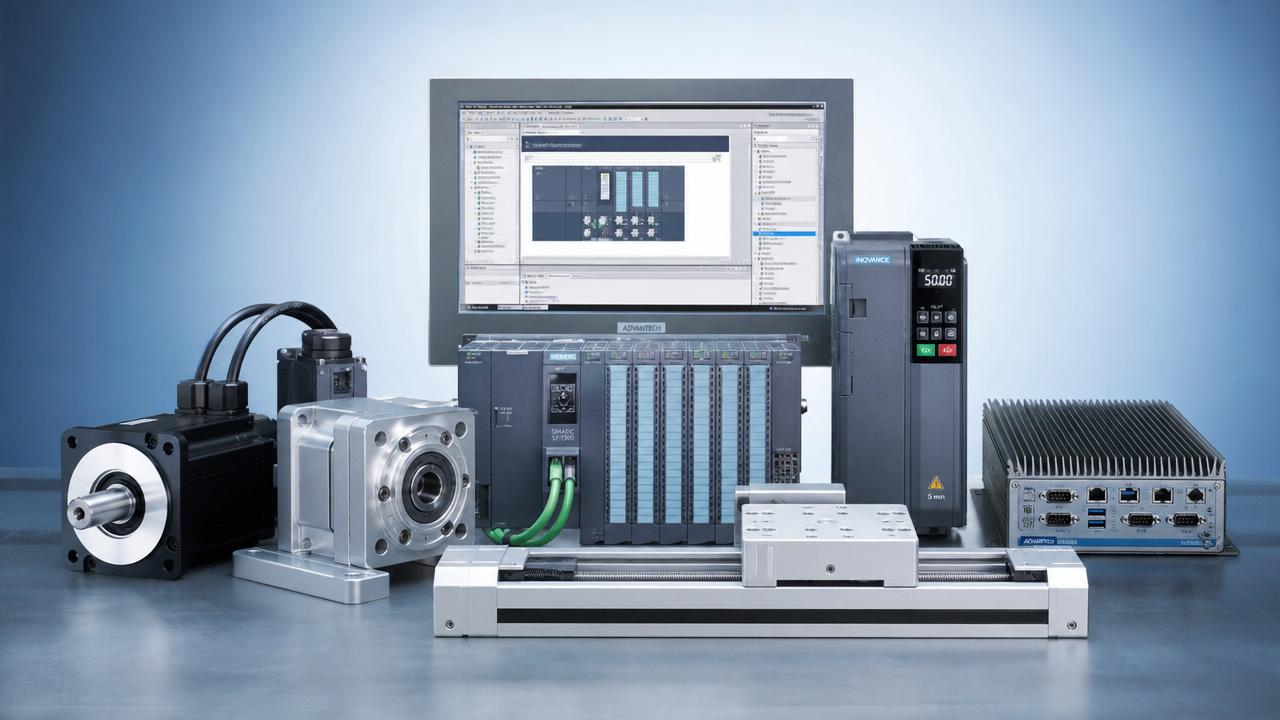
Industrial Control Technology gaps often surface at the worst possible moment—when distributors, agents, and channel partners are scaling into new markets or supporting more complex automation projects. From servo systems and PLC/DCS integration to precision transmission and edge computing, even small capability mismatches can delay expansion, weaken customer trust, and reduce margins. Understanding where these gaps emerge is the first step toward building a stronger, more competitive industrial portfolio.
For distributors and industrial channel partners, expansion is rarely blocked by demand alone. The real obstacle is often technical readiness across core automation categories: servo motors, controllers, reducers, linear motion parts, inverters, and industrial PCs. When one layer underperforms, the entire sales chain feels the impact through longer quotation cycles, more engineering clarification, and higher after-sales pressure.
In Industrial Control Technology, growth depends on more than adding product lines. It requires product fit, integration depth, delivery stability, and the ability to support applications with precision thresholds such as micron-level positioning, millisecond logic execution, and 24/7 line continuity. This article examines the most common technology gaps that disrupt expansion and shows how channel-focused businesses can close them with a more disciplined portfolio strategy.
Where Industrial Control Technology Gaps First Appear in Expansion Plans
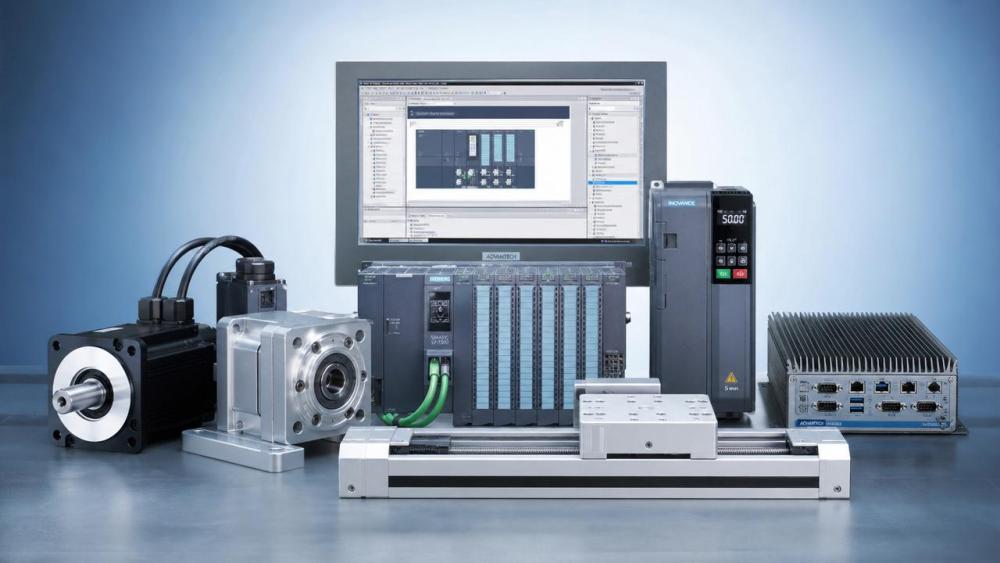
The first signs of weakness usually appear before installation. A distributor may win interest in a new region, but once customers request coordinated motion, multi-axis control, or edge-level data handling, technical gaps become visible. In many projects, the sales issue is not price. It is the missing 10%–20% of technical compatibility that prevents a reliable offer.
1. Product-line imbalance across the motion stack
A common issue is carrying isolated components without a complete motion ecosystem. For example, a partner may have servo motors rated from 0.4kW to 7.5kW, but lack matching drives, encoder feedback options, or PLC communication support for EtherCAT, PROFINET, or Modbus TCP. That forces end users to source from multiple vendors, increasing commissioning risk and reducing distributor influence.
Typical mismatch signals
- Servo motors available, but no clear inertia matching guidance for 3:1 to 10:1 load ratios
- PLC stocked locally, but no tested linkage with HMI, VFD, and remote I/O
- Reducers offered for robotics, but no backlash, stiffness, or fatigue-life comparison
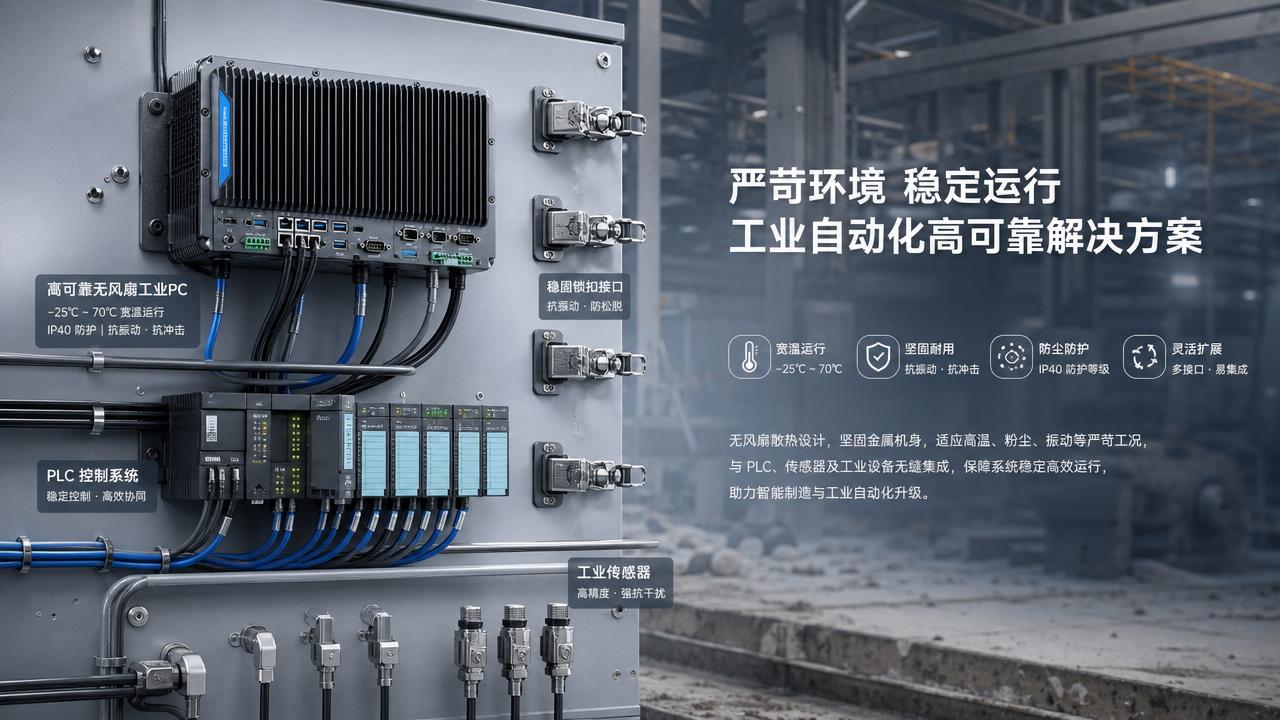
- Industrial PCs sold as hardware only, without OS, protocol, or vibration-environment validation
These gaps matter because industrial buyers do not evaluate a component in isolation. They evaluate line behavior, failure probability, and startup speed. If commissioning stretches from 3 days to 10 days because interfaces were not validated in advance, the distributor absorbs cost through engineering support and reputational strain.
2. Insufficient application engineering depth
Industrial Control Technology is application-driven. A channel partner that understands packaging, CNC, battery assembly, textile machinery, or robot cells can shorten decision cycles by 20%–30%. A partner that only circulates datasheets usually struggles when customers ask about resonance suppression, repeatability, electromagnetic interference, or thermal drift over 8-hour to 24-hour operation windows.
This is especially true in high-precision motion systems. Servo tuning is not a catalog exercise. If the team cannot discuss loop bandwidth, encoder resolution, mechanical resonance points, or stop-position stability within ±0.01mm to ±0.05mm, expansion into more advanced manufacturing sectors will remain limited.
The table below shows where channel expansion projects most often fail when Industrial Control Technology capabilities are incomplete.
The key conclusion is simple: expansion fails where portfolio depth and application support diverge. A broad catalog may create leads, but only a verified control stack converts those leads into repeat orders and lower service cost.
Why These Gaps Hurt Margins, Delivery, and Customer Retention
Not every Industrial Control Technology gap causes immediate failure, but almost all of them erode profitability. In channel businesses, margin is often lost in the hidden layer: repeated pre-sales engineering, emergency substitutions, onsite troubleshooting, and post-installation tuning visits. One unresolved integration problem can consume 6–12 hours of technical labor and still leave the customer uncertain about future orders.
Delivery instability multiplies project risk
Industrial buyers increasingly evaluate supply continuity as seriously as performance. If servo drives have a 2–4 week lead time but compatible encoders or brakes require 8–12 weeks, the practical lead time becomes the longer window. The same issue applies to harmonic reducers, industrial chips, and IPC boards. Distributors expanding into export markets cannot build trust if their control chain breaks at one critical node.
This is especially important in industries moving toward flexible manufacturing. Shorter product cycles and smaller batch sizes require automation systems that can be configured and reconfigured quickly. If a distributor cannot maintain stocking logic for fast-moving SKUs, safety stock for high-risk parts, and alternative communication modules, project expansion slows down even when market demand remains healthy.
After-sales burden rises when validation is weak
Weak technical validation usually surfaces as after-sales pressure. For example, a linear axis may meet nominal speed targets of 1.0m/s to 2.5m/s, yet still fail customer expectations because screw critical speed, guide lubrication intervals, or motor coupling stiffness were not reviewed. In PLC/DCS projects, logic may run correctly at lab scale but become unstable under actual electromagnetic interference or higher I/O counts.
Channel partners should treat these issues as commercial risks, not only engineering issues. A single unstable deployment may reduce reorder probability across an entire plant group, especially when the customer operates 3 to 5 lines with a standardization strategy.
Commercial consequences often include
- Quotation conversion drops because customers request more technical proof
- Gross margin shrinks due to unplanned engineering and service hours
- Replacement and spare-part opportunities shift to competitors
- Regional expansion slows because reference projects are harder to secure
For this reason, Industrial Control Technology readiness should be measured not just by the number of SKUs, but by the number of validated combinations a partner can deploy with confidence.
How Distributors Can Audit Industrial Control Technology Readiness
A practical audit should focus on system fit, support depth, and supply resilience. For most channel businesses, a 4-part review completed every 6 months is enough to identify the biggest barriers to expansion. The goal is not to test everything. It is to find which technical gaps most directly affect quote speed, project acceptance, and repeatability.
A 4-point readiness framework
- Portfolio coverage: Can you support the complete chain from drive to control to transmission?
- Application validation: Do you have tested solutions for at least 3 target industries?
- Service capability: Can your team answer setup questions within 24–48 hours?
- Supply security: Do you have approved substitutions for high-risk components?
This framework is especially relevant for portfolios involving industrial AC servo motors, PLC/DCS systems, precision reducers, linear guides, ball screws, inverters, and IPCs. These product families define the operating precision and control continuity of modern equipment, so weaknesses here tend to surface quickly in expansion projects.
Questions worth asking during the audit
Can the servo platform support high-resolution encoder feedback and fast current-loop response for precision positioning? Can the PLC handle multi-axis synchronization with stable millisecond scan cycles? Are reducers and transmission parts matched to actual torque, load, and life requirements instead of nominal figures only? Can IPCs operate under vibration, dust, and heat while processing edge data in real time?
The table below can be used as a channel-side evaluation tool when reviewing Industrial Control Technology portfolios for growth-stage markets.
The strongest portfolios do not simply score high in one category. They remain balanced across electrical control, mechanical transmission, and service execution. That balance is what makes Industrial Control Technology scalable in real channel environments.
Practical Ways to Close Expansion Gaps Without Overbuilding Inventory
Closing technology gaps does not require carrying every product variant. In most cases, channel partners can improve competitiveness by standardizing around a narrower, better-supported set of platforms. A focused range with verified performance often outperforms a wide catalog with uncertain integration behavior.
Build around solution clusters, not isolated parts
A solution cluster may include 3 servo power bands, 2 controller families, 2 communication standards, and a defined set of reducers or linear modules. That structure makes quotation faster and field support more repeatable. It also helps sales teams speak in application language rather than part-number language.
For example, one cluster may target packaging lines with moderate speed, synchronized conveyors, and frequent changeovers. Another may target CNC or cutting systems requiring higher rigidity, finer feed accuracy, and better vibration management. When clusters are mapped to use cases, Industrial Control Technology becomes easier to scale across regions and industries.
Strengthen technical content for pre-sales conversion
Distributors often overlook how much expansion depends on technical communication. Clear selection guides, wiring references, motion matching charts, and commissioning checklists can shorten customer hesitation dramatically. Even a 5-step selection workflow can reduce the back-and-forth that slows quotation approval.
Useful pre-sales assets include
- Motor-drive-reducer matching sheets by torque and speed band
- PLC/I/O topology templates for 32-point, 64-point, and 128-point systems
- Linear axis reference tables with stroke, payload, and repeatability ranges
- IPC deployment notes for temperature, dust, vibration, and network latency conditions
This is also where intelligence-driven platforms create value. A resource center focused on motion control, programmable logic, precision transmission, and industrial edge computing can help channel partners move beyond basic product access. It supports better market interpretation, better specification alignment, and more credible discussions with OEMs and plant buyers.
Reduce risk with staged market entry
Instead of entering five industries at once, many successful partners start with 1 or 2 verticals where they can establish technical authority. They validate the control stack, define spare strategies, and build reference know-how before broadening the range. A staged rollout over 2 to 3 quarters often produces stronger results than a broad but unsupported launch.
Industrial Control Technology rewards depth. The channel partners that expand sustainably are usually those that can explain not only what a component does, but how it behaves in a complete machine under real operating constraints.
What Buyers and Channel Partners Should Prioritize Next
As manufacturing moves toward higher precision, flexible automation, and more edge-level decision making, the value of Industrial Control Technology will continue to rise. Yet the market will increasingly favor partners that combine product access with technical literacy. That means the winning portfolio is not simply broad; it is coherent, supportable, and aligned with practical application ranges.
For distributors, agents, and industrial resellers, the priority is to identify where small mismatches are causing outsized friction—whether in servo tuning, PLC integration, precision transmission, inverter coordination, or IPC deployment. Once those gaps are visible, they can be addressed with tighter product clustering, stronger engineering content, better lead-time planning, and more disciplined market focus.
If your business is expanding into automation-intensive sectors, now is the right time to review how your portfolio performs across the full control chain. A sharper Industrial Control Technology strategy can improve conversion, reduce service cost, and strengthen long-term customer trust. Contact us to explore tailored portfolio insights, discuss product details, or get a customized solution for your next growth stage.
Related Recommendations
 How to Evaluate an Industrial PCs Manufacturer for Long-Term SupplyTime : Jun 25, 2026
- Machine Vision Inspection: Common False Reject Causes and FixesTime : Jun 23, 2026
- Industrial PCs Manufacturer Checklist for Harsh EnvironmentsTime : Jun 22, 2026
- Industrial PCs vs Standard PCs: What Matters on the Factory FloorTime : Jun 19, 2026
- How to Choose an Industrial PCs Supplier for Harsh EnvironmentsTime : Jun 13, 2026
- How to Compare Industrial PCs Manufacturer Options for Harsh SitesTime : Jun 06, 2026