Industrial Inverters: Cost vs Control Performance

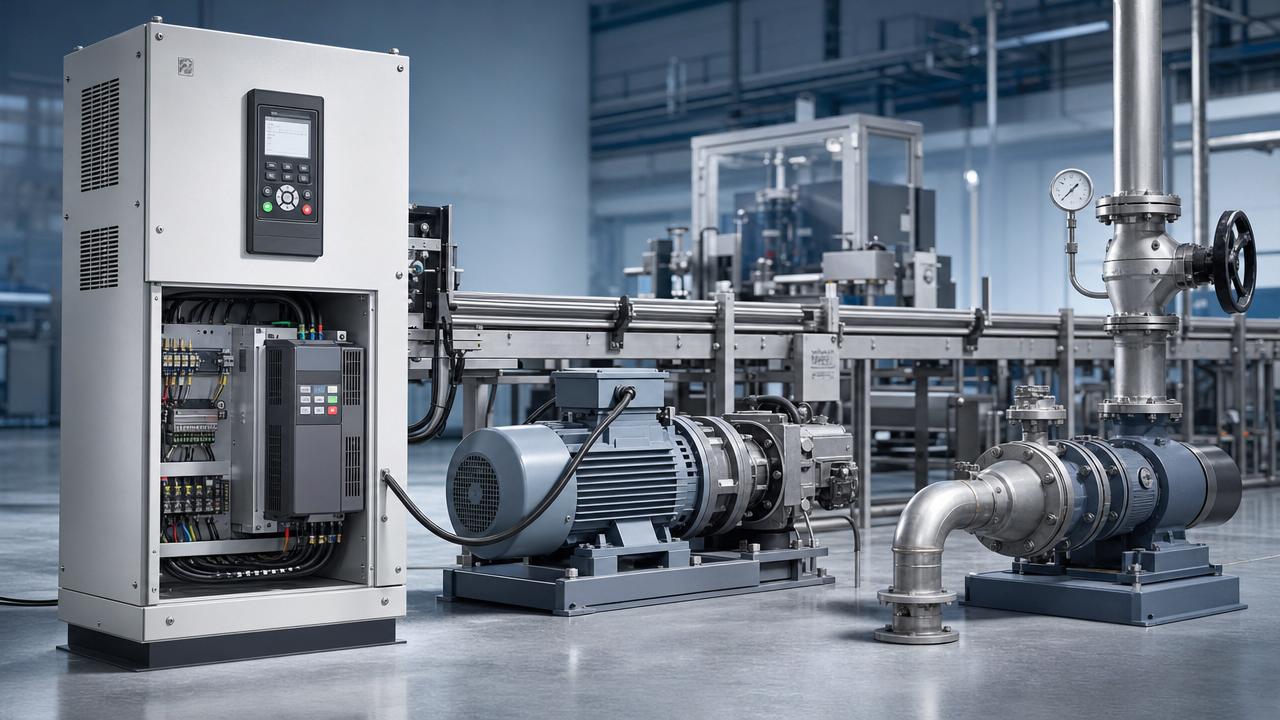
For procurement teams, choosing Industrial Inverters is rarely a simple trade-off between price and performance. The right solution shapes energy efficiency, speed stability, torque response, and maintenance exposure across the full equipment lifecycle.
In modern automation, Industrial Inverters also influence process consistency, machine uptime, and integration quality with PLC, IPC, servo, and transmission systems. A low upfront price can become expensive when control precision, harmonics, or serviceability are ignored.
This guide explains how to compare Industrial Inverters through a practical FAQ structure. It focuses on cost versus control performance, with direct decision points for mixed industrial applications.
What are Industrial Inverters, and why does control performance matter?
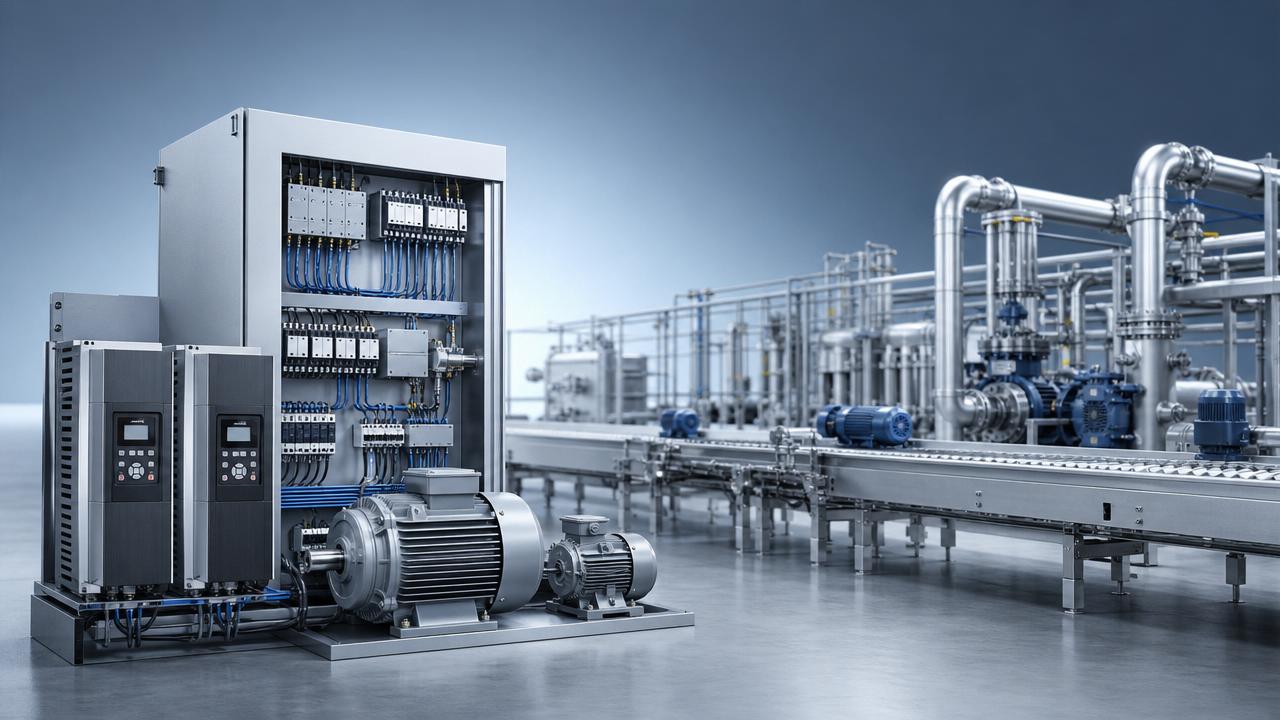
Industrial Inverters are variable frequency drives that regulate motor speed and torque by adjusting voltage and frequency. They are central to pumps, fans, conveyors, compressors, mixers, hoists, and precision production equipment.
Their value is not limited to energy savings. Industrial Inverters directly affect acceleration smoothness, low-speed torque, process repeatability, and protection behavior during unstable electrical or mechanical conditions.
Control performance matters more when load changes are frequent. It also matters when cycle times are tight, product quality depends on stable motion, or machines must communicate with broader automation platforms.
In a basic ventilation system, a standard inverter may be enough. In coordinated motion lines, winding equipment, or variable torque systems, weak control can create scrap, vibration, overshoot, and hidden downtime.
Key control indicators worth checking
- Speed regulation accuracy under changing loads
- Starting torque at low frequency
- Dynamic response during acceleration and deceleration
- Vector control capability and sensorless performance
- Overload capacity and thermal protection logic
- EMC behavior, harmonic mitigation, and network integration
When is a lower-cost inverter a smart choice, and when is it risky?
A lower-cost option can be rational when the process is noncritical, load variation is mild, and speed precision requirements are loose. Examples include simple pumps, exhaust systems, and utility conveyors.
The risk appears when the application demands stable torque, repeated starts, regenerative braking, or coordinated communication with PLC or DCS systems. In these cases, minimal hardware often limits real performance.
Cheaper Industrial Inverters may also offer fewer protection layers, shorter service support windows, and weaker parameter tuning tools. That can increase commissioning time and expose operations to longer recovery after faults.
Another hidden issue is enclosure and environmental resistance. Dust, humidity, vibration, and high cabinet temperatures can quickly erase any purchase savings if the inverter design is not robust enough.
Typical signs that low price may become high cost
- Frequent overload alarms during normal production
- Unstable speed at low frequency ranges
- Poor compatibility with motors, filters, or fieldbus modules
- Limited spare parts and uncertain firmware support
- Extra engineering needed to control harmonics or heat
How should Industrial Inverters be compared beyond the purchase price?
A useful comparison starts with total cost of ownership. Industrial Inverters should be evaluated across acquisition, installation, tuning, energy use, downtime risk, maintenance effort, and replacement cycle.
Initial device cost is only one layer. The real business impact often comes from operating efficiency, control quality, and the ability to maintain output stability during fluctuating demand or harsh plant conditions.
A practical evaluation checklist
- Match load type: constant torque, variable torque, or precision dynamic load.
- Confirm control mode: V/F, sensorless vector, or closed-loop vector.
- Review efficiency gains at real operating speed ranges.
- Check communication support for Modbus, Profinet, EtherNet/IP, or other required protocols.
- Assess cooling demands, panel space, and protection rating.
- Verify diagnostics, fault history, and remote maintenance options.
- Estimate service response time and spare part availability.
Industrial Inverters used with edge computing or industrial PCs should also be judged on data accessibility. Better data supports predictive maintenance, energy analysis, and more accurate control optimization.
Which applications need stronger control performance from Industrial Inverters?
Not every motor system needs premium performance. However, some applications strongly benefit from higher-grade Industrial Inverters because process precision and mechanical stress are closely linked to drive behavior.
Applications where better control usually pays back
- Conveyors with frequent starts, stops, and load changes
- Winders and unwinders requiring stable tension
- Mixers and extruders needing constant torque response
- Hoists, cranes, and elevators with braking demands
- CNC support axes, feeders, and precision transport systems
- Energy-intensive HVAC or pump systems with long run hours
In these scenarios, stronger Industrial Inverters can reduce shock loads on reducers, belts, couplings, guides, and ball screws. Better control may therefore protect upstream and downstream mechanical assets.
This is especially relevant in integrated Industry 4.0 environments. Motion quality, edge data quality, and control reliability are often interconnected rather than isolated purchasing items.
What common mistakes distort cost versus performance decisions?
One common mistake is oversizing far beyond actual duty needs. Oversizing may seem safe, but it can increase cabinet cost, lower efficiency at real loads, and complicate tuning.
Another mistake is comparing Industrial Inverters by rated power alone. Power rating does not reveal overload profile, low-speed torque, EMC performance, or communication flexibility.
Many projects also underestimate installation context. Cable length, grounding quality, ambient heat, and motor insulation can dramatically change inverter behavior and lifecycle value.
Ignoring support quality is another expensive error. A technically good inverter can still become a weak choice if local service, commissioning knowledge, or spare logistics are unreliable.
Risk reminder table for Industrial Inverters
How can buyers balance Industrial Inverters cost and performance with confidence?
The best path is a structured shortlist process. Start with the application profile, then narrow inverter options according to torque behavior, control method, environment, and automation compatibility.
Next, compare two or three Industrial Inverters using a weighted scorecard. Include purchase cost, projected energy use, expected uptime, integration complexity, and service support strength.
Suggested weighted decision factors
If possible, request a site-matched test or simulation. Even a short validation can reveal whether Industrial Inverters deliver stable current control, acceptable thermal margins, and clean communication behavior.
Industrial Inverters are not just commodity electrical parts. They are strategic control assets that influence energy use, mechanical life, automation quality, and future digital visibility.
The most economical choice is often the inverter that meets real control demands without overspecification. That means balancing price, response quality, reliability, integration, and service over the entire operating life.
To move forward, define the application duty clearly, map critical control risks, and compare Industrial Inverters with a lifecycle scorecard. Better decisions start with better performance context, not lower unit price alone.
Related Recommendations
 Automation Motion Control: Servo or Inverter?Time : Jun 01, 2026
- Servo Drives Cost Risks Often MissedTime : May 30, 2026
- Industrial Control Algorithms for Stable Vector Inverter PerformanceTime : May 29, 2026
- Industrial Inverters: Cost vs Control PerformanceTime : May 18, 2026
- Servo Control Technology: When Higher Speed Hurts AccuracyTime : May 15, 2026