Industrial Robotics Components Cost Checklist

Industrial Robotics Components Cost Checklist: Trends Reshaping Automation Spending
For procurement teams, building a reliable Industrial Robotics Components cost checklist is no longer just about comparing unit prices.
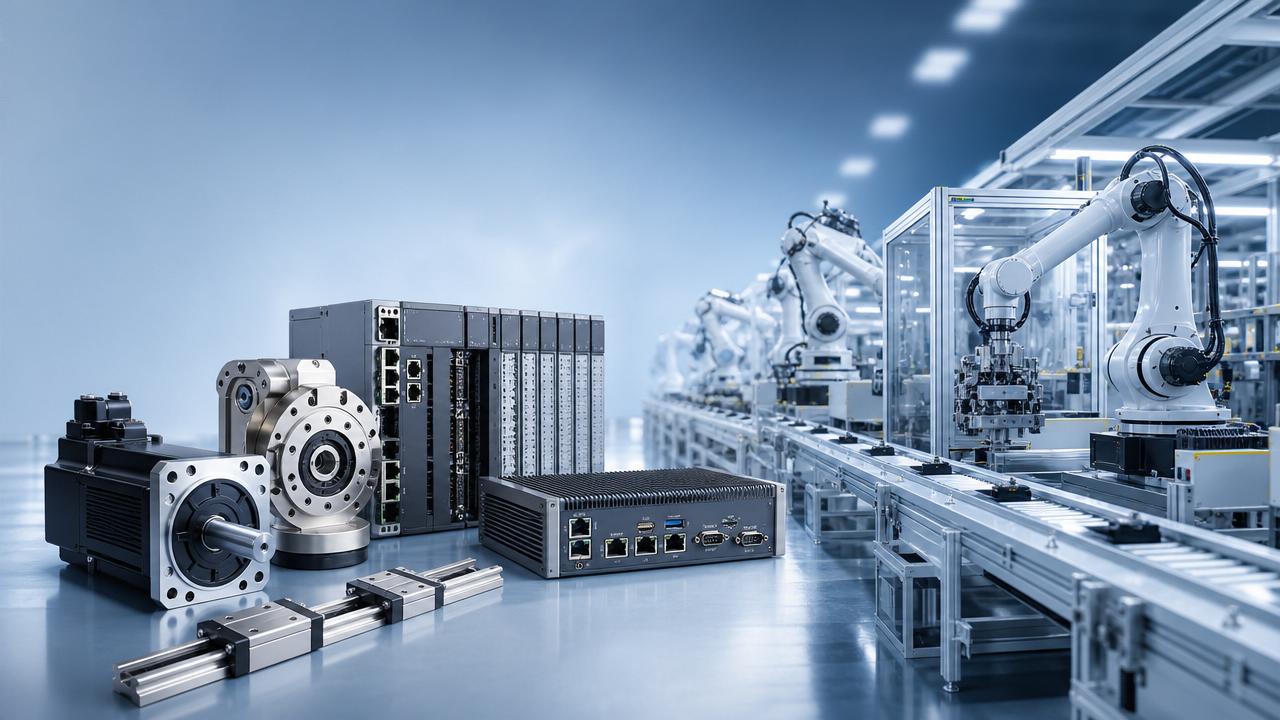
Servo motors, precision reducers, PLC/DCS systems, linear motion parts, inverters, and industrial PCs all influence lifecycle cost, uptime, and automation performance.
This guide explains the cost signals behind Industrial Robotics Components, from torque density and accuracy grades to supplier reliability and integration complexity.
The goal is practical budget control, without sacrificing long-term competitiveness in smart manufacturing and flexible production.
Automation Cost Is Moving From Hardware Price To System Value
The cost structure of Industrial Robotics Components is changing as factories demand higher precision, faster changeovers, and more resilient operations.
A low-priced component can become expensive when it creates downtime, programming delays, vibration problems, or spare-part uncertainty.
Servo systems now must support tighter current loops, higher encoder resolution, and stable performance under demanding mechanical loads.
Precision reducers face pressure from humanoid robotics, collaborative robots, semiconductor tools, and new energy equipment.
PLC/DCS platforms are also becoming cost-sensitive because software libraries, cybersecurity, and communication compatibility affect total ownership cost.
Therefore, an Industrial Robotics Components checklist should measure purchase cost, operational risk, engineering time, and lifecycle service capacity together.
Trend Signals Visible In Industrial Robotics Components Pricing
Several market signals show why Industrial Robotics Components pricing is becoming more layered and less predictable.
- High-resolution encoders and safety-certified drives are adding value beyond basic motor specifications.
- Harmonic and RV reducers face long lead times when robot demand rises sharply.
- Industrial PCs require stronger environmental protection for edge AI and real-time data workloads.
- PLC/DCS systems increasingly depend on software ecosystems, not only hardware availability.
- Linear guides and ball screws are affected by steel quality, grinding accuracy, and preload consistency.
These signals mean Industrial Robotics Components should be evaluated through technical resilience and supply continuity, not simple price ranking.
Why Cost Pressure Is Rising Across The Component Stack
Cost pressure does not come from one component category alone. It forms across control, transmission, sensing, computing, and mechanical motion.
The best Industrial Robotics Components decisions balance motion accuracy, control stability, and predictable support over the machine lifecycle.
Servo Motors And Drives: The Cost Of Dynamic Precision
Servo motors are among the most influential Industrial Robotics Components because they directly determine motion quality and productivity.
Key cost variables include torque density, peak overload capacity, encoder resolution, brake quality, thermal design, and drive tuning functions.
Advanced drives with notch filters, vibration suppression, and fast current response may cost more initially.
However, they can reduce commissioning time, improve path accuracy, and protect mechanical structures from resonance damage.
Servo Checklist Points
- Confirm continuous torque, peak torque, and duty cycle under real load conditions.
- Compare encoder type, resolution, absolute position retention, and cable durability.
- Evaluate drive auto-tuning, resonance suppression, safety functions, and diagnostic depth.
- Check compatibility with EtherCAT, PROFINET, EtherNet/IP, or other factory networks.
In high-speed cells, servo-related Industrial Robotics Components often justify premium pricing when they protect throughput and precision.
Precision Reducers: Small Parts With Large Cost Consequences
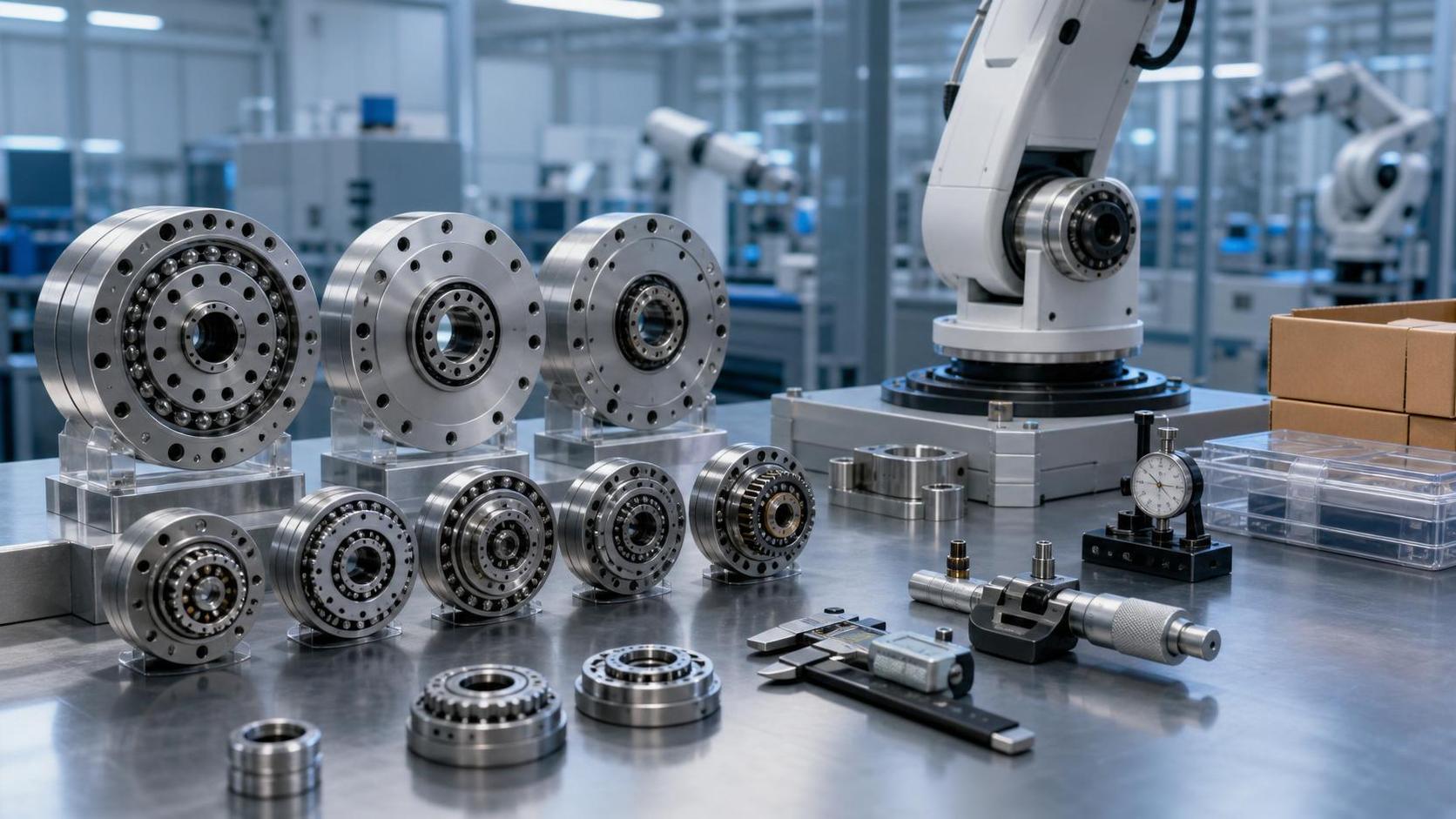
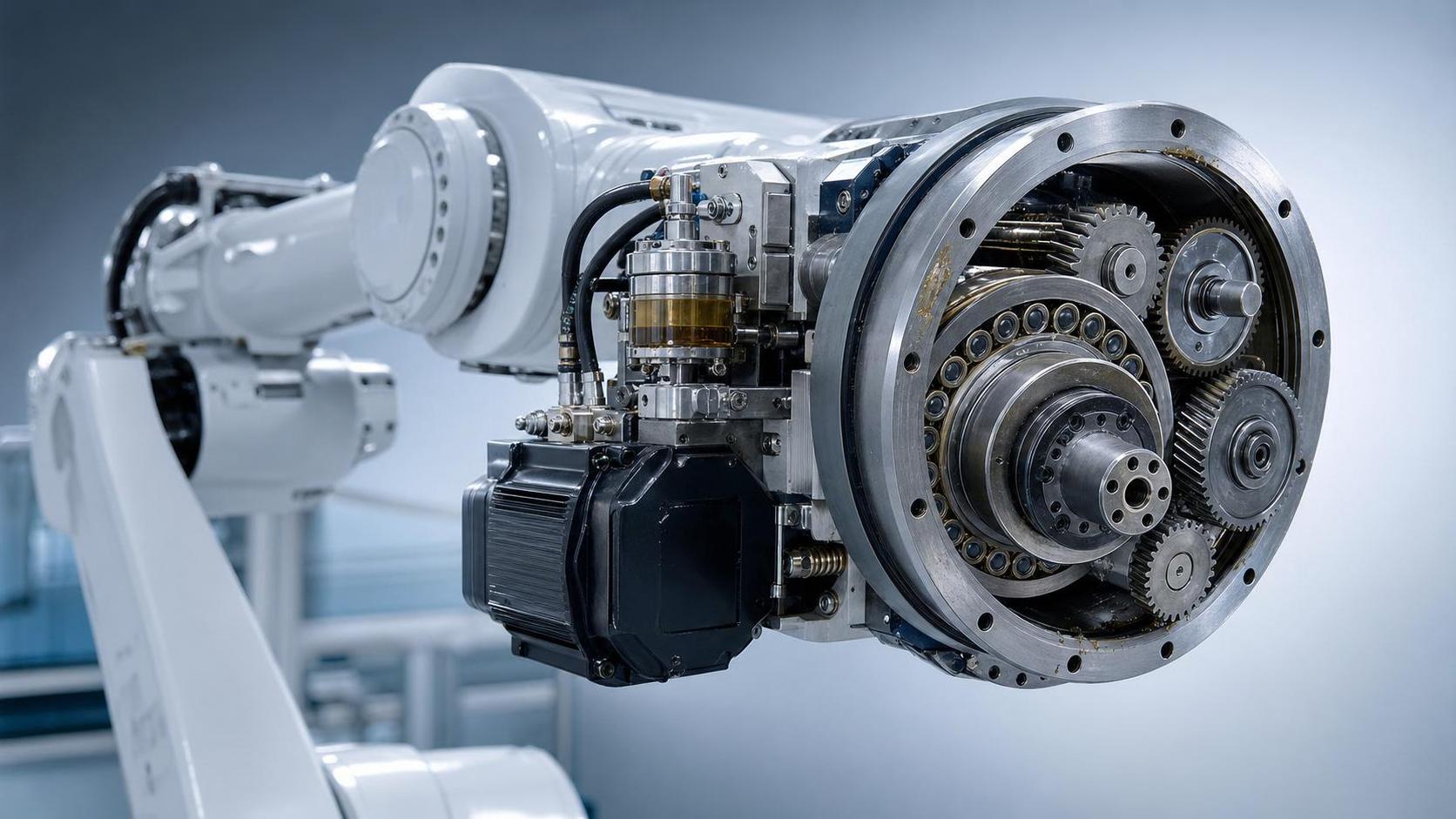
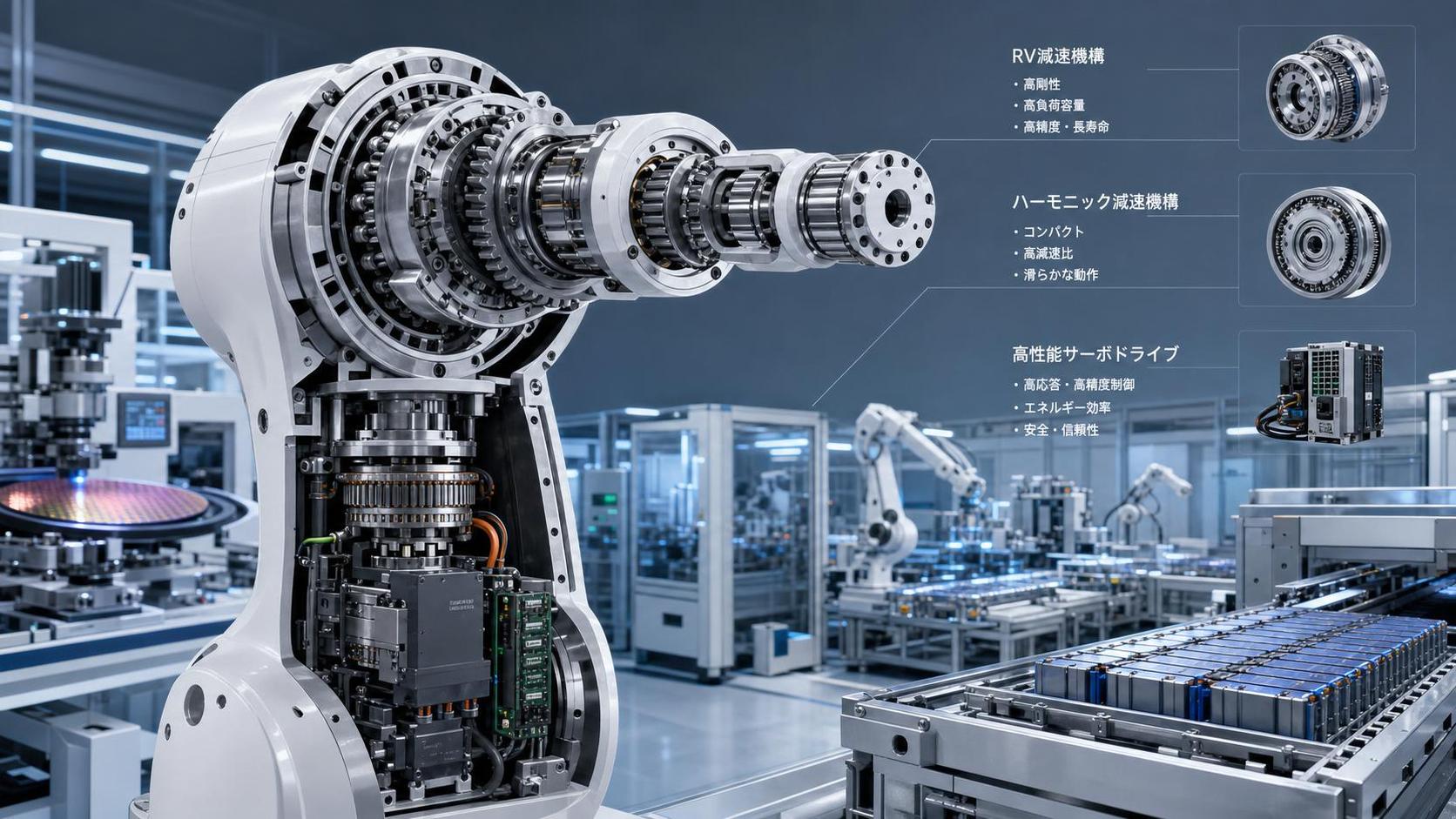
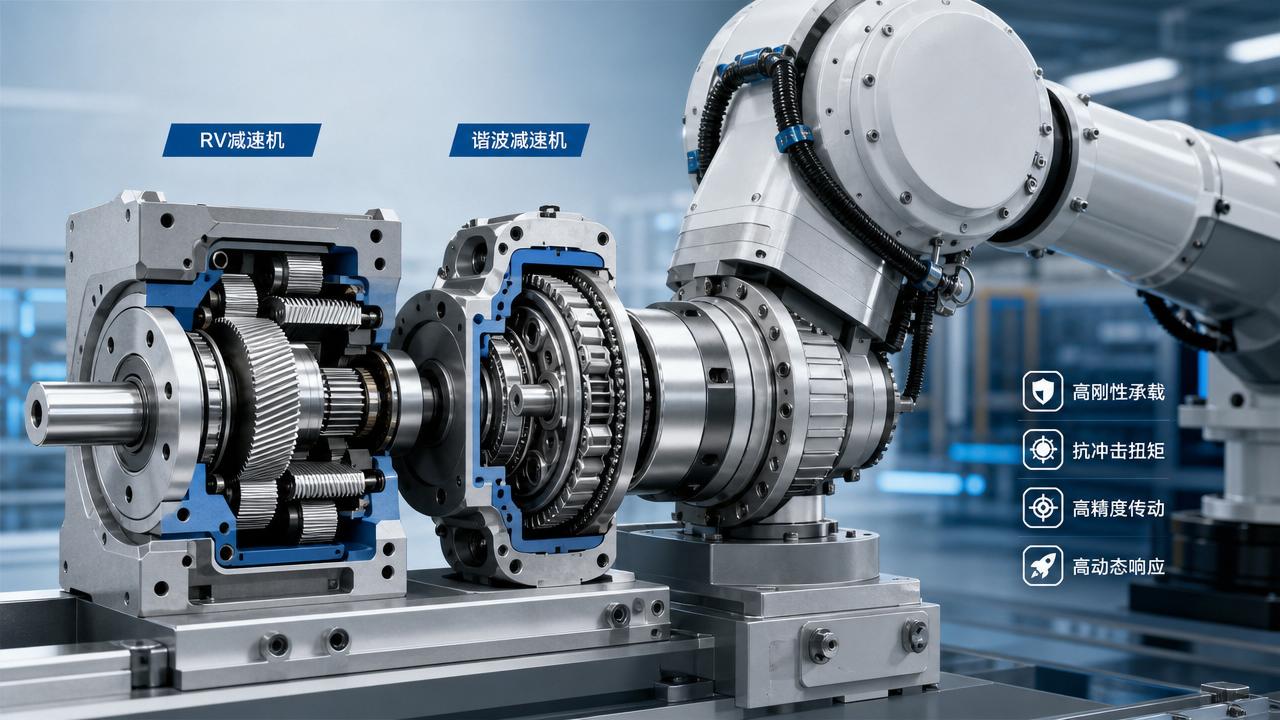
RV and harmonic reducers are critical Industrial Robotics Components because backlash, stiffness, and fatigue life define robotic joint behavior.
A lower-cost reducer can create positioning errors, heat rise, noise, vibration, or premature flexspline fatigue.
Cost evaluation should include rated torque, emergency torque, torsional rigidity, transmission error, lubrication, and expected operating hours.
For compact robots, high reduction ratio in limited volume becomes a major pricing factor.
Reducer Checklist Points
- Identify backlash requirements by robot axis and process tolerance.
- Review fatigue test data, lubrication intervals, and thermal behavior.
- Compare stiffness under acceleration, deceleration, and emergency stop conditions.
- Assess availability of spare reducers, seals, and qualified repair support.
Industrial Robotics Components in the reducer category should never be selected only by ratio and nominal torque.
PLC, DCS, And Industrial PCs: Control Cost Is Becoming Software Cost
Control platforms are essential Industrial Robotics Components because they coordinate logic, safety, motion sequences, and factory data exchange.
Hardware price is only one part of the decision. Software licensing, engineering tools, firmware support, and cybersecurity matter increasingly.
Industrial PCs add another layer as edge computing enters robotics, inspection, predictive maintenance, and AI-assisted quality control.
Rugged IPC cost depends on processor grade, thermal design, storage reliability, expansion slots, and long-term operating system support.
Control Checklist Points
- Confirm scan cycle, motion synchronization, and deterministic communication capability.
- Calculate software, function block, runtime, and engineering tool costs.
- Check vendor support for firmware updates and vulnerability management.
- Review compatibility with sensors, servo drives, safety modules, and MES interfaces.
For complex automation lines, these Industrial Robotics Components can shape integration speed more than mechanical hardware.
Linear Motion, Ball Screws, And Inverters: Hidden Drivers Of Lifecycle Cost
Linear guides and ball screws are Industrial Robotics Components that affect smooth motion, positioning accuracy, and load-bearing stability.
Their cost depends on material purity, grinding grade, preload class, sealing structure, lubrication method, and rail straightness.
A weak linear motion system can transfer vibration into the robot cell and reduce toolpath consistency.
Inverters also influence ownership cost by improving motor energy efficiency, soft-start behavior, and process stability.
For pumps, conveyors, fans, and auxiliary axes, inverter selection affects electricity cost and maintenance stress.
Mechanical And Power Checklist Points
- Match guide preload and screw accuracy to payload, speed, and repeatability needs.
- Calculate lubrication access, contamination resistance, and expected replacement intervals.
- Review inverter harmonic control, braking options, and motor protection functions.
- Compare energy savings against drive cost, cabinet space, and cooling requirements.
These Industrial Robotics Components often decide whether an automation cell remains stable after thousands of operating hours.
Business Impact Across Engineering, Operations, And Supply Planning
Industrial Robotics Components influence different business links in different ways, from design approval to spare-part strategy.
Engineering teams feel the impact through integration time, communication protocol stability, mechanical fit, and tuning complexity.
Operations feel the impact through uptime, defect rates, energy usage, alarm frequency, and maintenance predictability.
Supply planning feels the impact through lead time exposure, supplier concentration, replacement compatibility, and inventory carrying cost.
Core Items Every Cost Checklist Should Include
A practical Industrial Robotics Components cost checklist should combine technical verification with commercial risk analysis.
- Define required accuracy, repeatability, torque, speed, stiffness, and environmental resistance.
- Separate mandatory performance features from optional premium functions.
- Confirm standard interfaces, communication protocols, and software tool availability.
- Request lifecycle documentation, including MTBF data, maintenance intervals, and failure modes.
- Evaluate supplier capacity, regional service network, and spare-part continuity.
- Calculate commissioning labor, downtime risk, energy usage, and replacement cost.
- Verify safety certifications, EMC performance, and industrial cybersecurity readiness.
This structure keeps Industrial Robotics Components evaluation connected to measurable operating value, not isolated component price.
How To Judge Suppliers Beyond The Quotation
Supplier evaluation is becoming a central part of Industrial Robotics Components cost control.
A strong supplier reduces risk through stable quality, transparent lead times, engineering support, and clear product roadmaps.
The lowest quotation may hide limited testing, weak documentation, uncertain firmware support, or short lifecycle availability.
Supplier Review Questions
- Can the supplier prove consistency through batch data and application references?
- Are replacement parts available for the expected machine service life?
- Does technical support understand servo tuning, reducer sizing, and control integration?
- Is there a clear escalation path for urgent field failures?
Reliable Industrial Robotics Components suppliers help protect production continuity when demand, logistics, or technology standards shift.
Decision Framework For The Next Automation Cycle
The next automation cycle will favor Industrial Robotics Components that support precision, flexibility, connectivity, and maintainability.
Cost decisions should follow a staged framework, especially when robotic cells serve high-mix or high-value production.
This approach makes Industrial Robotics Components spending more predictable during expansion, retrofits, and platform standardization.
Practical Next Steps For Cost Discipline
Start by mapping each robotic function to the Industrial Robotics Components that carry the greatest precision or downtime risk.
Then create a weighted scorecard covering performance, integration effort, supplier resilience, maintenance burden, and lifecycle cost.
Use pilot data whenever possible. Real load, real duty cycles, and real environmental conditions reveal hidden cost drivers quickly.
Finally, review the checklist every procurement cycle because automation technology, chip supply, and robot application demands keep changing.
A disciplined Industrial Robotics Components checklist turns cost control into a strategic capability for resilient, precise, and flexible manufacturing.
Related Recommendations
 Robot Reducer Systems Supplier Comparison: Cost, Lead Time, and Service RiskTime : Jul 12, 2026
- Precision Robot Gearbox: Key Signs of Backlash and WearTime : Jul 11, 2026
- Robot Joint Reducers in Japan: What Is Shaping the 2026 Market?Time : Jul 08, 2026
- RV Reducers vs Harmonic Drives: Which Holds Up Better Under Shock LoadsTime : Jun 06, 2026
- Industrial Robotics Components Cost ChecklistTime : Jun 02, 2026