Industrial Motion Technology Trends for 2026

Industrial Motion Technology is entering a decisive phase in 2026, shaped by smarter servo control, resilient PLC/DCS architectures, precision transmission breakthroughs, and edge-level intelligence. For researchers tracking the future of automation, these shifts reveal how manufacturers are pursuing higher accuracy, faster response, lower energy use, and more flexible production systems. From micron-level motion control to AI-assisted diagnostics and industrial computing at the machine edge, the next wave of innovation will redefine how factories move, sense, decide, and compete.
What Makes Industrial Motion Technology a 2026 Decision Priority?
For information researchers, Industrial Motion Technology is no longer a narrow component topic. It connects productivity, energy management, supply resilience, quality stability, and equipment flexibility.
The central question is changing. Buyers are not only asking which servo, reducer, PLC, or IPC is available. They ask which motion architecture can survive product variation, labor pressure, and tighter delivery windows.
The five technical layers researchers should track
- Servo motors and drives determine torque response, positioning accuracy, encoder resolution, vibration suppression, and real-time command execution.
- PLC/DCS systems define scan cycle stability, deterministic control, safety logic, and production-line orchestration under electromagnetic interference.
- Precision reducers, including RV and harmonic types, influence robot joint stiffness, backlash, lifespan, load capacity, and repeatability.
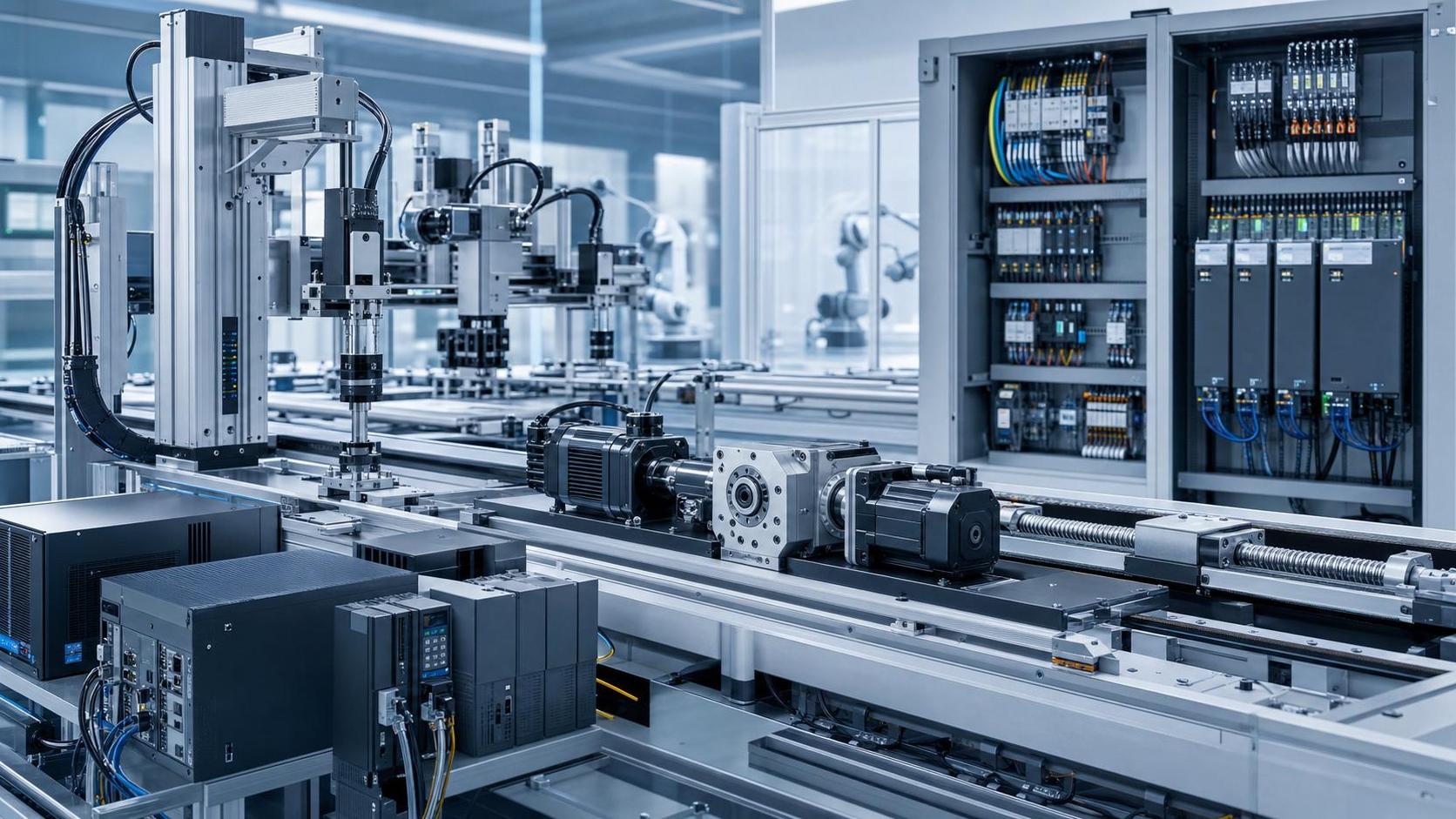
- Linear guides and ball screws convert rotary energy into accurate linear motion while resisting cutting force, friction, dust, and thermal distortion.
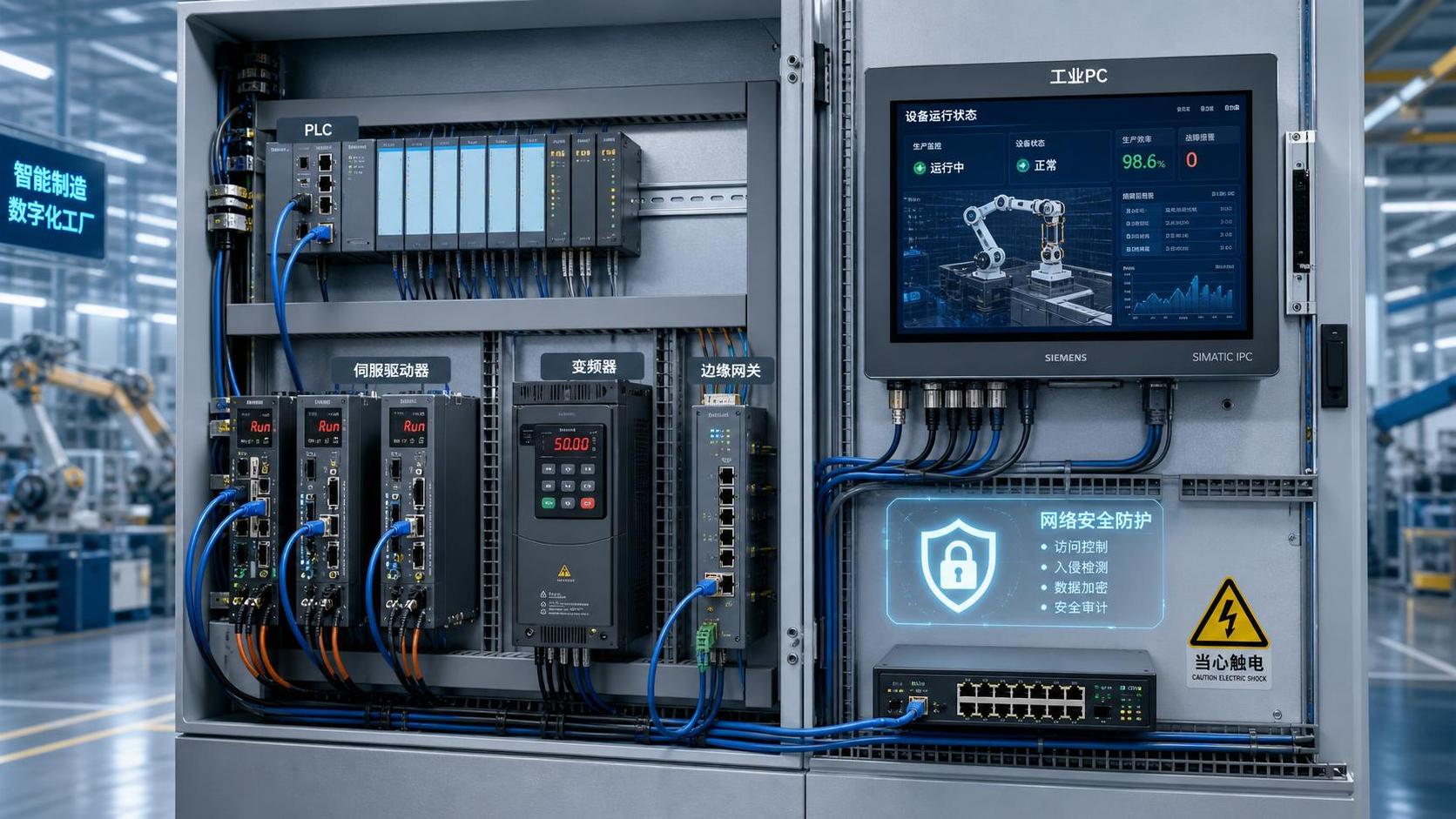
- Inverters and industrial PCs support energy optimization, edge analytics, predictive maintenance, machine vision, and OT/IT data convergence.
IAMC views these layers as the muscles, joints, rails, energy hearts, and nerve centers of Industry 4.0, not as isolated catalog items.
Which Market Forces Are Reshaping Industrial Motion Technology?
Industrial Motion Technology trends in 2026 are being driven by flexible manufacturing, robotics expansion, new energy equipment, semiconductor localization, and rising expectations for lifecycle transparency.
Researchers must compare technical feasibility with market pressure. A component may be technically mature, yet unsuitable when lead time, regional compliance, or chip availability changes.
The following table summarizes the market forces most likely to influence motion control selection, investment timing, and technology roadmaps in 2026.
This view helps researchers avoid a common mistake: treating Industrial Motion Technology as a price comparison instead of a system-level competitiveness factor.
How Servo Control Will Evolve Beyond Basic Positioning
Servo systems in 2026 will be judged by responsiveness under disturbance, not only by nominal accuracy. Microsecond current loops and high-resolution encoders are becoming baseline expectations.
The more important trend is adaptive control. Modern Industrial Motion Technology increasingly uses auto-tuning, notch filters, vibration observers, and load estimation to stabilize changing mechanics.
What performance parameters deserve attention?
Parameter claims can be misleading without context. Researchers should connect each specification to the actual motion task, load inertia, duty cycle, and mechanical stiffness.
In IAMC analysis, servo evaluation should combine electrical response with mechanical realities, including coupling rigidity, screw pitch, reducer torsion, and machine-frame resonance.
PLC, DCS, and IPC: Where Should Control Intelligence Reside?
A major Industrial Motion Technology question for 2026 is architectural. Should intelligence remain inside PLC logic, move to IPCs, or be distributed across drives?
The answer depends on determinism, data volume, safety requirements, and maintenance capability. General-purpose computing should not weaken real-time control discipline.
Architecture comparison for mixed automation environments
Researchers comparing control platforms should look beyond CPU speed. Real value comes from deterministic communication, diagnostic visibility, lifecycle support, and integration with field devices.
The strongest architecture often combines a deterministic PLC layer, servo-level compensation, and IPC-based analytics. Separation of responsibility keeps motion reliable and data useful.
Precision Transmission Trends: Reducers, Guides, and Ball Screws
Mechanical transmission remains the physical truth of Industrial Motion Technology. Even advanced algorithms cannot fully compensate for poor backlash, thermal growth, contamination, or fatigue.
In 2026, researchers should expect stronger attention to reducer lifespan, harmonic flexspline fatigue, RV stiffness, guideway preload, and ball screw lubrication strategy.
Practical selection indicators
- For robot joints, compare rated torque, moment rigidity, lost motion, reduction ratio, and expected cycle profile under acceleration.
- For CNC and semiconductor equipment, examine straightness, preload class, screw lead accuracy, thermal compensation, and contamination control.
- For high-speed handling systems, prioritize low inertia, lubrication stability, dynamic load rating, and compatibility with servo tuning.
- For heavy industrial machines, verify shock-load allowance, mounting rigidity, bearing arrangement, sealing, and service accessibility.
IAMC’s technical lens is useful here because motion performance is evaluated from encoder pulse to steel contact, not from a single component datasheet.
How Should Researchers Build a Procurement Shortlist?
Information researchers often face fragmented data. Datasheets emphasize peak values, suppliers highlight successful applications, and procurement teams focus on price and delivery.
A practical Industrial Motion Technology shortlist should convert technical requirements into measurable decision criteria before supplier conversations begin.
Procurement checklist for 2026 projects
- Define the motion task, including speed, acceleration, accuracy, load inertia, positioning cycle, and environmental constraints.
- Separate mandatory requirements from preferred functions, especially for safety, communication protocol, and maintenance diagnostics.
- Request lifecycle information, including firmware update policy, spare-part continuity, repair route, and regional technical support.
- Compare total cost rather than purchase price, including tuning labor, downtime risk, energy use, and future expansion.
- Validate compatibility among servo drives, PLC/DCS, reducers, linear guides, sensors, and industrial networks before pilot testing.
This checklist reduces subjective comparison and helps procurement teams avoid mismatches between motion ambition, budget limits, and commissioning resources.
Cost, Risk, and Alternatives: What Should Not Be Ignored?
Cost decisions in Industrial Motion Technology are rarely linear. A lower-cost drive may increase tuning time, while an oversized motor can waste energy and cabinet space.
Alternatives should be considered by function. Sometimes a direct-drive motor replaces a reducer; sometimes a better reducer allows a smaller servo and simpler control.
Cost-sensitive evaluation points
- Review whether high encoder resolution is genuinely required, because mechanical compliance may limit usable positioning accuracy.
- Estimate downtime cost if a critical servo drive, IPC, or precision reducer has uncertain delivery or repair support.
- Check whether energy savings from inverters or regenerative drives justify additional engineering and protection design.
- Avoid copying specifications from flagship machines when the actual production requirement is moderate and stable.
The best alternative is not always cheaper at purchase. It is the option that balances accuracy, maintainability, delivery risk, and upgrade space.
Standards, Compliance, and Data Integrity in Motion Systems
As automation becomes networked, compliance expands beyond electrical safety. Researchers must include functional safety, industrial communication, cybersecurity, and documentation quality in evaluation.
Relevant references may include IEC 61131 for PLC programming concepts, IEC 61508 or ISO 13849 for safety-related control, and IEC 62443 for industrial cybersecurity.
Compliance questions before specification freeze
- Does the motion system require safety torque off, safe limited speed, emergency stop integration, or validated safety logic?
- Can communication protocols support deterministic motion and secure data exchange without excessive gateway complexity?
- Are firmware versions, parameter backups, alarm histories, and machine recipes traceable for maintenance and audits?
- Will the IPC, drive, or PLC operate reliably under vibration, dust, temperature variation, and electromagnetic interference?
Compliance does not only protect certification schedules. It also improves troubleshooting discipline and reduces ambiguity during global deployment.
FAQ: Common Questions About Industrial Motion Technology in 2026
How do I compare servo systems when all suppliers claim high precision?
Compare actual application performance, not only encoder counts. Ask about load inertia range, settling time, resonance suppression, thermal behavior, and tuning workflow.
When is an IPC better than a traditional PLC?
An IPC is stronger when machine vision, AI diagnostics, database interaction, or high-volume sensor processing is needed. A PLC remains preferable for simple deterministic control.
Are harmonic reducers always better for robot applications?
No. Harmonic reducers offer compactness and low backlash, but RV reducers may suit heavier loads or higher rigidity needs. Joint duty cycle decides suitability.
What is the biggest procurement risk in Industrial Motion Technology?
The biggest risk is system mismatch. A strong individual component can fail commercially if it conflicts with protocol, mechanics, commissioning capability, or delivery schedule.
Why Choose IAMC for Industrial Motion Technology Intelligence?
IAMC supports researchers who need more than news headlines. Our focus covers servo algorithms, PLC/DCS architectures, precision reducers, linear transmission, inverters, and industrial edge computing.
We connect microsecond electrical control, mechanical tolerance behavior, component supply cycles, and manufacturing application needs into practical intelligence for decision preparation.
You can consult IAMC for specific research and selection needs
- Parameter confirmation for servo motors, drives, reducers, ball screws, guides, IPCs, inverters, and PLC/DCS platforms.
- Technology comparison for motion control architectures, fieldbus choices, edge computing deployment, and predictive maintenance readiness.
- Procurement research on lead time, component alternatives, regional supply risk, and specification priorities before supplier engagement.
- Compliance discussion involving safety functions, industrial cybersecurity, environmental durability, and documentation expectations.
- Customized intelligence support for robotics, new energy equipment, CNC systems, packaging lines, process automation, and flexible production cells.
If you are mapping Industrial Motion Technology trends for 2026, IAMC can help refine the questions, compare trade-offs, and build a clearer technical roadmap.
Related Recommendations
 Japan Robot Joint Reducers Market: 2026 Supply, Pricing, and Share ShiftsTime : Jul 16, 2026
- Factory Automation Technology Trends in 2026: What Will Change FirstTime : Jul 14, 2026
- Automation Technology Trends: Cybersecurity Risks Now Shaping UpgradesTime : Jul 13, 2026
- Factory Automation Technology Trends Shaping 2026 Upgrade PlansTime : Jul 02, 2026
- 2026 Industrial Motion Systems Trends Shaping Throughput and Energy UseTime : Jun 27, 2026
- Industrial Cyber Physical Systems: What Changes on the Factory FloorTime : Jun 26, 2026