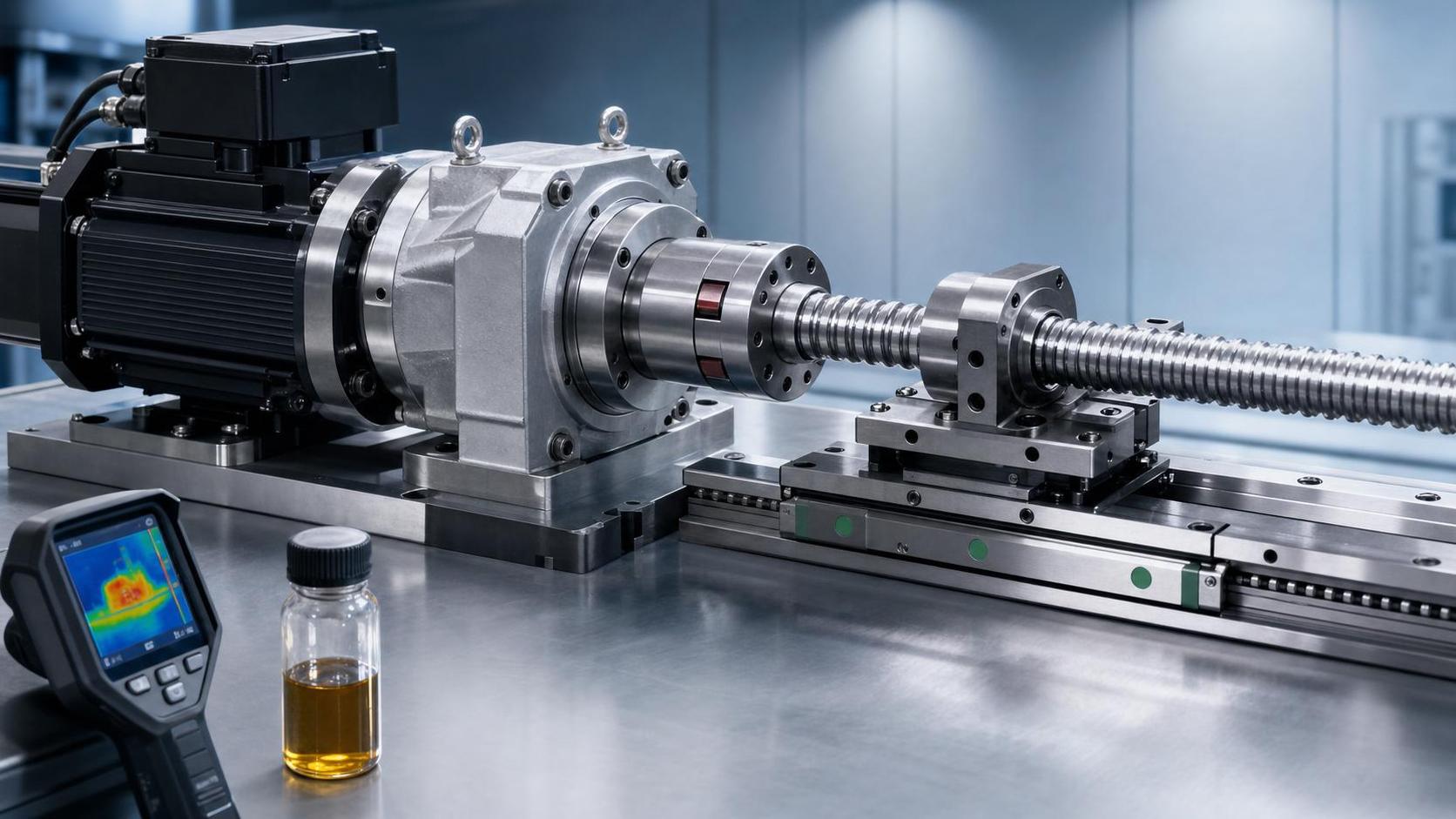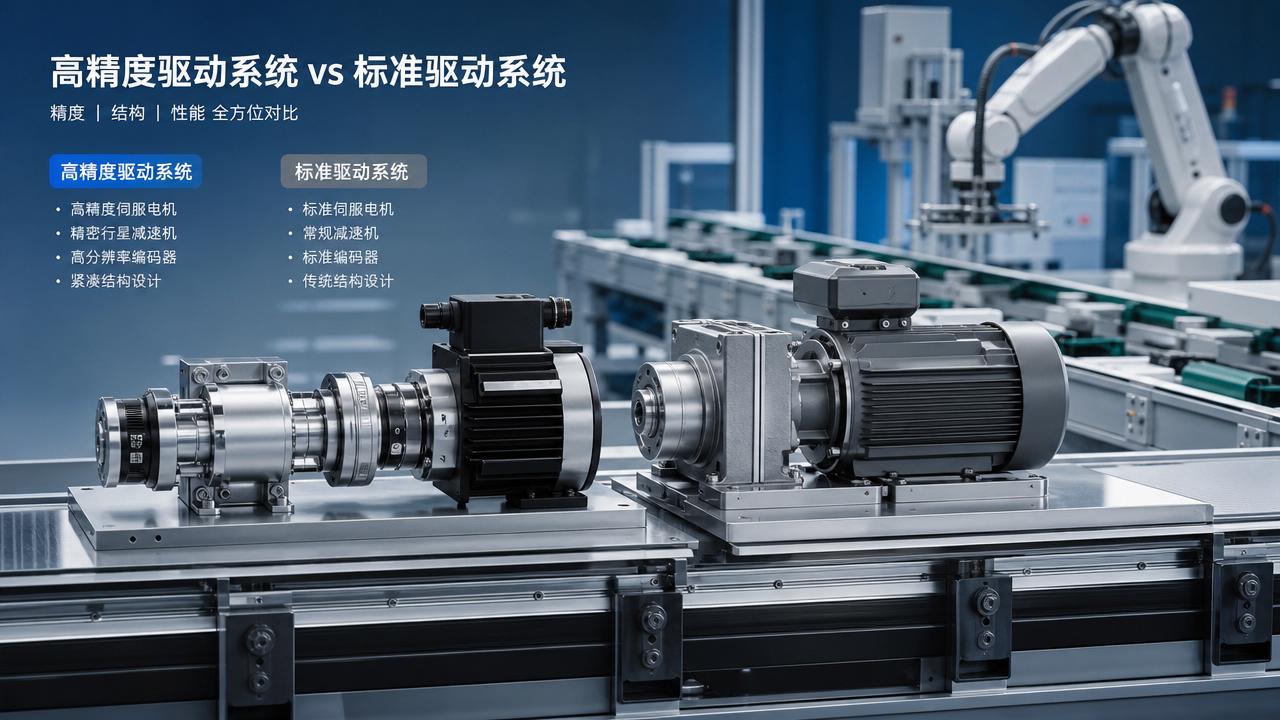

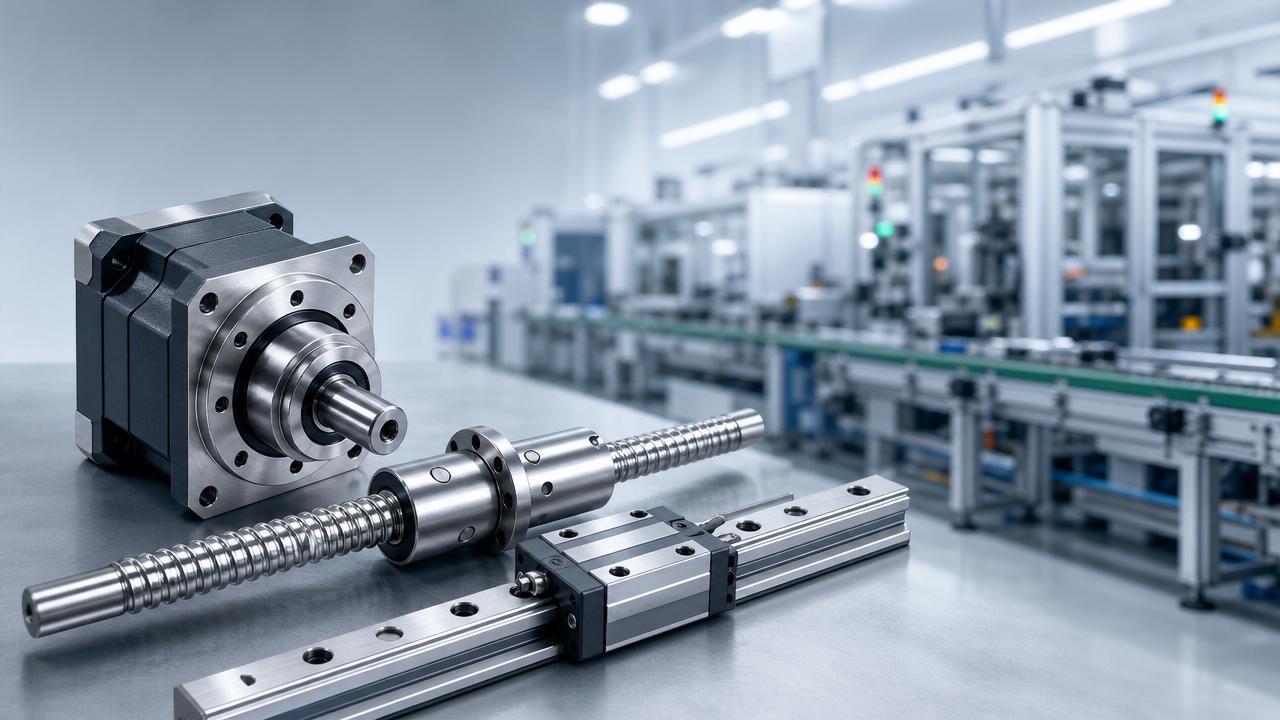
Precision Transmission Selection: Key Cost Risks
For procurement teams, Precision Transmission selection is no longer a simple price comparison. It directly affects equipment accuracy, lifecycle cost, and production stability.
Backlash, bearing fatigue, supplier lead times, counterfeit risks, and hidden maintenance expenses can turn minor specification gaps into costly production failures.
This article examines the cost risks buyers should evaluate before sourcing precision transmission components for demanding automation and motion control applications.
The Real Procurement Question: Lowest Price or Lowest Risk?
The most expensive Precision Transmission component is rarely the one with the highest quotation. It is the one that fails inside production.
For buyers, the correct question is not simply which supplier offers the lowest unit price. The better question is which option protects output.
A reducer, ball screw, linear guide, coupling, or precision gearbox sits deep inside the machine’s value chain. Failure spreads quickly.
One unsuitable component can create positioning error, vibration, unplanned downtime, warranty disputes, rejected products, and emergency logistics costs.
Procurement teams must therefore evaluate total cost of ownership, not only purchase cost. This includes qualification, installation, operation, service, and replacement.
In high-speed packaging, CNC machining, robotics, semiconductor equipment, and battery manufacturing, transmission quality directly influences repeatability and yield.
A small saving during sourcing can be erased by one missed delivery, one failed acceptance test, or one unplanned maintenance shutdown.
Specification Gaps That Become Expensive After Installation
Many procurement risks begin with incomplete specifications. A purchasing request may mention torque, ratio, size, or rail length, but omit operating details.
Precision Transmission performance depends on dynamic load, acceleration, duty cycle, mounting orientation, lubrication, temperature, impact, and required positioning accuracy.
If these factors are not clarified, suppliers may quote technically acceptable products that are commercially dangerous for the actual application.
Backlash is one common example. A low-backlash reducer may be sufficient for indexing but unsuitable for interpolation or force-controlled motion.
Load rating is another frequent misunderstanding. Catalog dynamic load capacity does not automatically guarantee long service life under real shock conditions.
Procurement should request application-based sizing confirmation, not only catalog matching. The supplier must understand speed profiles, inertia, cycles, and safety factors.
When specifications are vague, responsibility becomes difficult to assign after failure. Buyers may face arguments between machine builders, integrators, and component suppliers.
Backlash, Stiffness, and Accuracy: The Cost of Motion Error
In precision automation, motion error is not just a technical metric. It can create scrap, rework, unstable process quality, and customer complaints.
Backlash affects positioning repeatability when direction changes. Torsional stiffness affects response during acceleration, cutting, pressing, dispensing, or robotic path correction.
A cheaper component may meet static accuracy requirements but deform under load. That difference often appears only during production trials.
Procurement teams should distinguish between positioning accuracy, repeatability, lost motion, transmission error, and stiffness. These terms are related but not interchangeable.
For robots, RV reducers and harmonic drives have different behavior under shock, overload, and continuous cycling. Selection should reflect operating reality.
For CNC and linear motion, ball screw accuracy grade matters, but preload, support bearing quality, alignment, and thermal growth matter too.
Buyers should ask suppliers for test methods, tolerance definitions, and measurement conditions. A performance number without context can mislead sourcing decisions.
Lifecycle Cost: Where Hidden Expenses Usually Appear
The visible price of a Precision Transmission product is only the first line of cost. The hidden lines often determine profitability.
Hidden expenses include premature replacement, longer commissioning, special tools, lubrication routines, spare inventory, technician training, and shipment during emergency repairs.
Maintenance frequency is especially important. A low-cost unit requiring frequent relubrication may cost more than a sealed or long-life alternative.
Compatibility also affects cost. A component that requires redesigning brackets, couplings, control parameters, or guards can delay the machine schedule.
Procurement should calculate cost per operating hour, not only cost per piece. This approach is more suitable for capital equipment.
For production lines running multiple shifts, downtime cost can exceed component cost within hours. Reliability should therefore carry measurable purchasing weight.
A practical evaluation should include expected life, replacement time, service accessibility, spares availability, and the supplier’s response commitment.
Supplier Reliability: Lead Time Is a Technical Risk Too
Precision Transmission sourcing is increasingly affected by global supply chains, material constraints, high-end machining capacity, and regional trade restrictions.
A technically excellent product may still create risk if delivery is unstable, documentation is weak, or after-sales support is distant.
Procurement teams should assess supplier reliability with the same discipline used for technical evaluation. Lead time promises need evidence and history.
Ask whether the supplier holds local inventory, offers forecast agreements, maintains critical spare parts, and can support urgent replacements.
Buyers should also review manufacturing capability, quality systems, inspection equipment, traceability process, and experience in comparable applications.
For strategic components, dual sourcing may reduce exposure. However, dual sourcing requires dimensional, performance, and control compatibility verification.
A cheaper secondary source is not useful if it creates software tuning changes, mechanical redesign, or inconsistent machine behavior.
Counterfeit and Substandard Components: A Growing Procurement Threat
High-value transmission parts attract counterfeit and gray-market activity. This is especially true for bearings, guides, ball screws, reducers, and servo accessories.
Counterfeit risks are not limited to obvious fakes. They include unauthorized repairs, repackaged stock, altered labels, and products without traceable origin.
The cost impact can be severe because substandard components may pass visual inspection but fail under load, speed, or temperature.
Procurement should require authorized channels, serial number verification, factory certificates, and clear warranty terms. Price deviations need careful investigation.
Receiving inspection should check packaging, markings, dimensions, lubrication condition, smoothness, noise, and documentation consistency before installation.
For critical equipment, buyers should consider supplier audits or third-party verification. This is especially important in cross-border sourcing.
A procurement policy that blocks untraceable components protects not only the buyer, but also machine builders and end users.
Application Fit: Different Machines Need Different Risk Priorities
There is no universal best Precision Transmission choice. The best decision depends on application duty, accuracy demand, environment, and business consequences.
For robotics, buyers should focus on backlash stability, shock resistance, torsional rigidity, grease life, and consistency between production batches.
For CNC machines, priority shifts toward ball screw accuracy grade, preload, thermal behavior, guideway rigidity, and long-term repeatability.
For packaging and logistics equipment, speed, noise, easy replacement, and cost-effective durability may be more important than extreme precision.
For semiconductor, medical, and electronics assembly, cleanliness, micro-vibration, smooth motion, documentation, and process stability become essential purchasing factors.
For new energy equipment, long duty cycles, synchronized multi-axis motion, and predictable service intervals often dominate sourcing decisions.
Procurement teams gain leverage when they map component selection to application risk, instead of applying one purchasing rule everywhere.
How Buyers Should Compare Quotes Beyond Unit Price
A useful quotation comparison should include technical equivalence, delivery certainty, warranty scope, service support, documentation, and expected lifecycle performance.
If two suppliers quote different prices, buyers should identify what is included and excluded before assuming one is more competitive.
Important comparison items include accuracy grade, preload class, material treatment, bearing brand, sealing design, lubrication, inspection report, and packaging standard.
For reducers, compare rated torque, emergency stop torque, moment load, backlash after lifetime testing, efficiency, noise, and thermal limits.
For linear motion products, compare rail hardness, carriage preload, seal structure, straightness, ball circulation design, and corrosion protection.
Buyers should request a clear statement of assumptions. A quote based on incomplete operating data should be treated as conditional.
The strongest suppliers usually ask more technical questions before quoting. That behavior often indicates better risk control, not inconvenience.
Qualification Testing Before Mass Purchasing
Qualification testing is a procurement insurance policy. It reduces the chance that a component passes paperwork review but fails in production.
For new suppliers, buyers should start with sample testing under realistic load, speed, duty cycle, temperature, and installation conditions.
Testing should measure not only immediate performance, but also drift, noise, heating, wear particles, backlash change, and lubrication condition.
Machine acceptance tests should record baseline motion data. This helps identify whether future failures come from components, installation, or process changes.
Procurement, engineering, maintenance, and quality teams should define pass-fail criteria together before samples are approved for volume purchasing.
For high-risk applications, accelerated life testing may be justified. The cost is often smaller than one failed production launch.
Qualification records also strengthen supplier negotiations because they replace subjective opinions with measurable evidence and documented performance history.
Contract Terms That Reduce Precision Transmission Cost Risk
Commercial terms can reduce technical risk when they are aligned with how Precision Transmission components fail, age, and require support.
Contracts should define acceptance criteria, inspection documents, warranty conditions, failure analysis process, response time, replacement method, and liability boundaries.
Buyers should avoid vague warranty promises. A useful warranty explains what happens when accuracy loss, abnormal noise, or early wear occurs.
For strategic components, agreements may include safety stock, forecast sharing, annual price review, engineering change notification, and end-of-life notice.
Engineering change control is especially important. A small material, grease, seal, or machining process change can affect machine behavior.
Procurement should require advance notice and approval for changes affecting dimensions, performance, origin, critical subcomponents, or inspection procedures.
Good contracts do not replace supplier trust, but they make expectations visible and reduce disputes when production pressure is high.
A Practical Procurement Checklist for Precision Transmission Selection
Before placing an order, buyers should confirm whether the selected component truly matches the machine’s technical and business risk profile.
Start with application data: load, speed, acceleration, operating hours, environment, accuracy target, installation layout, and required service life.
Then verify critical performance indicators: backlash, stiffness, rated torque, load capacity, repeatability, lubrication method, thermal behavior, and noise.
Next, examine supplier capability: manufacturing process, inspection reports, traceability, certifications, local support, spare parts, and comparable project experience.
Finally, review commercial protection: delivery commitment, warranty language, change notification, emergency support, sample approval, and documentation requirements.
This checklist helps procurement teams move from price negotiation to risk-based sourcing. It also improves communication with engineering and maintenance teams.
The result is not always the lowest initial quote, but it is more likely to be the lowest sustainable operating cost.
Conclusion: Precision Transmission Buying Is a Risk Management Decision
Precision Transmission selection directly influences accuracy, uptime, maintenance cost, and supplier resilience. Procurement decisions should reflect that strategic importance.
The key risks are usually hidden in specification gaps, lifecycle assumptions, supplier reliability, counterfeit exposure, and weak qualification processes.
Buyers who evaluate total cost of ownership can avoid false savings and build more stable automation and motion control supply chains.
The best sourcing decision balances performance, reliability, availability, and commercial protection. That balance is what keeps machines accurate and factories productive.