When Precision Mechanical Transmission Assemblies Fail Early

When Precision Mechanical Transmission Assemblies Fail Early
When precision mechanical transmission assemblies fail early, downtime is only the visible problem.
The bigger cost often comes from repeat repairs, unstable accuracy, and warranty pressure that keeps coming back.
In field service, early failure rarely has one single cause.
It usually starts with a small mismatch in load, lubrication, alignment, installation, or control behavior.
Then the issue builds quietly until backlash grows, temperature rises, noise changes, or positioning quality drops.
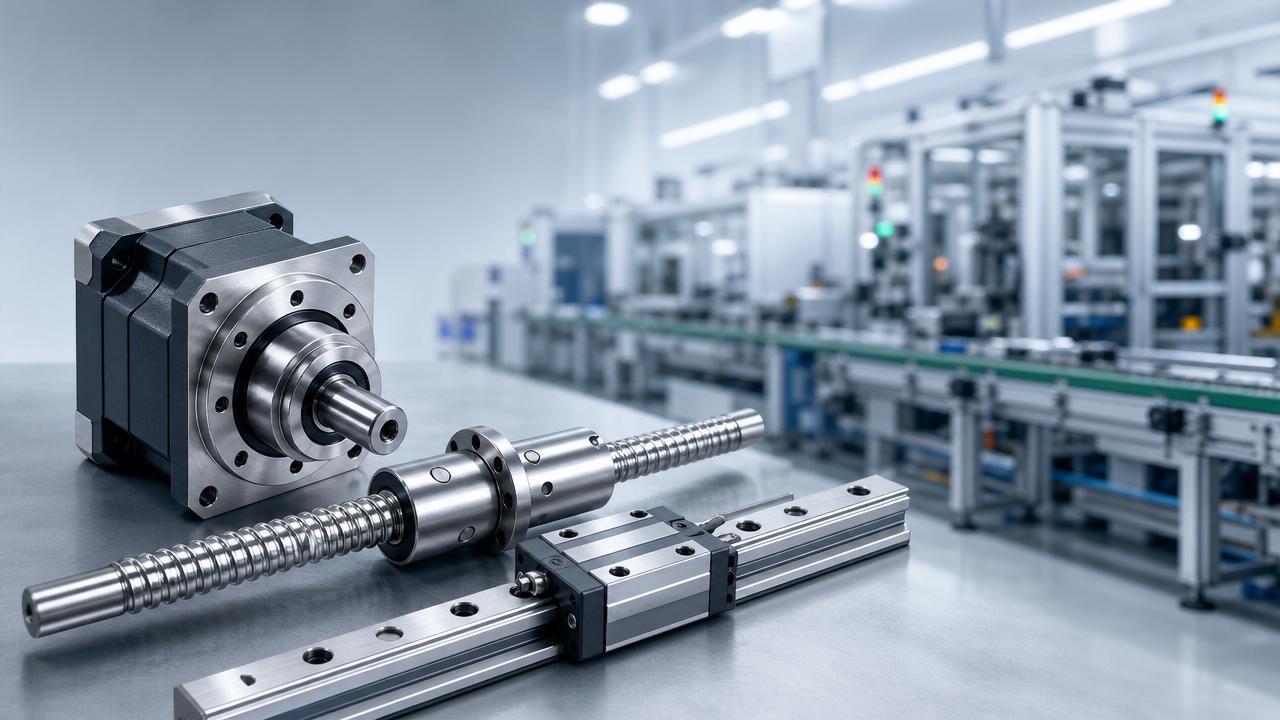
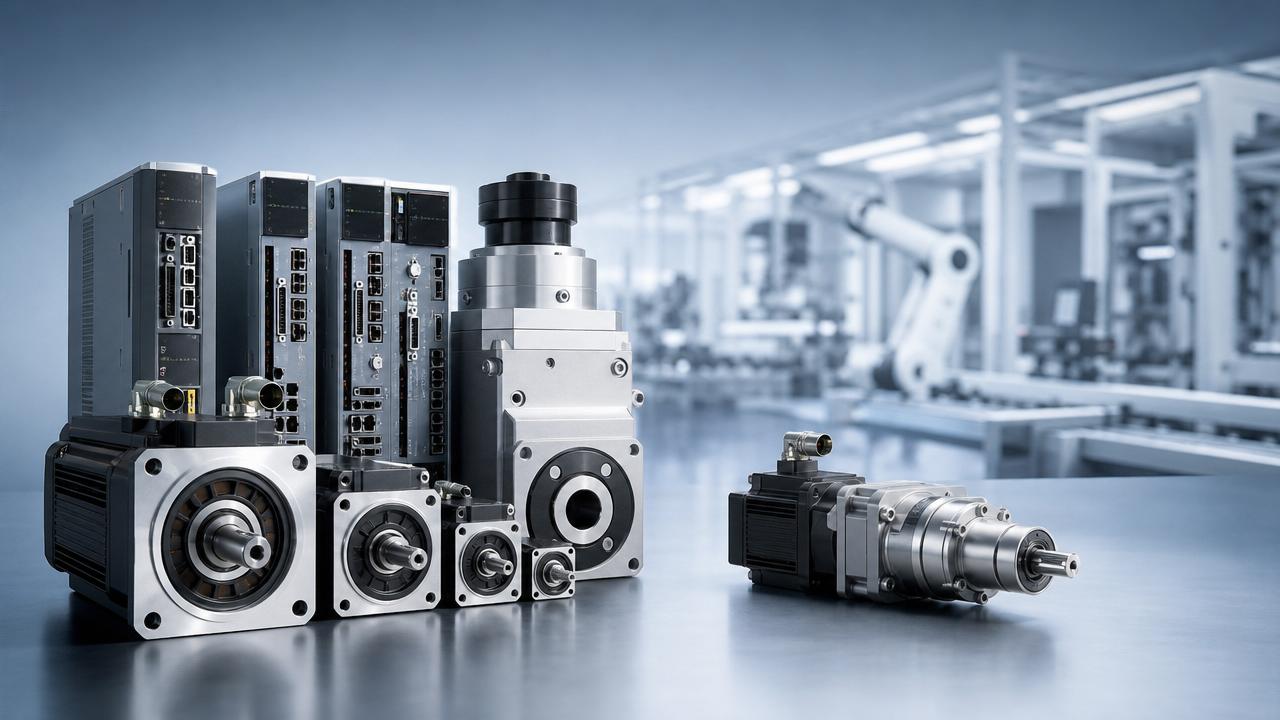
For anyone dealing with servo axes, reducers, couplings, ball screws, and linear guides, speed matters.
But accuracy matters more, because a fast repair that misses root cause usually creates the next call.
Why Precision Mechanical Transmission Assemblies Fail Before Expected Life
Most early failures in precision mechanical transmission assemblies begin long before visible damage appears.
A reducer may still rotate smoothly while internal fatigue is already progressing.
A ball screw may still meet cycle targets while preload loss is slowly reducing positioning stability.
That is why early failure analysis should focus on operating conditions, not just broken parts.
The most common root causes include:
- Incorrect load assumptions during commissioning or line modification.
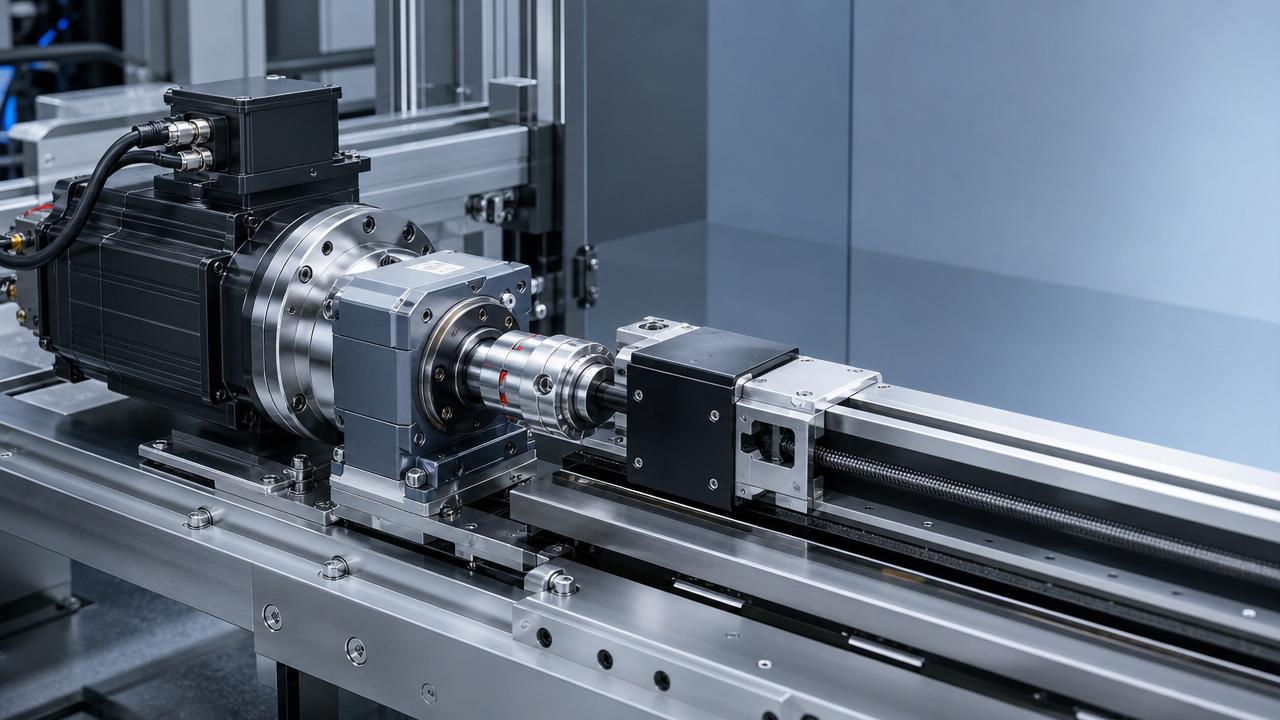
- Poor alignment between motor, coupling, reducer, and driven axis.
- Lubrication grade, quantity, or interval that does not match duty cycle.
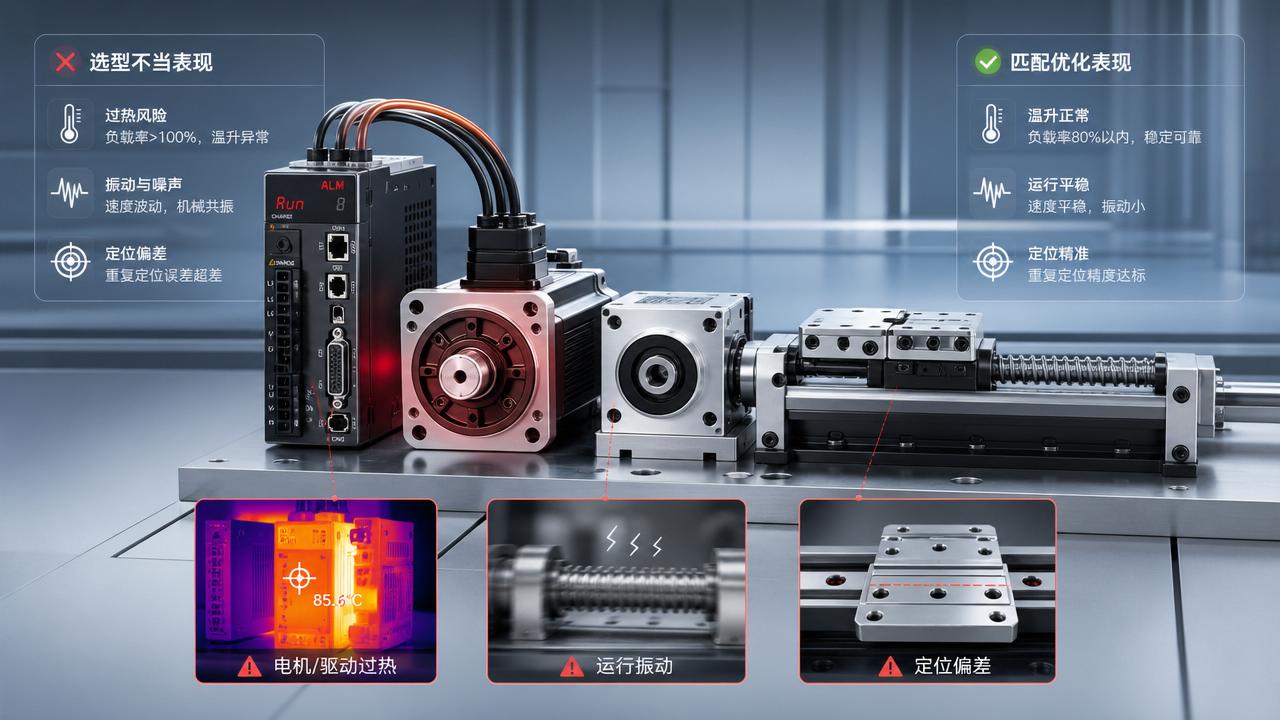
- Overheating caused by continuous overload, contamination, or drag.
- Installation errors that distort bearing seats or preload settings.
- Servo tuning problems that create repeated shock, hunting, or resonance.
- Environmental stress from dust, coolant, vibration, or washdown exposure.
In practical maintenance work, several of these factors often overlap inside the same failure event.
Early Warning Signs You Should Not Ignore
Precision mechanical transmission assemblies usually give warnings before they stop.
The problem is that those signals often look minor during routine service.
A slightly warmer housing, a new vibration tone, or a small repeatability drift can be the real clue.
Pay attention when you see these changes:
- Backlash increases after a stable production period.
- Motor current rises without a matching increase in output demand.
- Lubricant darkens early or shows metallic particles.
- Axis repeatability worsens while encoder feedback still looks normal.
- Temperature spreads become uneven across bearing or reducer surfaces.
- Noise appears only during acceleration, deceleration, or direction reversal.
- Seal damage allows coolant, dust, or fine abrasive material inside.
These are not just symptoms. They often point directly to the failure mechanism developing inside the assembly.
The High-Risk Failure Modes Behind Precision Mechanical Transmission Assemblies
1. Misalignment and hidden side loads
Misalignment is one of the fastest ways to shorten the life of precision mechanical transmission assemblies.
Even a small angular or parallel offset can increase bearing stress and coupling fatigue.
This becomes more serious on high-speed servo axes with frequent start-stop motion.
In many cases, the failed part is replaced, but the mounting condition that caused the load remains unchanged.
2. Lubrication breakdown
Lubrication errors are common because the assembly still runs for a while after the problem starts.
Too much grease can create churning heat.
Too little grease can push metal contact higher during peak load.
Wrong viscosity or contamination can damage raceways, gear teeth, and rolling elements much earlier than expected.
3. Shock loading and motion profile mismatch
Some precision mechanical transmission assemblies fail because the machine runs harder than the design data assumed.
Payload may increase, tooling may change, or cycle time may be compressed.
From a service perspective, the assembly looks undersized, but the real issue is operating drift.
Repeated shock loading can crack surfaces, reduce preload, and accelerate tooth or spline fatigue.
4. Resonance and control interaction
Mechanical condition and servo tuning are closely linked.
When gain settings, notch filters, or acceleration ramps are poorly matched, cyclic stress rises fast.
This is especially true for harmonic reducers, high-rigidity screw drives, and fast reversing axes.
If the assembly is replaced without checking control behavior, the same early failure pattern often returns.
A Practical Troubleshooting Flow for Field Service
A good troubleshooting process should narrow causes quickly without missing hidden interactions.
Use this sequence when precision mechanical transmission assemblies show early wear or unstable performance:
- Confirm the complaint with measured data, not operator memory alone.
- Check backlash, vibration, temperature, current trend, and repeatability under the same load.
- Inspect coupling condition, mounting bolts, key interfaces, and alignment references.
- Review lubrication type, refill interval, contamination signs, and seal condition.
- Compare actual duty cycle against the original machine specification.
- Pull servo alarm history, gain settings, oscillation traces, and acceleration parameters.
- Open the failed assembly only after collecting enough evidence from the installed system.
This approach saves time because it connects component damage with machine behavior, not just part replacement.
Quick Reference: Symptom, Likely Cause, First Check
How to Reduce Repeat Failures After Repair
Once precision mechanical transmission assemblies are replaced, the real job is preventing the same pattern.
That means turning every failure into a documented reliability improvement.
The most effective actions are usually simple:
- Record the actual load profile after the line returns to production.
- Standardize alignment checks during reducer, screw, and coupling replacement.
- Match lubricant specification to temperature, speed, and contamination level.
- Review servo tuning when any major mechanical component is changed.
- Trend vibration, current, and repeatability instead of waiting for alarms only.
- Feed field findings back into spare parts, warranty, and design review decisions.
From a broader industry view, this is where maintenance and motion control intelligence meet.
Reliable precision mechanical transmission assemblies depend on both mechanical accuracy and control stability working together.
Final Takeaway
Early failure in precision mechanical transmission assemblies is usually traceable, even when the first symptoms seem small.
The best results come from linking wear patterns to alignment, lubrication, loading, environment, and servo behavior.
That also means every repair should end with one question.
What changed in the machine, process, or maintenance routine before this assembly failed early?
Answer that clearly, and you move from replacing parts to restoring long-term reliability.
That is the practical path to fewer callbacks, lower cost, and stronger confidence in every repaired system.
Related Recommendations
 When Precision Mechanical Transmission Assemblies Fail EarlyTime : Jul 03, 2026
- Precision Drive Systems vs Standard Drives: What Changes Performance?Time : Jun 13, 2026
- Precision Transmission Selection: Key Cost RisksTime : Jun 01, 2026
- Precision Drive Systems: Cost Risks Hidden in OversizingTime : May 31, 2026
- Precision Drive Systems: Selection Tips for Stable TorqueTime : May 19, 2026
- Servo Motion Systems: Signs the Sizing Was WrongTime : May 15, 2026