High-Precision Encoders: Common Failure Causes in Motion Systems

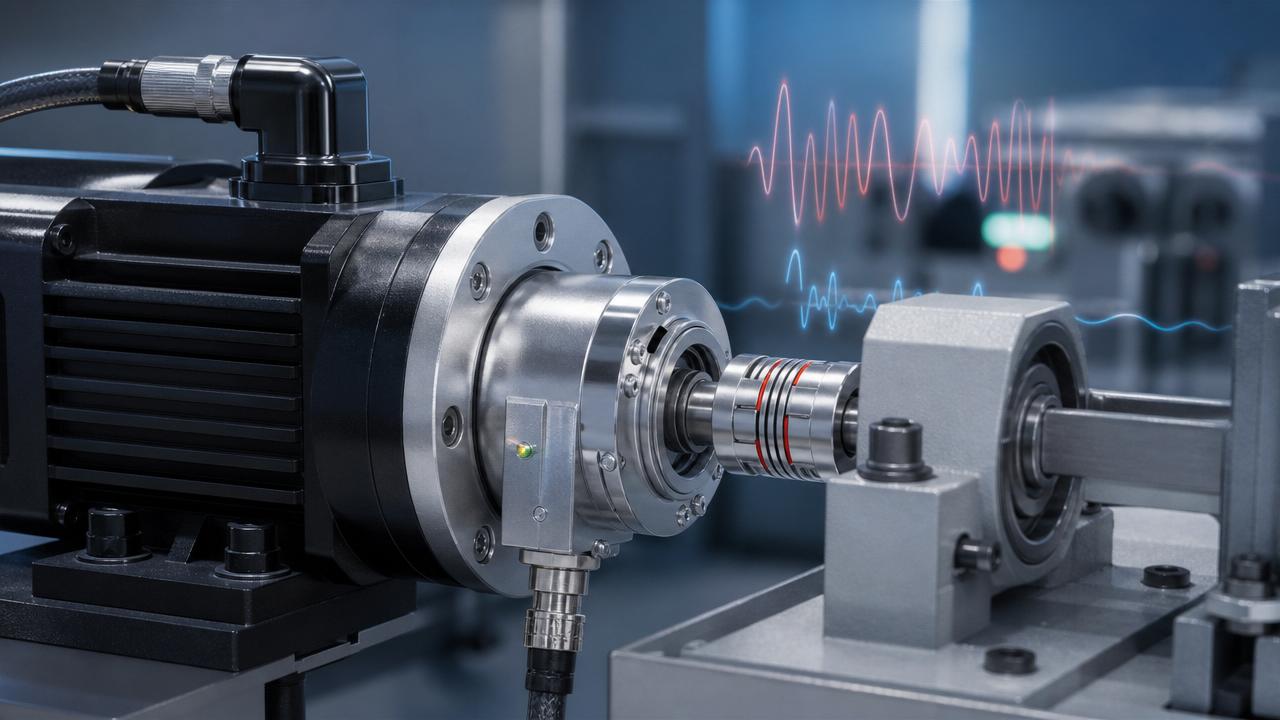
High-precision encoders are often the earliest warning point in a motion system. When feedback quality drops, the encoder may not be the true root cause.
For after-sales maintenance teams, the practical question is simple: is the encoder actually failing, or is it revealing problems in installation, cabling, mechanics, temperature, or electrical noise?
This article focuses on that search intent directly. It explains the most common failure causes behind encoder-related alarms, unstable feedback, and position errors in industrial motion systems.
It also emphasizes what maintenance personnel care about most: how to identify likely causes faster, what symptoms usually appear first, and how to reduce repeat failures after repair.
Why High-Precision Encoders Fail So Often in Real Motion Systems
High-precision encoders work at very tight tolerances. They translate movement into highly accurate electrical signals, so even small disturbances can create visible system problems.
In many servo axes, the encoder is not the weakest component by design. It is simply the component that exposes hidden instability sooner than motors, reducers, guides, or controllers.
That is why encoder alarms should not be treated as isolated sensor events. They are often system-level symptoms linked to contamination, vibration, thermal growth, grounding faults, or poor assembly.
For maintenance teams, the most useful mindset is to separate failures into two categories: true encoder damage and encoder signal degradation caused by surrounding conditions.
The Core Search Intent: Find the Real Cause Behind Feedback Errors and Downtime
When someone searches for common failure causes in High-precision Encoders, they usually do not want a theoretical definition of encoder technology.
They want to solve urgent field issues such as intermittent loss of position, servo following errors, startup alarms, unstable speed feedback, or repeated replacement without lasting improvement.
After-sales maintenance readers are especially concerned with diagnosis speed. They need to know what to check first, what failures are most common, and which symptoms suggest electrical versus mechanical causes.
They also want decision support. If an encoder is replaced, they need confidence that the new unit will survive, rather than fail again because the original root cause remains untreated.
Common Failure Cause #1: Wiring and Connector Problems
Wiring faults are among the most common causes of encoder-related trouble in the field. They include broken cores, loose terminals, shield damage, poor crimping, and connector oxidation.
These problems are especially likely on equipment exposed to repeated movement, drag chains, vibration, oil mist, or frequent maintenance handling.
Typical symptoms include intermittent feedback loss, axis alarms during acceleration, communication faults on serial encoder interfaces, or unstable counts that appear only in certain positions.
One reason these failures are hard to catch is that static continuity testing may look normal. The problem often appears only when cables flex, warm up, or experience vibration.
For that reason, effective troubleshooting should include dynamic cable inspection. Check cable bend radius, tension, chain routing, strain relief, and connector locking under actual operating conditions.
Pay special attention to shield termination. A damaged or poorly grounded shield can increase susceptibility to noise, especially around servo power lines, inverters, and switching devices.
Common Failure Cause #2: Contamination Inside or Around the Encoder
Dust, oil vapor, coolant mist, metal particles, and condensation can all reduce encoder reliability. Optical encoders are particularly sensitive because contamination interferes with light transmission and signal clarity.
Even when ingress protection ratings appear sufficient on paper, real industrial conditions may be harsher than expected. Washdown, abrasive particles, and thermal cycling can weaken sealing over time.
Contamination-related failures often begin as intermittent signal distortion rather than total failure. The axis may still run, but with increasing position instability, missed counts, or unexplained alarms.
Maintenance teams should inspect not only the encoder body but also nearby sources of contamination. Leaking lubricant, air purge failure, damaged covers, and pressure-washing practices often contribute.
If contamination is found repeatedly, replacing the encoder alone is not enough. The maintenance solution must include environmental control, sealing review, and better protection of the feedback path.
Common Failure Cause #3: Mechanical Misalignment and Installation Errors
Improper installation is another major reason High-precision Encoders fail prematurely. Misalignment between the encoder shaft and driven shaft can create excessive radial, axial, or torsional loads.
Over time, those extra loads damage bearings, couplings, discs, or internal sensing elements. The encoder may then show noisy signals, drift, or sudden failure after a period of apparently normal operation.
Installation errors also include overtightening, incorrect mounting surfaces, poor concentricity, coupling selection mistakes, and lack of tolerance control during assembly.
In field service, this issue often appears after component replacement, retrofit work, collision events, or hurried machine rebuilds. The encoder is blamed, but the real problem is mechanical fit-up.
Technicians should verify shaft runout, coupling condition, mounting rigidity, and alignment tolerances. If the machine has experienced impact, backlash changes, or bearing wear, inspect the entire drive chain.
On high-speed axes, even slight imbalance or mounting eccentricity can produce cyclic feedback errors. Those errors may become more severe at specific RPM ranges or during resonance zones.
Common Failure Cause #4: Vibration and Shock from the Motion System
Encoders installed near motors, reducers, or machine frames with persistent vibration face continuous stress. High-frequency vibration can degrade internal elements and disturb signal stability.
Shock events are even more damaging. Emergency stops, mechanical collisions, tooling crashes, or abrupt load changes can crack encoder components or loosen internal connections.
In many cases, vibration damage is not immediately obvious. The machine may continue running while the encoder output gradually becomes erratic, especially under acceleration or direction change.
Maintenance teams should not inspect the encoder alone. Look for root sources such as bearing wear, reducer damage, poor machine base rigidity, unbalanced rotating parts, or servo tuning issues.
If vibration is persistent, signal problems may return even after replacement. Long-term correction may require structural reinforcement, improved damping, retuning, or redesign of mounting interfaces.
Common Failure Cause #5: Thermal Drift and Temperature Stress
Temperature affects both encoder electronics and the mechanical parts around them. Heat changes clearances, material dimensions, signal stability, and the quality of alignment across the feedback assembly.
In precision systems, thermal effects can create subtle but important position deviations before any hard alarm appears. This is common on long-duty cycles, enclosed cabinets, and high-load servo applications.
Excessive motor heat can transfer into the encoder area. Repeated thermal expansion and contraction may also weaken seals, connectors, and solder joints over time.
Field symptoms include increasing error after warm-up, accuracy drift during long production runs, and problems that disappear when the machine is cold.
Maintenance personnel should compare cold-start and stabilized operating behavior. Temperature measurement around the motor rear end, encoder housing, cabinet, and cable path can reveal hidden stress points.
Do not ignore ventilation, heat sources, and panel layout. In many applications, encoder reliability depends as much on thermal management as on the encoder specification itself.
Common Failure Cause #6: Electrical Noise, Grounding, and Power Quality Issues
Electrical interference is a classic source of encoder trouble, especially in facilities with inverters, large motors, switching power supplies, welding equipment, or poor cabinet grounding practice.
Noise can distort encoder output, interrupt communication, or trigger false counts. High-resolution systems are especially vulnerable because small disturbances can affect precision feedback significantly.
Common root causes include improper cable separation, floating grounds, shield errors, power supply ripple, ground loops, and incorrect bonding between machine sections.
Symptoms may include random alarms, unstable position at standstill, unexplained resets, or faults that appear only when other equipment on the line starts operating.
A good troubleshooting sequence includes checking grounding topology, cable routing near power lines, shield continuity, power supply quality, and cabinet EMC practices.
If problems occur only during inverter switching or heavy current events, investigate common-mode noise and coupling paths. Encoder replacement will not fix an electromagnetic environment problem.
Common Failure Cause #7: Bearing Wear, Transmission Wear, and Hidden Mechanical Backlash
Sometimes the encoder is healthy, but the feedback appears wrong because the motion chain between commanded movement and actual movement is mechanically unstable.
Bearing wear, coupling looseness, reducer backlash, ball screw wear, and loose mounting structures can all create position inconsistency that looks like encoder failure.
This is common in aging equipment where the servo loop starts reporting following errors or repeatability loss. Replacing the encoder may briefly change symptoms without solving the real issue.
Maintenance teams should correlate encoder alarms with machine accuracy results, vibration patterns, backlash checks, and transmission condition. Feedback issues rarely exist in isolation.
On high-precision machines, even small mechanical wear can degrade the stability expected from High-precision Encoders. The sensor can only report the motion it receives.
How After-Sales Teams Can Troubleshoot Faster in the Field
The fastest path is to avoid guessing. Start by classifying the symptom: complete signal loss, intermittent signal loss, accuracy drift, speed instability, or alarms only under motion.
Next, identify when the problem appears: cold start, after warm-up, during acceleration, at a fixed position, under heavy load, or when nearby electrical equipment is active.
This time-based and condition-based approach quickly narrows the cause. For example, warm-up issues suggest thermal effects, while position-dependent faults often suggest cable flex or mechanical eccentricity.
Then inspect in layers: encoder body, cable and connector, mounting and alignment, surrounding mechanics, electrical environment, and controller diagnostics.
If available, compare live feedback traces, alarm history, servo current, vibration trends, and temperature data. These clues are often more valuable than replacing parts immediately.
When a replacement is required, document the original installation state carefully. Repeat failures often happen because mounting stress, contamination, or grounding problems were not corrected.
Prevention: How to Reduce Repeat Encoder Failures
Preventive maintenance should focus on the conditions that shorten encoder life, not only on the encoder itself. This is especially important in high-duty industrial automation environments.
Review cable routing regularly, especially on moving axes. Replace damaged drag-chain cables early, secure strain relief properly, and maintain separation from noisy power circuits.
Inspect seals, covers, and contamination barriers. Address oil leaks, coolant spray, and dust sources before they begin affecting feedback components.
During mechanical service, verify alignment and coupling condition every time the motor, reducer, or transmission assembly is disturbed. Precision feedback depends on precision installation.
Track thermal and vibration conditions on critical axes. If one machine repeatedly consumes encoders, the pattern usually points to a deeper environmental or mechanical cause.
Finally, train service teams to treat encoder alarms as system indicators. That mindset improves root-cause accuracy and lowers unnecessary spare-part consumption.
Conclusion
High-precision Encoders are essential to motion accuracy, but they often fail visibly because they are sensitive to wider system problems. That is why encoder alarms deserve system-level investigation.
For after-sales maintenance teams, the most common failure causes are wiring defects, contamination, installation errors, vibration, thermal stress, electrical noise, and hidden mechanical wear.
The real maintenance value comes from distinguishing true encoder damage from surrounding causes that degrade encoder performance. That distinction reduces downtime, repeat repairs, and unnecessary replacements.
In demanding motion systems, reliable encoder performance depends on clean signals, stable mechanics, controlled temperature, and disciplined installation practice. Solve those conditions, and encoder reliability improves dramatically.
Related Recommendations
 Automation Control Systems Price: Cost Drivers and Budget BenchmarksTime : Jul 17, 2026
- Reducer Selection Guide: How to Balance Torque, Cost, and LifespanTime : Jul 11, 2026
- How to Evaluate an Industrial Automation Parts Supplier for Lead Time and RiskTime : Jul 10, 2026
- Industrial Robotics for Packaging: Where Automation Cuts Downtime MostTime : Jul 09, 2026
- How CNC Machined Precision Engineering Components Improve Fit and ToleranceTime : Jul 08, 2026
 Manufacturing Automation Systems: Where ROI Improves FirstTime : Jul 07, 2026