How to Compare a CNC Machinery Supplier

Why Comparing a CNC Machinery Supplier Has Become a Strategic Decision
Choosing the right CNC Machinery supplier is no longer a simple quotation exercise.
It now affects machining accuracy, uptime, automation readiness, energy use, operator efficiency, and total production cost.
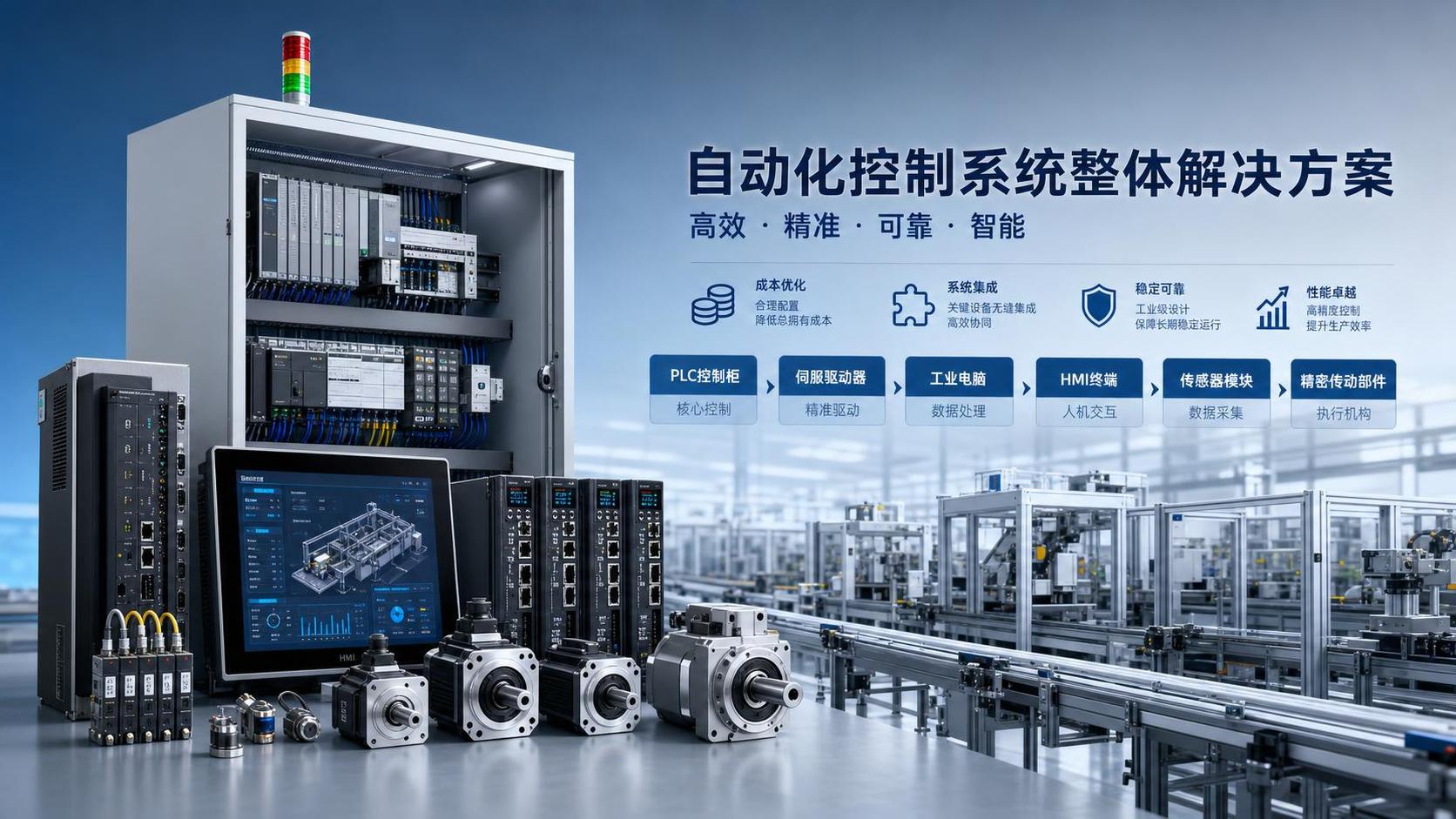
Modern CNC equipment depends on tightly connected motion control, mechanical transmission, industrial computing, and reliable software logic.
A low purchase price may hide weak servo tuning, poor spindle stability, unstable PLC logic, or limited after-sales capability.
A strong CNC Machinery supplier should support precision manufacturing, flexible production, and long-term equipment reliability.
That is why comparison should begin with technical confidence, not only commercial terms.
Start With the Real Manufacturing Requirement
Before comparing suppliers, the application itself must be clearly defined.
CNC machines for mold finishing, automotive parts, aerospace components, medical devices, and general machining have different priorities.
Some applications need high-speed contouring. Others need heavy cutting rigidity, thermal stability, or micron-level repeatability.
The same CNC Machinery supplier may perform well in one segment but less competitively in another.
A practical comparison should connect machine configuration with part tolerance, material type, batch size, and automation plans.
This prevents the selection process from being driven by catalog parameters alone.
Key questions before supplier comparison
- What tolerance and surface finish must be achieved consistently?
- Will the machine run single shifts, continuous shifts, or lights-out production?
- Is future integration with robots, inspection systems, or MES required?
- Which local standards, safety requirements, or documentation rules apply?
- How critical are spare parts lead time and service response speed?
Look Beyond the Machine Frame
The visible machine structure is only one part of the decision.
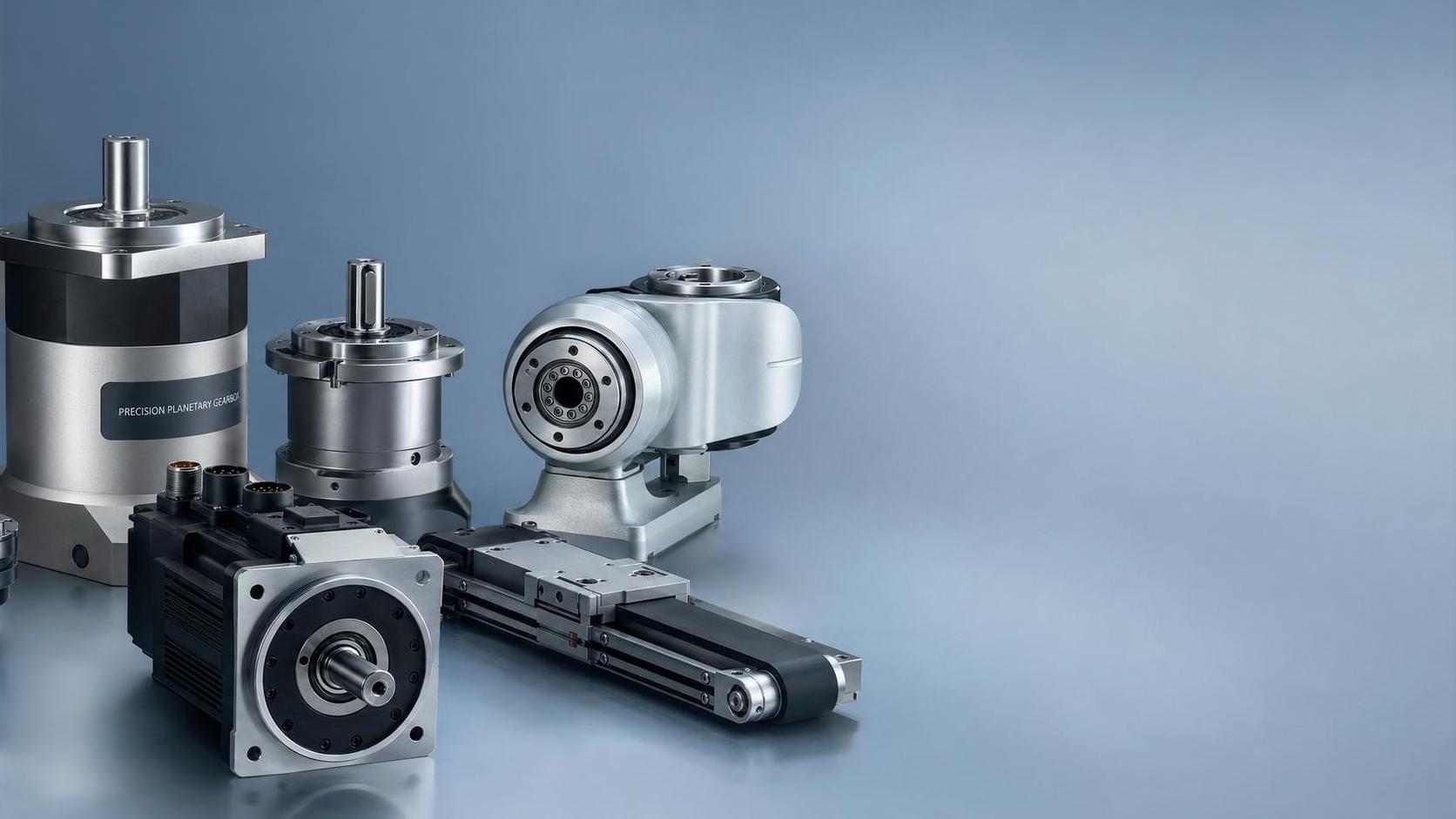
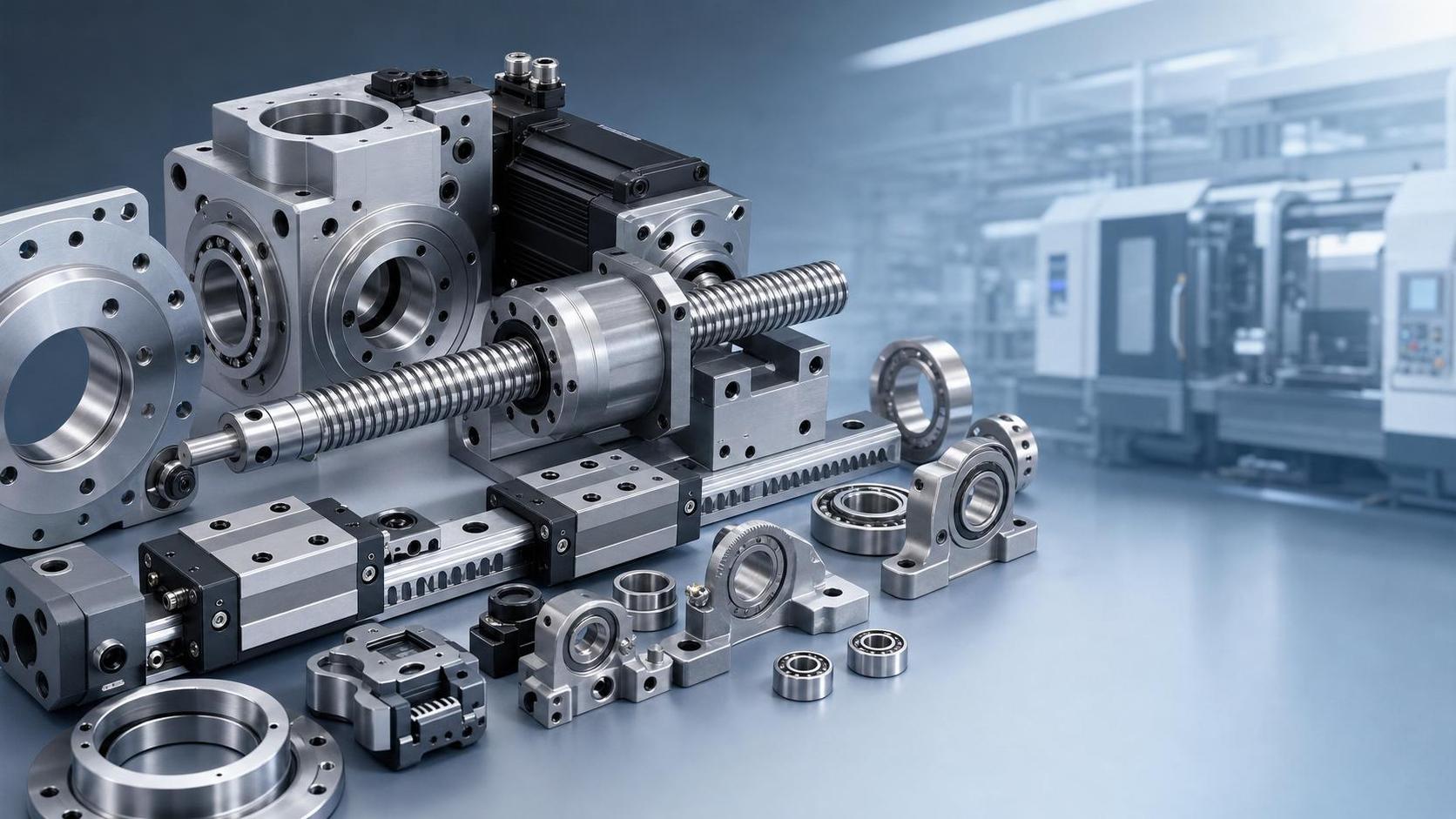
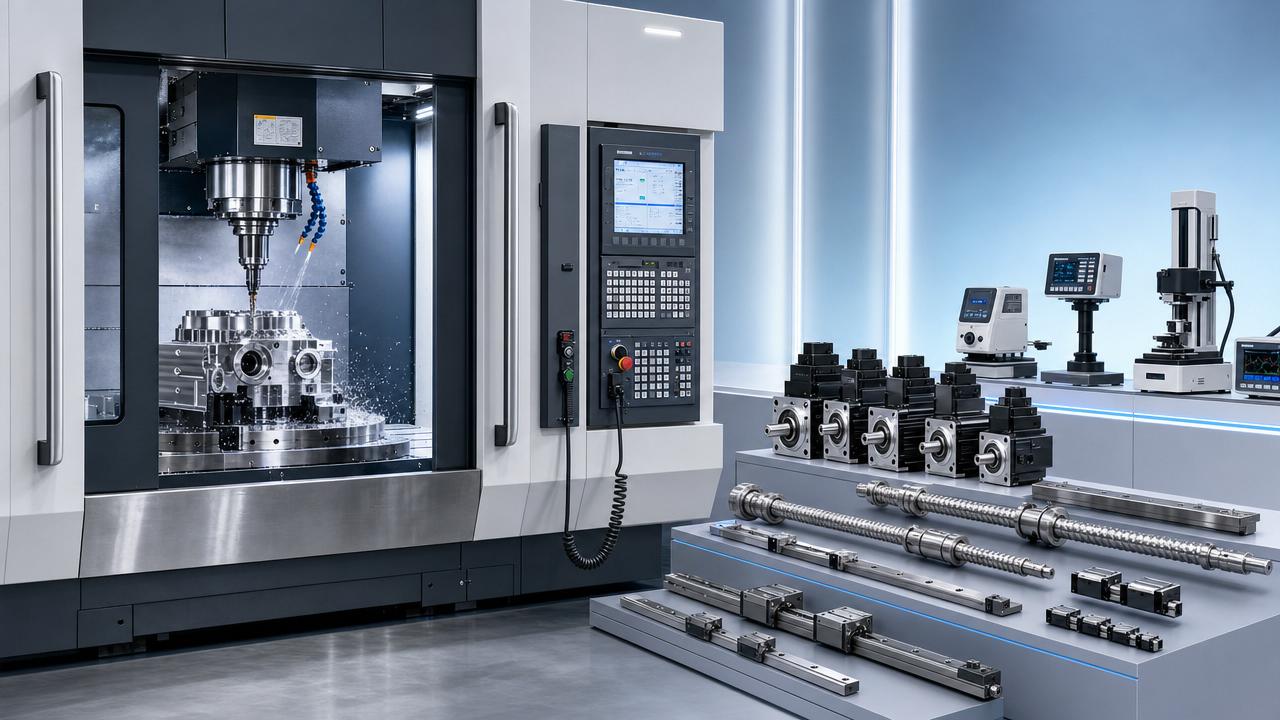
A CNC system works through the coordination of servo drives, ball screws, linear guides, spindles, reducers, PLCs, and industrial PCs.
These components determine acceleration, positioning accuracy, vibration behavior, and long-term mechanical wear.
A capable CNC Machinery supplier should explain component choices clearly, including control architecture and motion performance limits.
Servo motors act as the machine’s muscles, translating electrical commands into precise torque and displacement.
Linear guides and ball screws function as the rails and spine of feed movement.
PLC or CNC control platforms coordinate cutting cycles, tool changes, safety interlocks, and communication with peripheral equipment.
When these subsystems are poorly matched, accuracy may decline even if individual parts look acceptable.
Technical Indicators That Deserve Close Attention
Supplier comparison becomes more reliable when technical indicators are linked to actual production outcomes.
Positioning accuracy is important, but repeatability, backlash control, thermal drift, and vibration suppression are equally meaningful.
For high-speed machining, servo response and control loop performance influence corner quality and contour accuracy.
For heavy cutting, machine rigidity, spindle torque, guideway capacity, and screw preload become more decisive.
A reliable CNC Machinery supplier should provide verifiable test data instead of broad performance claims.
Automation Readiness Is Now Part of the Baseline
Flexible manufacturing has changed expectations for CNC equipment.
Machines increasingly need to communicate with robots, tool management systems, inspection devices, and factory software.
A CNC Machinery supplier should therefore be evaluated on connectivity, not only machine cutting performance.
Industrial Ethernet, fieldbus options, API access, alarm data, and production data export deserve attention.
Industrial PCs and edge computing devices also matter when real-time monitoring or predictive maintenance is planned.
In practical use, automation readiness reduces future retrofit cost and avoids closed-system limitations.
Signals of a more future-ready supplier
- Clear documentation for communication protocols and I/O expansion.
- Experience with robotic loading, pallet systems, or flexible cells.
- Support for data collection, alarms, tool life tracking, and remote diagnostics.
- Stable PLC architecture that tolerates industrial electromagnetic interference.
- A roadmap for software updates and controller compatibility.
Quality Evidence Should Be Verifiable
A supplier’s presentation can be polished, but the evidence must be inspectable.
Factory acceptance tests, laser calibration reports, ballbar tests, spindle runout records, and sample machining results are useful references.
It is also important to review how the supplier controls assembly variation.
Precision machines depend on scraping, alignment, preload adjustment, lubrication routing, and final compensation.
A dependable CNC Machinery supplier can describe these processes without relying on vague claims.
Certifications are helpful, but they should not replace machine-specific evidence.
The strongest signal is consistency across multiple delivered machines, not one successful demonstration unit.
Service Capability Often Decides the Real Cost
Initial price rarely represents the full economic picture.
Downtime, delayed spare parts, unclear troubleshooting, and repeated calibration can quickly erase purchase savings.
When comparing a CNC Machinery supplier, service structure deserves the same attention as machine specifications.
The review should include response time, regional coverage, remote diagnostics, technician training, and spare part stocking.
Documentation quality also reveals service maturity.
Clear electrical diagrams, lubrication schedules, parameter backups, and maintenance procedures reduce dependence on emergency support.
A supplier with strong service discipline helps stabilize production after installation.
Supply Chain Reliability Is a Technical Risk Too
High-end CNC equipment depends on global component networks.
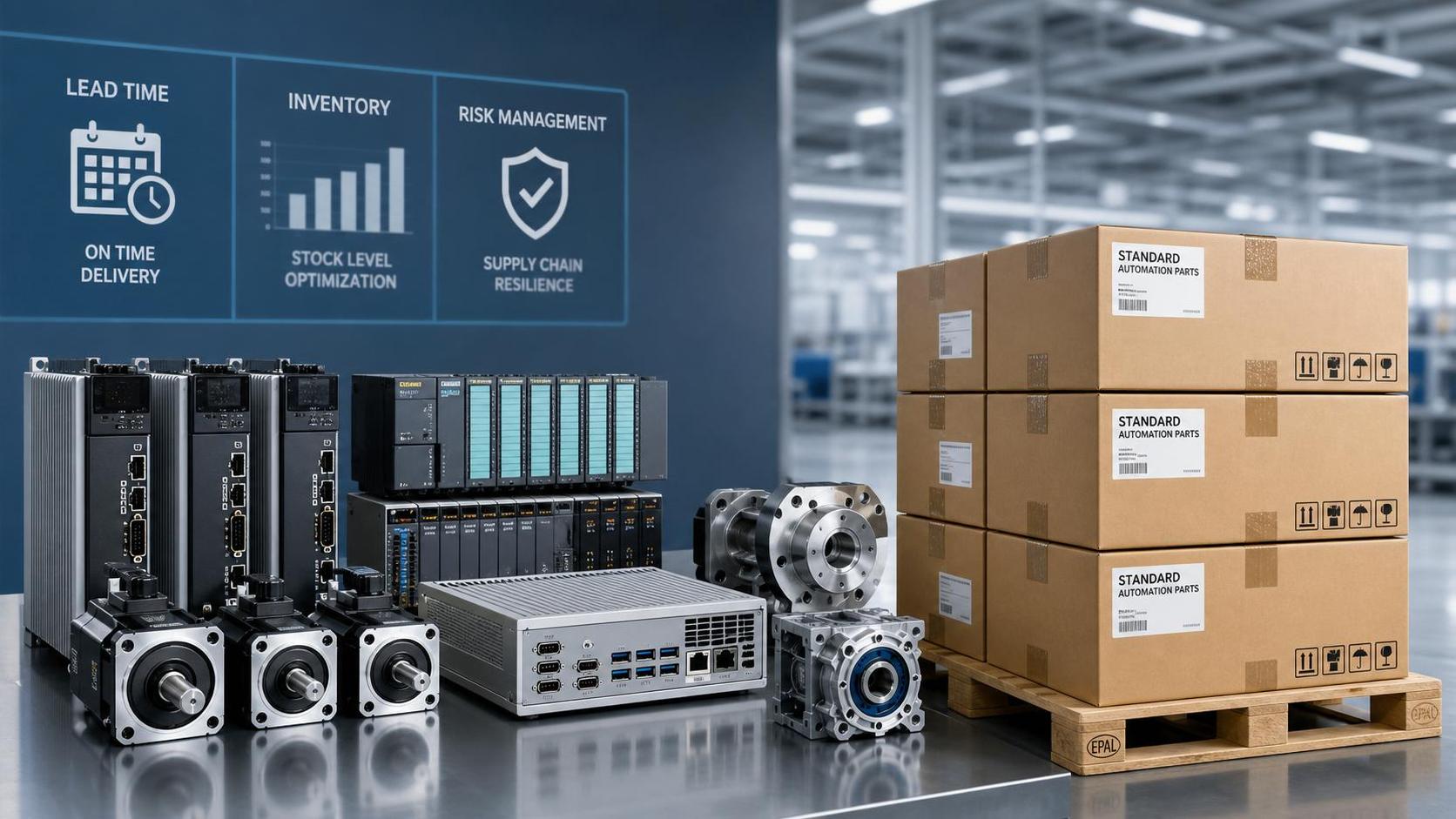
Servo drives, CNC controllers, encoders, bearings, reducers, chips, and industrial computers may face lead-time pressure.
A CNC Machinery supplier with weak sourcing resilience may struggle during component shortages or trade disruptions.
This risk has become more visible in smart manufacturing, new energy equipment, and robot-related capacity expansion.
Comparison should include component transparency, approved alternatives, inventory strategy, and lifecycle support for key electronics.
A machine is only maintainable if critical parts remain available throughout its service life.
Commercial Terms Need Technical Context
Price, payment terms, warranty, delivery schedule, and installation scope still matter.
However, they should be compared alongside equipment capability and risk exposure.
A lower quote may exclude tooling, fixtures, training, shipping, software options, or on-site commissioning.
A higher quote may include better controller options, stronger guides, faster service, or more complete acceptance testing.
The fair comparison is total cost of ownership, not only acquisition price.
For each CNC Machinery supplier, commercial terms should be translated into operational consequences.
Useful cost factors to normalize
- Included controller functions and optional software packages.
- Installation, commissioning, training, and acceptance test scope.
- Warranty exclusions, labor coverage, and travel cost rules.
- Recommended spare parts package and expected replacement intervals.
- Energy consumption, lubrication use, and maintenance workload.
Reference Cases Reveal Practical Fit
Case references are valuable when they match the intended production environment.
A supplier experienced in aluminum parts may not automatically fit hardened steel mold cutting.
A supplier focused on standard job shops may not suit fully automated production lines.
The strongest references include similar material, tolerance, cycle time, and production volume.
It is also useful to examine how the supplier handled problems after delivery.
Every machine project has adjustments; the response quality often reveals the real partnership level.
Building a Balanced Supplier Scorecard
A structured scorecard helps reduce subjective judgment.
It should balance machine performance, automation compatibility, quality evidence, service capability, supply chain resilience, and cost.
The weighting should reflect the production goal.
For precision parts, accuracy and thermal stability may dominate.
For high-volume production, uptime, service, and automation integration may carry more weight.
For global deployment, documentation, standards compliance, and spare parts logistics become more important.
This approach makes each CNC Machinery supplier easier to compare on evidence rather than impression.
A Practical Way to Move Forward
The best comparison process starts with application clarity and ends with risk visibility.
Shortlisted suppliers should receive the same technical requirement sheet, test expectations, and service questions.
Sample cutting, acceptance testing, and control architecture reviews should be part of the decision process.
Independent industry intelligence can also help interpret component trends, motion control maturity, and supply chain signals.
A CNC Machinery supplier should ultimately be judged as a production partner, not only an equipment vendor.
The next step is to define measurable requirements, compare evidence consistently, and connect every specification with real machining outcomes.
Related Recommendations
 Automation Control Systems Price: Cost Drivers and Budget BenchmarksTime : Jul 17, 2026
- Reducer Selection Guide: How to Balance Torque, Cost, and LifespanTime : Jul 11, 2026
- How to Evaluate an Industrial Automation Parts Supplier for Lead Time and RiskTime : Jul 10, 2026
- Industrial Robotics for Packaging: Where Automation Cuts Downtime MostTime : Jul 09, 2026
- How CNC Machined Precision Engineering Components Improve Fit and ToleranceTime : Jul 08, 2026
 Manufacturing Automation Systems: Where ROI Improves FirstTime : Jul 07, 2026