Industrial Digital Transformation: 7 Costly Missteps to Avoid

Industrial Digital Transformation: 7 Costly Missteps to Avoid
Industrial Digital Transformation promises speed, precision, and resilience.
Yet many programs stall long before value reaches the plant floor.
The reason is rarely technology alone.
Most failures start with avoidable leadership choices, weak integration, or unclear execution models.
In real operations, even advanced automation can underperform when strategy, data, and people move in different directions.
That is why Industrial Digital Transformation should be treated as a business redesign effort, not a simple technology upgrade.
The seven missteps below appear often across manufacturing, process industries, energy, logistics, and equipment-intensive operations.
1. Starting Without a Clear Business Case
Many Industrial Digital Transformation programs begin with excitement around AI, IIoT, edge computing, or smart factories.
But excitement does not replace a measurable business case.
When goals stay vague, teams cannot prioritize investments or defend budgets.
A practical roadmap should connect transformation initiatives to specific outcomes.
- Lower downtime through predictive maintenance
- Improve yield with precision motion and process control
- Reduce energy costs through inverter optimization
- Shorten changeovers for flexible manufacturing
- Increase traceability for quality and compliance
If the numbers are not visible from the beginning, Industrial Digital Transformation becomes an expensive experiment.
2. Treating Automation as Isolated Projects
This is one of the most common mistakes.
A company upgrades a PLC line here, adds sensors there, and pilots analytics somewhere else.
Each project may look reasonable on its own.
Together, they create fragmented architecture and rising integration costs.
From a recent market perspective, the stronger signal is convergence.
Servo systems, IPCs, DCS layers, field devices, and enterprise software must support one operating model.
Industrial Digital Transformation works best when automation investments follow shared standards, common data structures, and scalable governance.
3. Ignoring the Data Foundation
Smart decisions depend on trusted industrial data.
Yet many companies digitize workflows before fixing how data is collected, labeled, synchronized, and shared.
That creates dashboards full of activity but low in insight.
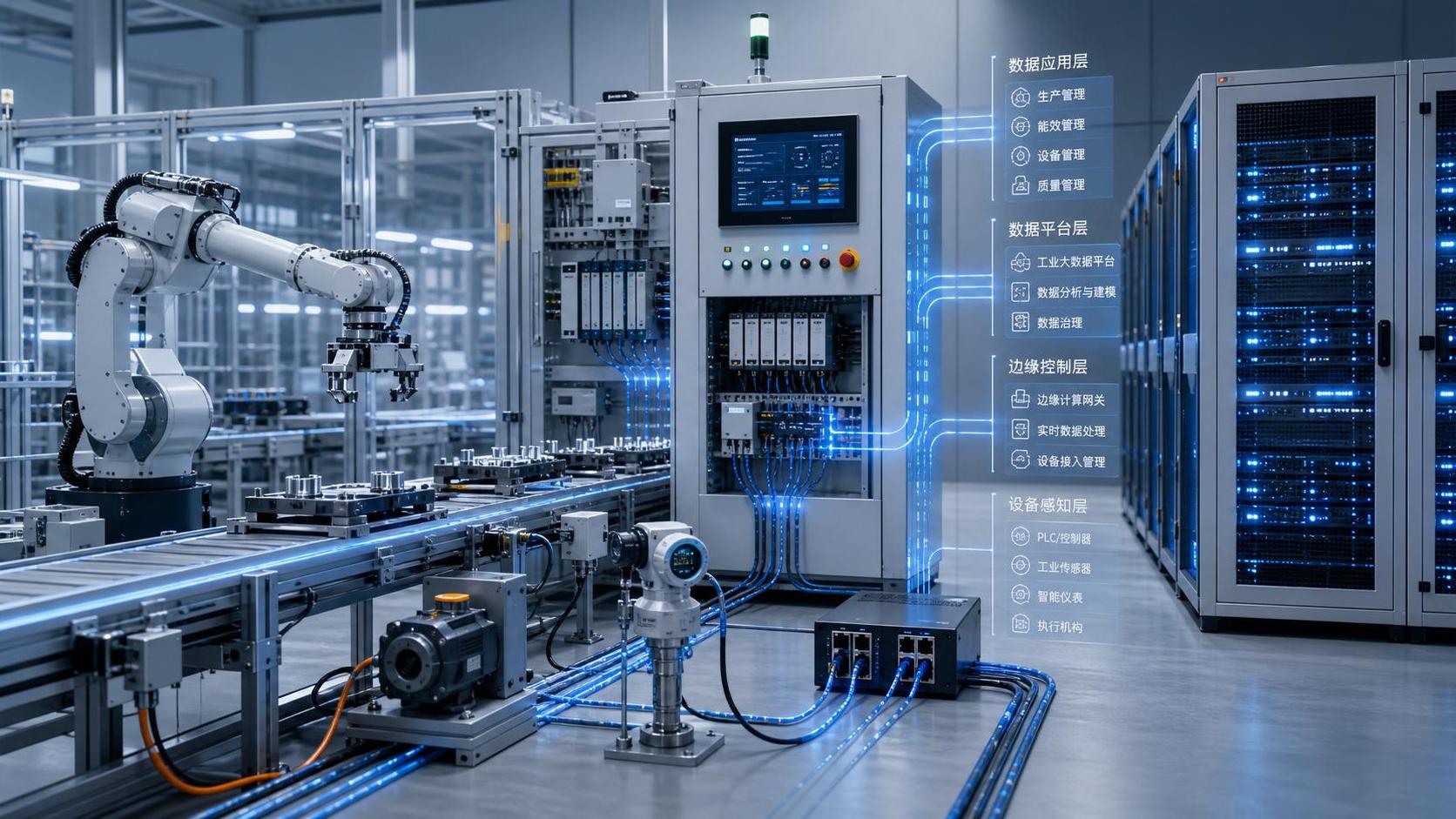
In industrial settings, data quality problems often start at the edge.
Signals from servo drives, encoders, reducers, guides, and PLC systems may use different formats and timestamps.
Without contextualization, root-cause analysis becomes slow and unreliable.
A stronger approach includes:
- Unified naming conventions across assets and lines
- Consistent time synchronization from edge to cloud
- Clean integration between OT and IT systems
- Governance rules for ownership, access, and quality
Industrial Digital Transformation cannot scale on disconnected spreadsheets, manual exports, and conflicting system records.
4. Underestimating Legacy Equipment Constraints
Not every facility begins with greenfield conditions.
Many operations rely on mixed generations of machines, controllers, drives, and mechanical systems.
This makes Industrial Digital Transformation more complex than vendor presentations suggest.
For example, adding analytics to a line with unstable reducers, worn ball screws, or poorly tuned servo loops will not solve performance loss.
Digital visibility helps, but physical constraints still matter.
This also means investment sequencing is critical.
In many cases, the best path combines selective retrofit, motion tuning, component reliability upgrades, and protocol bridging before larger software deployment.
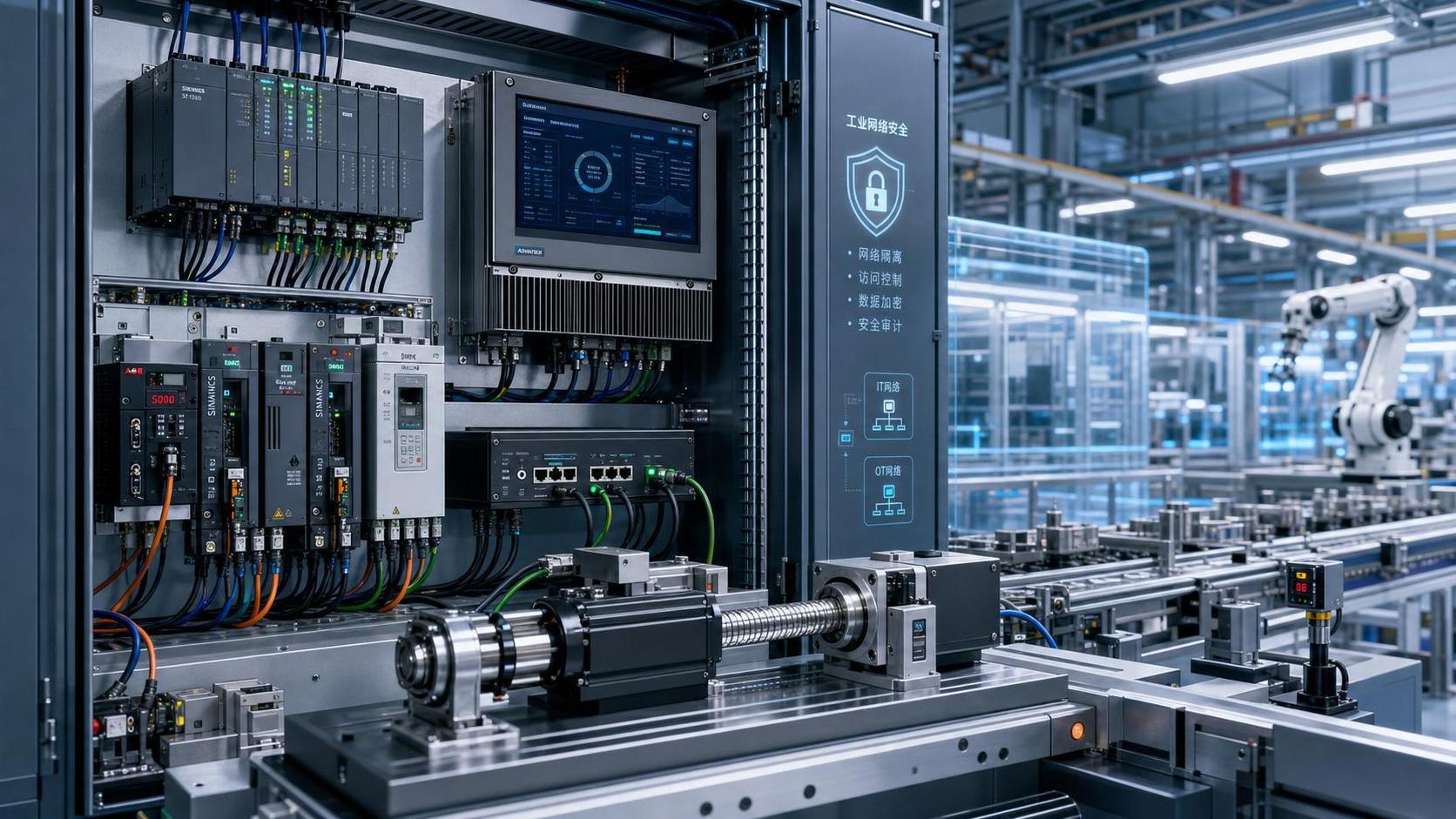
5. Overlooking Cybersecurity and Operational Risk
As Industrial Digital Transformation expands connectivity, the attack surface grows as well.
Plants now connect machines, historians, remote maintenance tools, industrial PCs, and cloud applications.
That creates new value, but also new exposure.
A single unsecured access path can threaten production continuity, safety, intellectual property, and customer trust.
More importantly, cyber planning should not be separated from operational risk planning.
If a patch interrupts a line, or remote access bypasses control procedures, the cost may exceed the original digital investment.
6. Failing to Align People, Skills, and Incentives
Technology can be purchased faster than capability can be built.
That is where many Industrial Digital Transformation efforts lose momentum.
Operations teams may worry about disruption.
Engineering teams may prefer familiar systems.
IT teams may optimize for security while plants optimize for uptime.
None of these concerns are irrational.
They simply need alignment.
In practice, this means defining new roles, shared KPIs, and realistic training plans.
Frontline adoption often improves when teams see how digital tools reduce troubleshooting time, improve repeatability, and support safer operations.
If incentives conflict, Industrial Digital Transformation stays trapped in pilot mode.
7. Scaling Too Fast or Too Slowly
Timing matters more than many leaders expect.
Move too fast, and the organization absorbs complexity without standards.
Move too slowly, and competitors lock in efficiency gains first.
The better approach is staged scaling.
Start with a high-value use case.
Prove measurable impact.
Then standardize architecture, workflows, and governance before replication.
A scalable Industrial Digital Transformation roadmap usually follows four steps:
- Prioritize one operational bottleneck with clear ROI.
- Build clean integration across machines, controls, and data layers.
- Validate results with plant and finance stakeholders.
- Replicate using repeatable standards, not custom exceptions.
How to Build a Stronger Industrial Digital Transformation Roadmap
Avoiding mistakes is only part of the work.
The bigger goal is creating a roadmap that connects operational precision with scalable business value.
This is especially important in industries where motion control accuracy, equipment reliability, and real-time decision-making define competitiveness.
That is why many transformation leaders now look beyond software features alone.
They evaluate the full stack, from servo response and mechanical transmission integrity to PLC orchestration, edge analytics, and industrial compute resilience.
A credible Industrial Digital Transformation strategy should answer three questions early.
- Which assets and processes create the highest operational leverage?
- What data architecture supports trustworthy, real-time decisions?
- How will teams sustain performance after deployment?
When those answers are clear, digital investments become more precise.
They also become easier to scale across plants, product lines, and regions.
Industrial Digital Transformation delivers the strongest returns when it improves both control accuracy and decision quality.
That combination supports lower waste, higher uptime, stronger flexibility, and better long-term resilience.
The real opportunity is not digitizing for its own sake.
It is building an operating model where intelligent automation, precision transmission, and industrial computing reinforce each other every day.
That is how Industrial Digital Transformation moves from promising concept to durable competitive advantage.
Related Recommendations
 Precision Engineering Solutions: When Higher Tolerance Pays OffTime : Jun 22, 2026
- Industrial Digital Transformation: 7 Costly Missteps to AvoidTime : Jun 22, 2026
- Industrial Cyber-Physical Systems: Key Risks, Standards, and ControlsTime : Jun 21, 2026
- Industrial Robotics vs Manual Cells: When Does Automation Pay Off?Time : Jun 21, 2026
- Precision Manufacturing Technology for Tight-Tolerance ProductionTime : Jun 18, 2026
- Advanced Manufacturing Automation: Cost Drivers and ROI BenchmarksTime : Jun 18, 2026