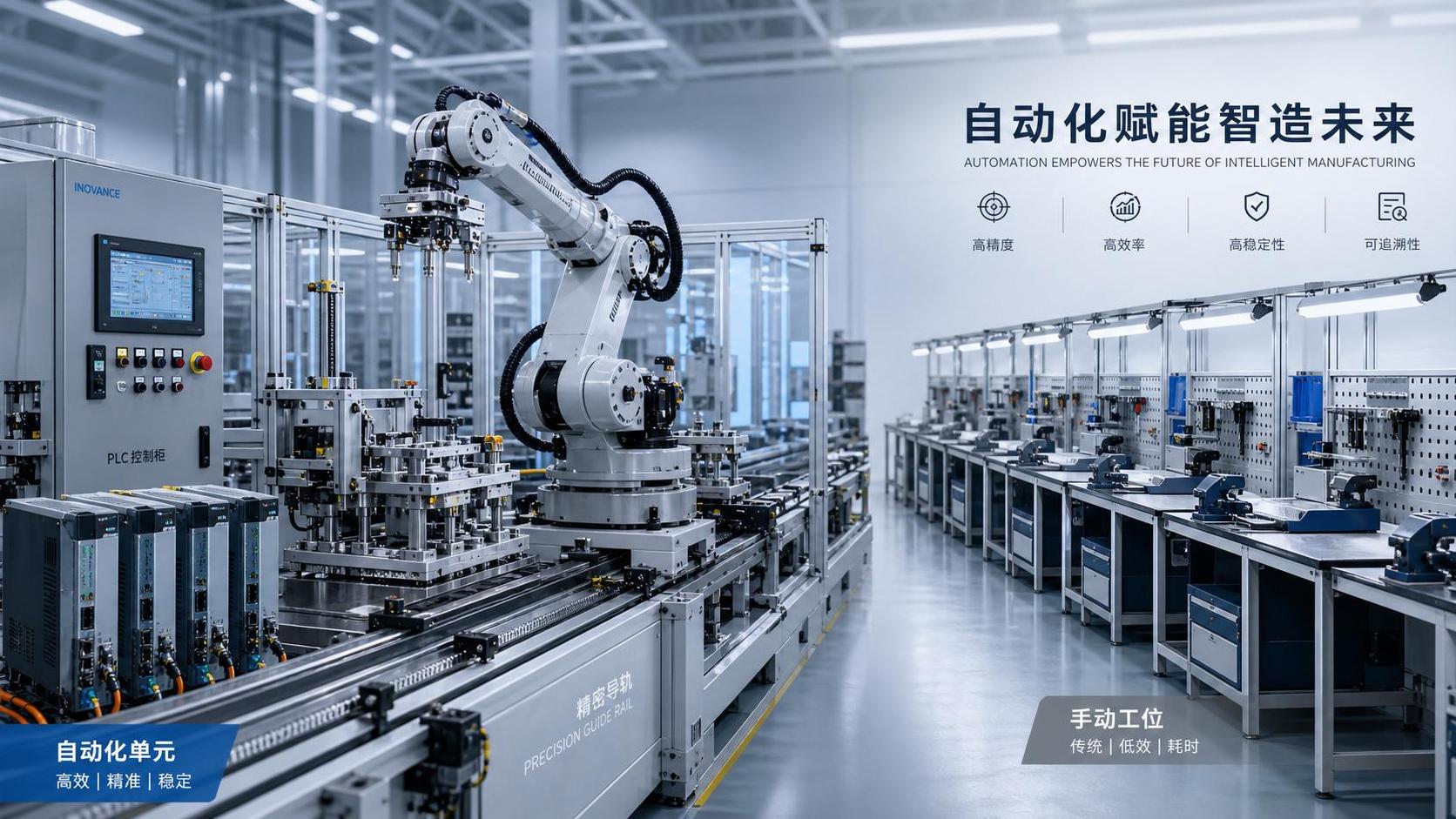
Precision Engineering Solutions: When Higher Tolerance Pays Off

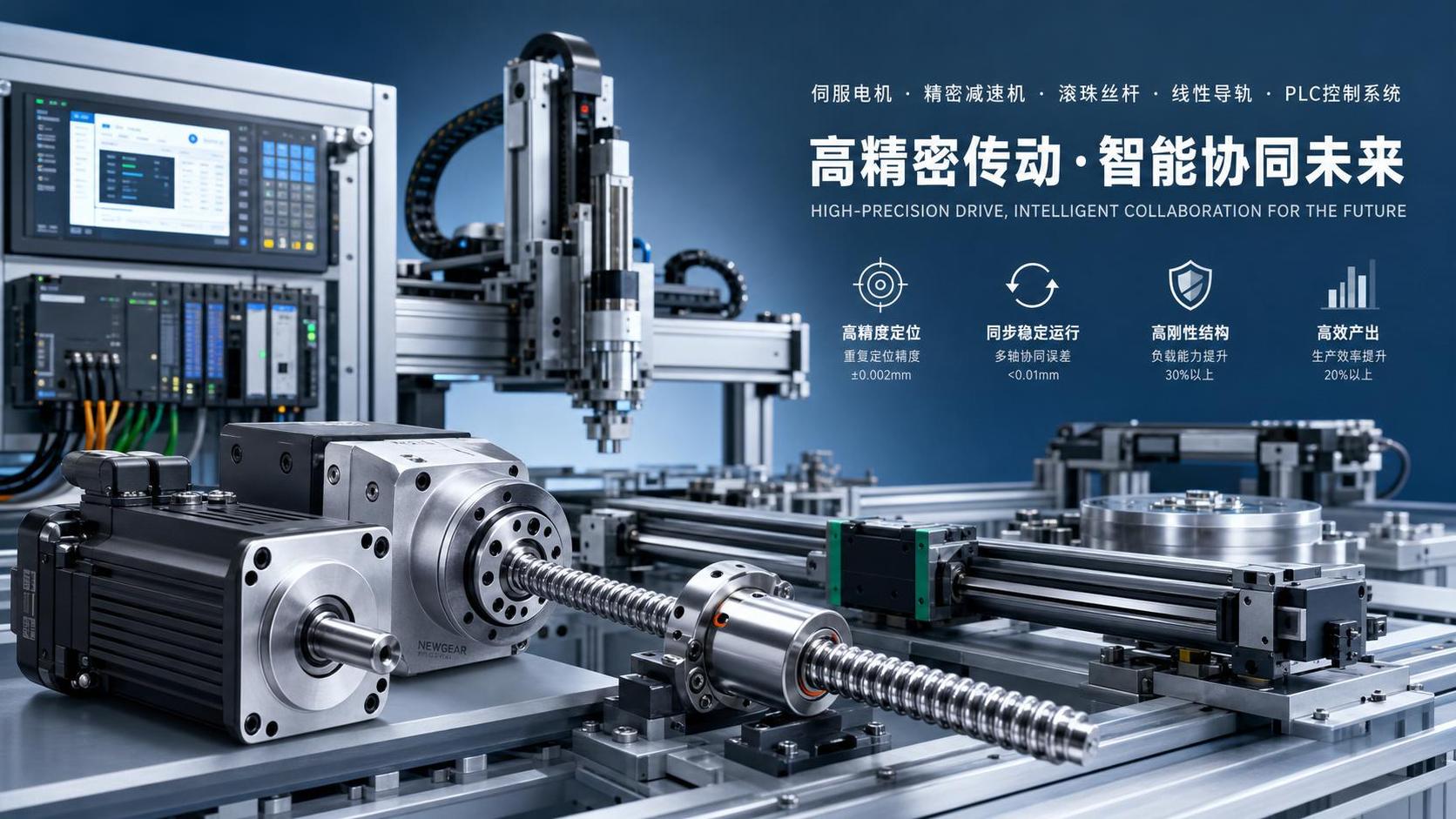
Precision Engineering Solutions: when does tighter tolerance really create value?
Precision Engineering Solutions matter when precision changes business outcomes, not simply drawings.
That distinction is critical in automation, motion control, and precision transmission sourcing.
A tighter tolerance can improve repeatability, reduce scrap, and stabilize throughput.
It can also add cost, extend lead time, and overcomplicate a system.
The practical question is not whether higher tolerance sounds better.
The real question is whether it protects uptime, yield, energy use, or service life.
That is why Precision Engineering Solutions are increasingly assessed as ROI tools.
Across servo motors, PLC/DCS control, reducers, guides, ball screws, inverters, and IPCs, value appears when precision supports the whole motion chain.
IAMC tracks this chain closely because manufacturing accuracy rarely depends on one component alone.
Is higher tolerance always the smarter choice?
Usually, no.
Higher tolerance pays off when process variation is expensive or safety margins are narrow.
Think semiconductor handling, battery equipment, CNC finishing, precision assembly, or robotic dosing.
In those settings, small mechanical deviations can trigger resonance, alignment loss, rework, or unstable control loops.
Yet in many general-purpose applications, the bottleneck sits elsewhere.
It may be fixture quality, thermal drift, PLC scan logic, operator setup, or inconsistent incoming materials.
If that is the case, buying tighter reducers or ultra-precise linear guides will not solve the core issue.
A better evaluation asks where the error budget actually lives.
- If the process fails on repeatability, precision components deserve attention.
- If failures come from logic timing, focus on PLC/DCS behavior and network determinism.
- If vibration dominates, servo tuning, frame stiffness, and damping may matter more.
- If wear causes drift, bearing quality, lubrication, and load matching become decisive.
Precision Engineering Solutions work best when specification discipline follows root-cause analysis.
Where do Precision Engineering Solutions deliver the clearest return?
The strongest return appears in systems where electrical control and mechanical transmission must stay synchronized.
That is exactly the environment IAMC covers through its focus on Industry 4.0 motion infrastructure.
For example, an AC servo motor with fast current-loop response only performs fully when encoder feedback, coupling stiffness, and load transmission are equally precise.
The same logic applies to PLC/DCS coordination.
Millisecond scan cycles lose value if actuators introduce backlash or if linear motion hardware cannot hold position under load.
A useful screening view is below.
In practical sourcing, this table helps separate true precision needs from specification inflation.
What should be compared besides the tolerance number?
This is where many evaluations become too narrow.
Tolerance alone says little about field performance if surrounding factors are unstable.
A reducer with excellent nominal backlash values may still underperform if fatigue behavior is weak.
A high-grade servo system may still oscillate if notch filtering is poorly tuned.
An industrial PC may support edge analytics, yet fail to protect motion quality under vibration or dust.
A more realistic comparison includes these questions.
- How stable is precision across temperature, speed, and load changes?
- What happens after six months of continuous duty?
- How sensitive is the component to installation error or lubrication quality?
- Does the supplier document measurement method and test conditions clearly?
- Can the control system use that precision, or will software timing limit it?
IAMC’s research perspective is useful here because motion quality spans algorithms and mechanics.
Microsecond jitter in SoftPLC environments, encoder feedback quality, resonance suppression, and reducer fatigue all influence final accuracy.
So, Precision Engineering Solutions should be compared as systems, not isolated catalog lines.
What cost risks are easy to miss during procurement?
The visible price gap is only one part of the decision.
The harder costs often appear later through commissioning delays, maintenance complexity, and replacement constraints.
For example, tighter ball screw grades may require stricter alignment discipline.
Higher-end servo packages may need deeper tuning expertise before the expected repeatability appears.
Special reducers or imported control components can also face supply-cycle volatility or trade barriers.
That matters when uptime commitments depend on spare parts availability.
More common hidden risks include:
- Over-specifying one axis while ignoring structural stiffness elsewhere.
- Paying for sub-micron capability in a process controlled only to millimeter limits.
- Choosing premium precision without checking maintenance training needs.
- Missing lifecycle costs tied to seal wear, relubrication, or encoder replacement.
A balanced procurement review should track acquisition cost, implementation effort, and failure cost together.
That is often a better predictor of ROI than unit price alone.
How can you tell whether a premium precision option is justified?
A simple test is to ask whether the tighter specification changes business math.
If better tolerance reduces scrap, avoids unplanned downtime, shortens cycle time, or protects warranty exposure, the premium may be justified.
If it only improves a paper specification, caution is wiser.
In real evaluations, four checks are especially useful.
This is also where market intelligence becomes useful.
IAMC’s coverage of industrial chips, high-end transmission gaps, and global supply conditions helps frame whether precision premiums are sustainable or temporary.
What is the smartest next step before locking a sourcing decision?
Start with an error-budget map.
List where accuracy is created, where it is lost, and where loss becomes expensive.
Then compare Precision Engineering Solutions against those exact loss points.
In many cases, the winning strategy is selective precision, not universal premium specification.
One axis may need a higher-grade ball screw.
Another may benefit more from better inverter control, stronger filtering, or cleaner PLC timing.
That is why the best decisions link mechanical tolerance, control behavior, environmental load, and supply continuity.
Precision Engineering Solutions pay off when they support repeatable production, not just impressive specifications.
Before moving forward, define the acceptable error range, verify operating conditions, compare lifecycle evidence, and confirm support capability.
That approach leads to sourcing choices that are technically grounded and financially defensible.
Related Recommendations
 Precision Engineering Solutions: When Higher Tolerance Pays OffTime : Jun 22, 2026
- Industrial Digital Transformation: 7 Costly Missteps to AvoidTime : Jun 22, 2026
- Industrial Cyber-Physical Systems: Key Risks, Standards, and ControlsTime : Jun 21, 2026
- Industrial Robotics vs Manual Cells: When Does Automation Pay Off?Time : Jun 21, 2026
- Precision Manufacturing Technology for Tight-Tolerance ProductionTime : Jun 18, 2026
- Advanced Manufacturing Automation: Cost Drivers and ROI BenchmarksTime : Jun 18, 2026