Industrial Motion Control Bottlenecks That Slow Throughput

Industrial Motion Control bottlenecks rarely announce themselves through dramatic failures. More often, they appear as small delays, unstable cycle times, excess scrap, unexplained vibration, or lines that cannot reach designed output even after expensive upgrades. In mixed manufacturing environments, these limits usually come from a mismatch between application scenario, control architecture, mechanical precision, and data response speed. Understanding where Industrial Motion Control slows throughput is essential for building automation systems that deliver repeatable precision, flexible capacity, and stronger return on investment.
When throughput targets rise, Industrial Motion Control constraints change by scenario
Not every production line suffers from the same Industrial Motion Control bottleneck. A high-speed packaging cell may be limited by servo response and registration accuracy, while a CNC or precision assembly platform may lose output because of backlash, thermal drift, or interpolation delays. In process-oriented systems, PLC/DCS scan time, network determinism, and edge-compute coordination often matter more than raw motor torque. This is why scenario-based diagnosis is more effective than broad assumptions about “insufficient automation.”
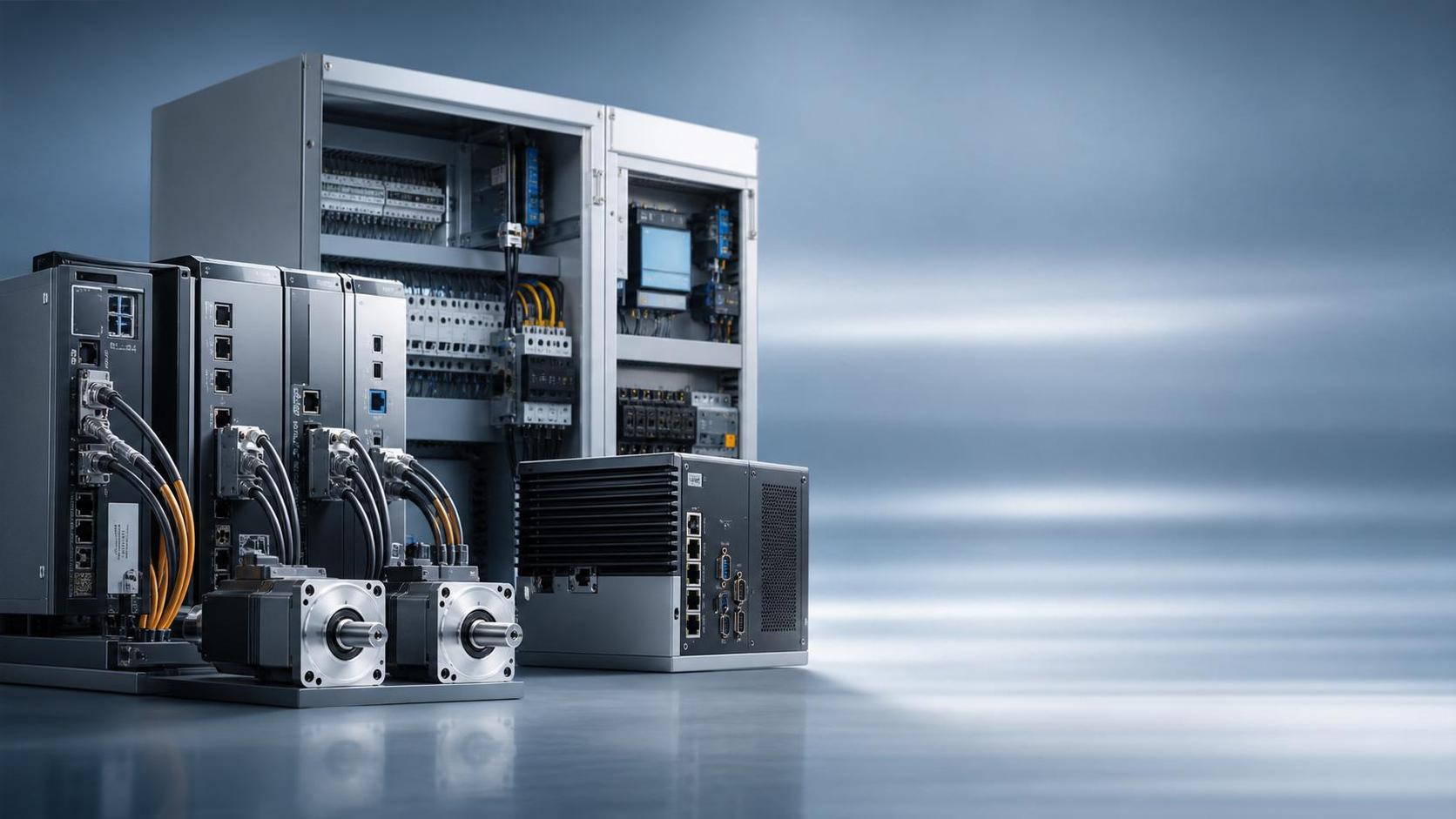
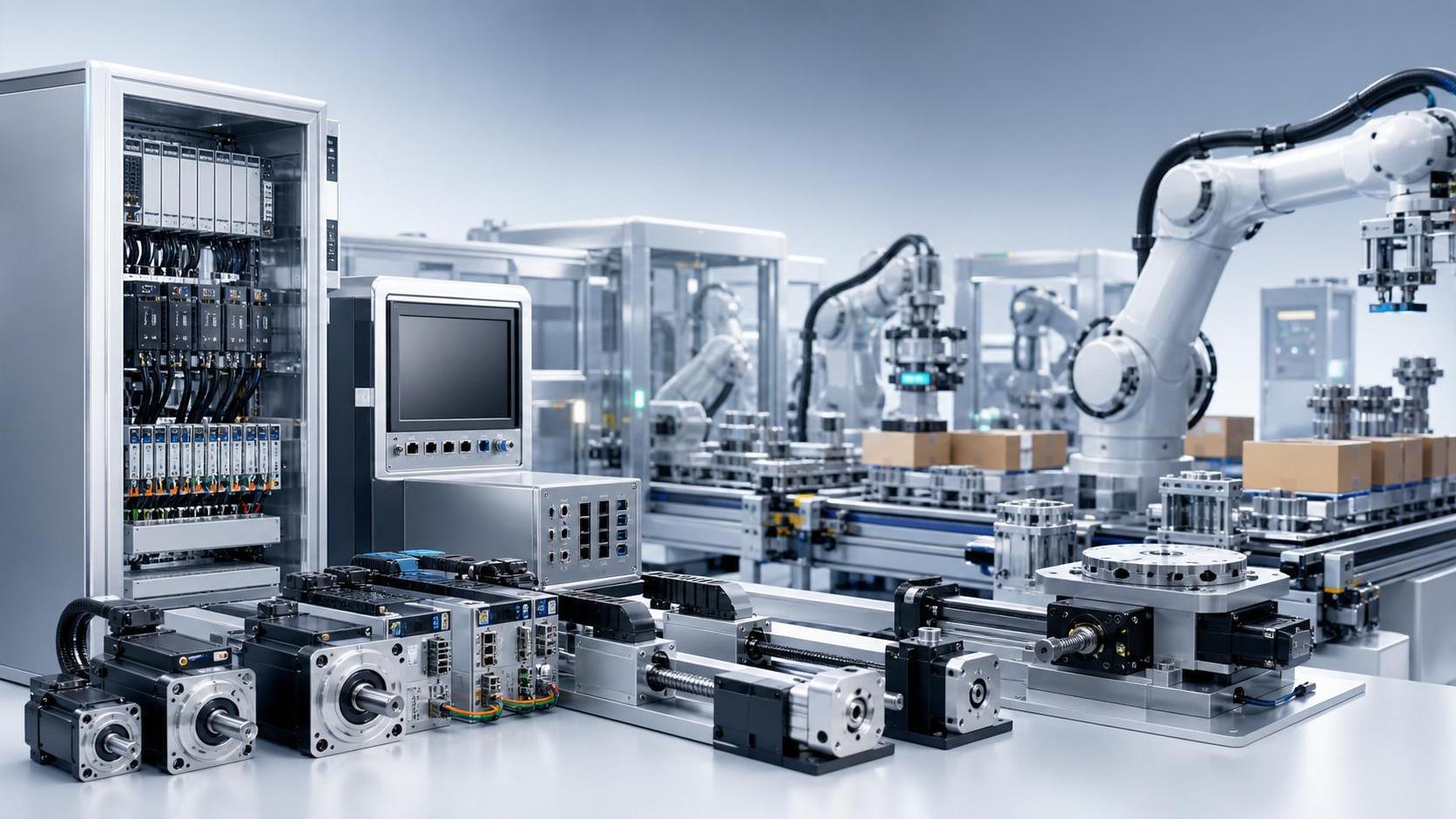
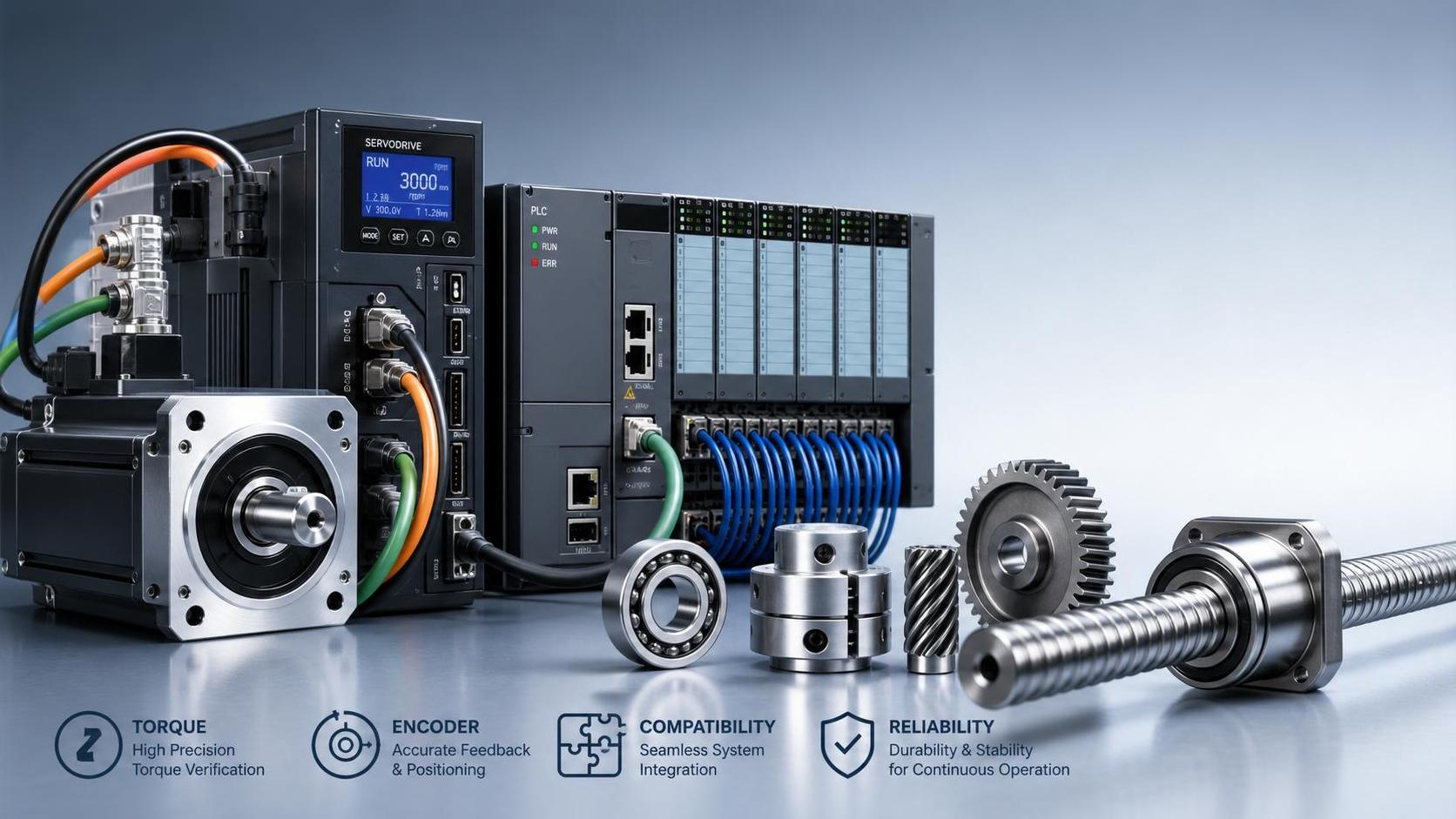
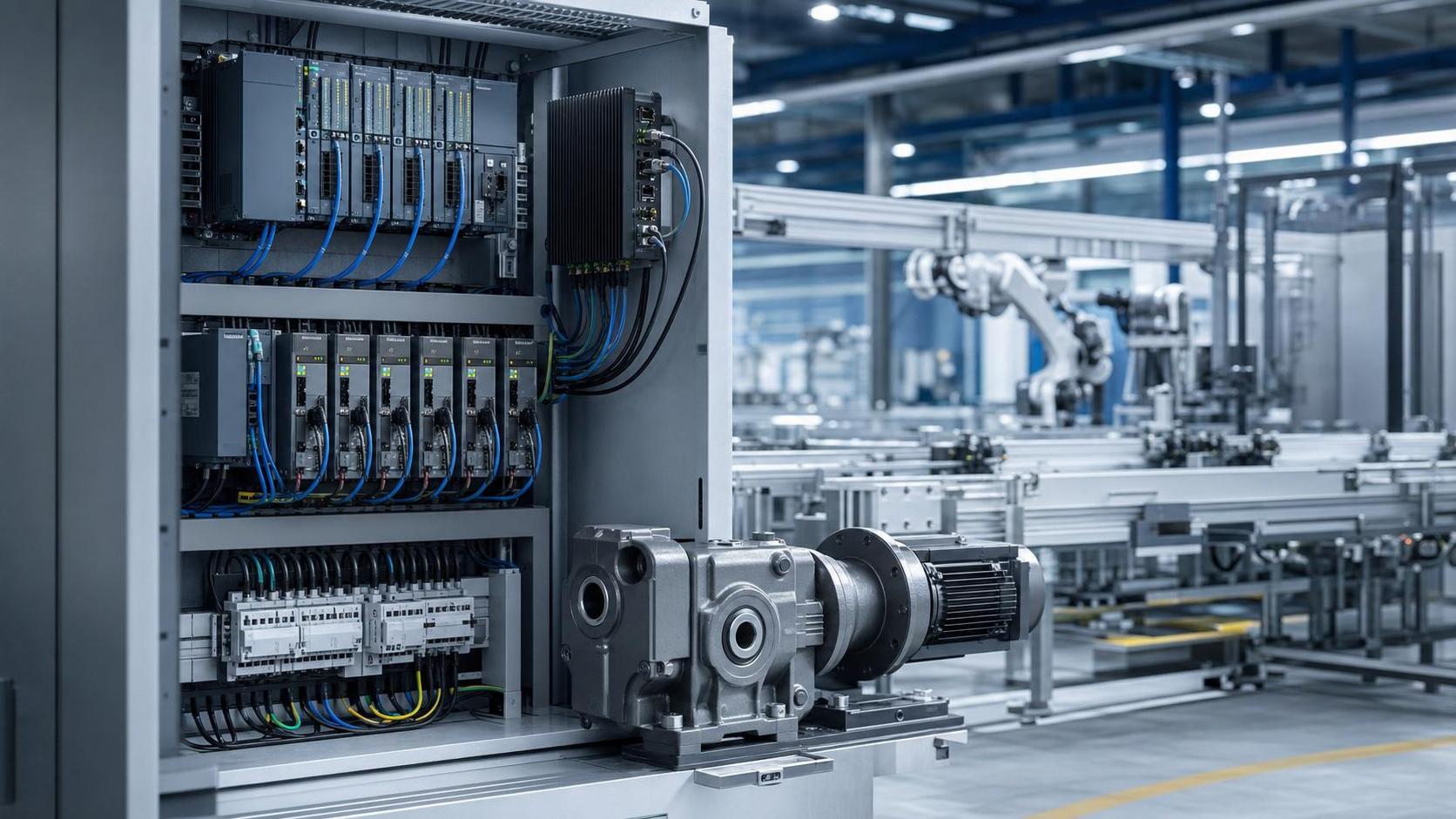
For industrial operations moving toward flexible manufacturing, the key question is not simply whether the machine is automated, but whether the Industrial Motion Control stack is aligned with the production task. That stack includes servo motors, drives, encoders, PLC/DCS platforms, reducers, linear guides, ball screws, inverters, industrial PCs, and software timing logic. Throughput slows when one layer is faster on paper than the next layer can support in reality.
In high-speed packaging and converting, small timing errors become output loss
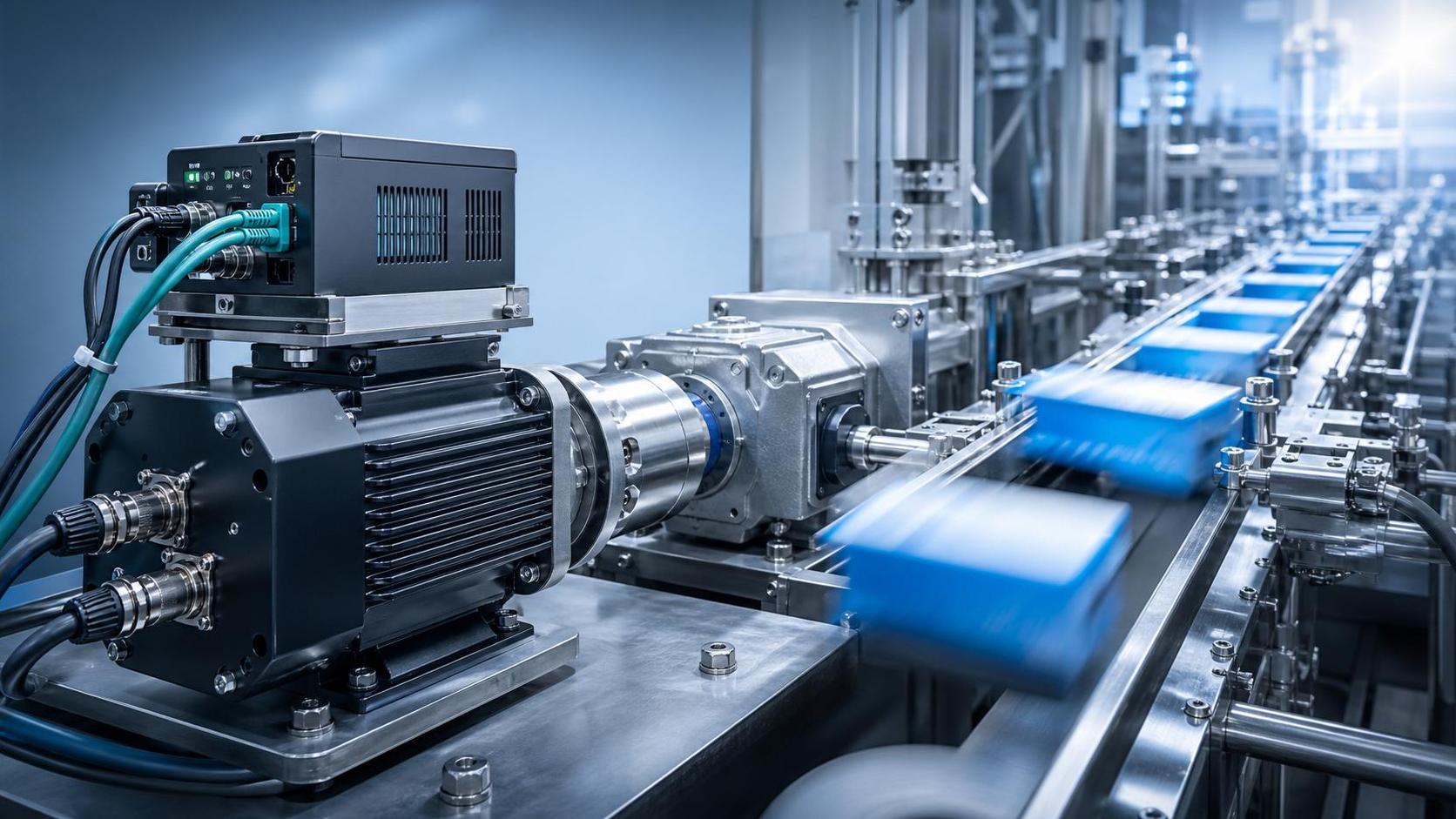
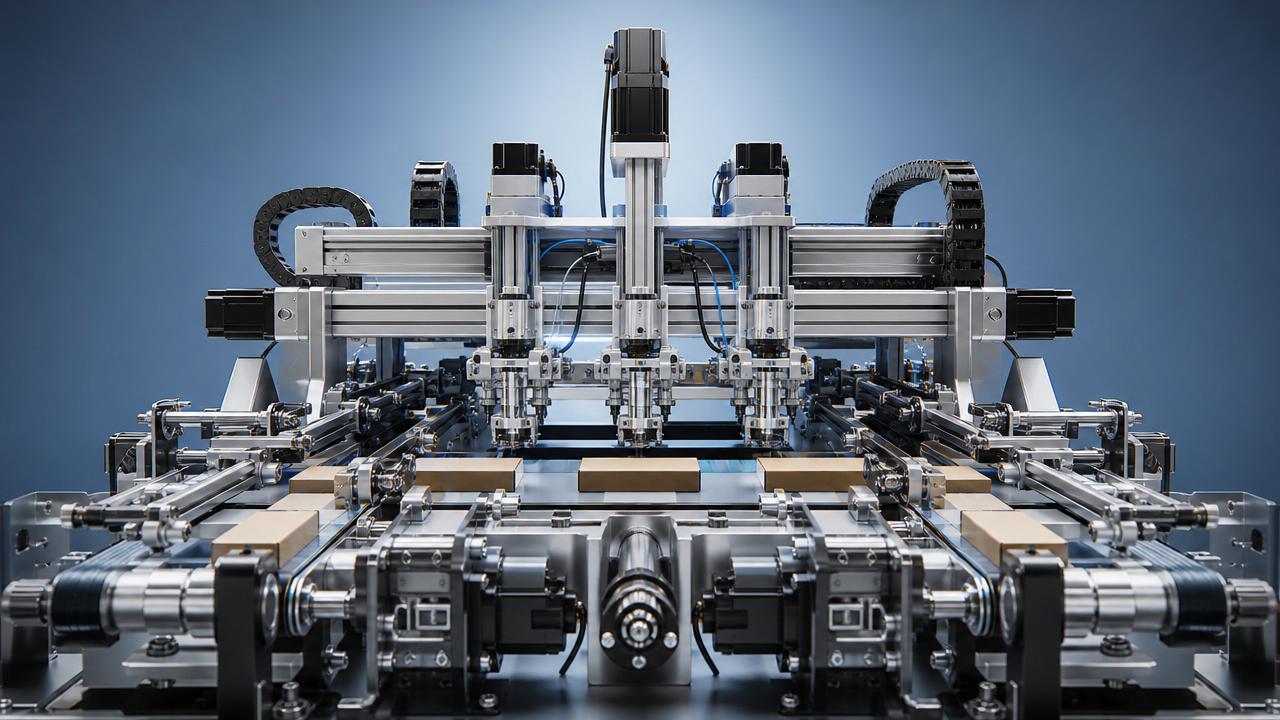
Packaging, labeling, printing, and converting lines depend on rapid synchronization between motion axes, sensors, and registration systems. In these scenarios, Industrial Motion Control problems often begin with aggressive acceleration profiles, poor servo tuning, or encoder feedback that is precise but not stable under vibration. A machine may run acceptably at medium speed, then lose registration, wrinkle material, or trigger frequent stops at peak demand.
The core judgment point here is whether the bottleneck is dynamic control or mechanical compliance. If current loops and velocity loops are not tuned for real load changes, the axis may overshoot or hunt. If couplings, belts, or lightweight structures flex during acceleration, software compensation alone will not restore throughput. In this scenario, Industrial Motion Control improvements usually come from resonance suppression, tighter electronic camming, more rigid mechanics, and deterministic communication between controller and drive.
In CNC, cutting, and precision assembly, micron errors accumulate into slower cycle times
Machine tools, semiconductor handling, battery equipment, and fine assembly systems face a different set of Industrial Motion Control limits. Here, output is constrained not only by speed but by the requirement to maintain repeatability under load. Ball screw preload, guideway friction behavior, thermal expansion, reducer backlash, and interpolation smoothness can all force machines to run below their designed feed rate.
A useful judgment point is whether the line is losing time because of quality protection logic. If the system repeatedly slows down to preserve tolerances, the issue may not be conservative programming; it may be that the Industrial Motion Control platform cannot maintain position confidence at higher speed. In these applications, stronger encoder resolution, lower backlash transmission, thermal compensation models, and more stable motion planning often create larger throughput gains than simply selecting a larger motor.
In robotic cells and flexible automation, coordination bottlenecks often hide between axes
Robotic welding, pick-and-place, palletizing, and multi-station flexible assembly rely on coordinated motion, not isolated axis speed. A robot arm may have adequate servo power, yet throughput still drops because path planning, reducer wear, communication jitter, or fixture variation interrupts flow. As production changes more frequently, Industrial Motion Control performance becomes a system-level issue rather than a component-level issue.
The judgment point in flexible cells is whether changeover and coordination overhead are consuming capacity. If every recipe adjustment requires manual retuning, the motion architecture is too fragile. If robot and conveyor timing drift under real production conditions, then deterministic synchronization is insufficient. For this scenario, Industrial Motion Control should be evaluated around trajectory smoothness, multi-axis latency, gearbox stiffness, and edge-level data handling that supports fast reconfiguration without destabilizing motion.
In process-heavy lines, PLC scan latency and edge response can quietly cap performance
Food, chemical, materials, and hybrid batch-discrete environments often combine motion, safety, sequence control, and process logic. In these cases, Industrial Motion Control bottlenecks may not originate in the drive at all. They may come from PLC scan cycles, overloaded communication buses, poorly structured logic, or industrial PCs handling vision and analytics too slowly for the required decision window.
The key judgment point is whether control decisions are being made at the right layer. When high-speed events are pushed into general PLC logic instead of time-critical motion or edge tasks, throughput suffers. If inspection results arrive too late, products must pause or be rejected. Better Industrial Motion Control in these environments often means redistributing tasks: fast loops remain local and deterministic, while industrial edge computing handles heavier analytics without interrupting core motion execution.
Different application scenarios require different Industrial Motion Control priorities
Practical adaptation strategies for Industrial Motion Control upgrades
A strong upgrade path starts with bottleneck isolation rather than blanket replacement. Many throughput projects fail because capital is directed toward visible hardware while timing architecture and mechanical load behavior remain unchanged. The most effective Industrial Motion Control strategy is usually phased, evidence-based, and scenario-specific.
- Map cycle losses by axis, control layer, and mechanical interface before selecting new hardware.
- Validate servo tuning under full production load, not only during commissioning or empty runs.
- Check backlash, stiffness, and wear in reducers, couplings, guides, and ball screws before increasing control gains.
- Review PLC/DCS task structure and scan priorities to keep deterministic motion separate from heavy logic.
- Use industrial edge computing for vision, analytics, and predictive tasks that should not delay core motion loops.
- Confirm that communication networks can sustain synchronized updates during peak throughput, not just nominal operation.
Common misjudgments that keep Industrial Motion Control underperforming
One frequent mistake is assuming that bigger motors solve throughput problems. If the true issue is backlash, scan delay, or unstable feedback, added torque may increase stress without increasing output. Another common error is tuning motion around ideal test conditions while ignoring thermal changes, payload variation, contamination, or long-shift wear. Industrial Motion Control is highly sensitive to real operating context.
It is also risky to treat software and mechanics as separate worlds. Notch filters cannot fully compensate for poor structural rigidity, and precision reducers cannot overcome jitter from weak synchronization. In many plants, throughput plateaus because each subsystem is optimized in isolation. The better approach is cross-layer analysis: electrical response, logic execution, mechanical transmission, and edge intelligence must be measured as one performance chain.
The next step is to diagnose Industrial Motion Control by production scenario
Industrial Motion Control improvement begins with a structured review of where throughput is actually being lost: acceleration phases, settling windows, registration points, path transitions, quality verification, or logic handshakes. Once those losses are tied to a real production scenario, upgrade priorities become clearer and investment becomes more defensible.
A practical next move is to create a scenario-based audit covering servo behavior, PLC/DCS timing, transmission accuracy, feedback quality, and edge-compute response. For organizations pursuing full automation and flexible manufacturing, this approach turns Industrial Motion Control from a hidden constraint into a strategic lever for precision, scalability, and resilient capacity growth.
Related Recommendations
 Reducer Selection in Europe: Cost, Compliance, and Lead Time Factors to CompareTime : Jun 29, 2026
- How to Evaluate an Industrial Control Systems Supplier Beyond Unit PriceTime : Jun 27, 2026
- Servo Motor Selection Mistakes That Raise Downtime RiskTime : Jun 26, 2026
- Flexible Manufacturing Solutions for Faster Line ChangeoversTime : Jun 26, 2026
- Servo Motor Selection: 7 Key Checks Before BuyingTime : Jun 26, 2026
- Industrial Automation Solutions: Hidden Integration Costs to Check FirstTime : Jun 25, 2026