Servo Motor Selection Mistakes That Raise Downtime Risk

Servo Motor Selection Mistakes That Raise Downtime Risk
Servo motor selection is one of the most overlooked causes of unexpected downtime. For replacement, troubleshooting, or upgrade work, a motor that looks “close enough” can still create heat, vibration, instability, or encoder faults. In industrial automation, those small mismatches often spread into longer stops, slower recovery, and repeated service calls.
The real issue is not only size or power. Load profile, speed range, feedback type, brake demand, mounting limits, and thermal margin all change from one machine to another. That is why servo motor selection should be treated as a scene-based decision, not a part-number comparison.
Why similar machines still need different servo motor choices
Two lines may use the same mechanical structure and still require different servo motor selection logic. One may run short cycles with sharp acceleration. Another may run slower, but stay under load for hours. The first needs peak torque and response. The second needs thermal stability and continuous torque reserve.
This is where downtime risk starts. When the selection process copies a previous model without checking the actual duty cycle, the motor may pass the first test run and fail later in production. IAMC often frames this issue through the link between motion control, PLC timing, reducers, and mechanical transmission. If one part of that chain is underestimated, the whole axis loses reliability.
Where servo motor selection goes wrong most often
A common mistake is sizing only by rated power. Power alone does not describe inertia match, acceleration demand, or low-speed torque behavior. In a conveyor, wrapper, or robot axis, the load may look light, yet the start-stop pattern can push the motor into frequent overload alarms.
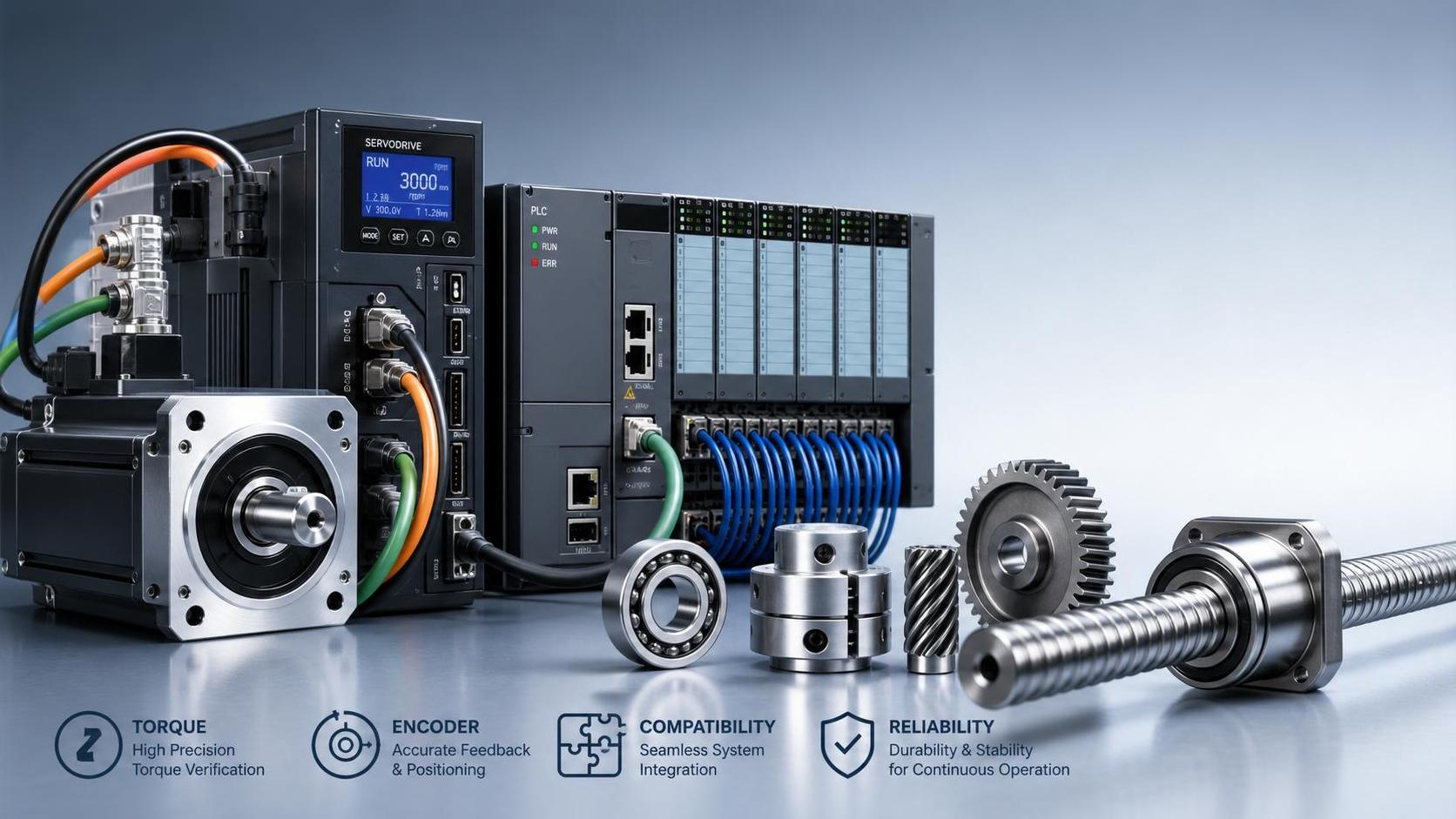
Another frequent error is ignoring encoder feedback compatibility. If the encoder resolution, protocol, or wiring standard does not fit the drive or controller, the machine may run with unstable positioning or intermittent faults. In systems built around PLC/DCS coordination, that instability can appear as a logic problem even when the root cause is servo motor selection.
Thermal capacity is also underestimated. A motor that works in short test cycles may overheat in real production, especially when cabinet ventilation is limited or ambient temperature is high. In these cases, the risk is not immediate failure. It is repeated derating, speed drift, and eventual shutdown.
Selection errors that deserve extra attention
- Matching only on torque nameplate, not on duty cycle.
- Ignoring inertia ratio and acceleration bursts.
- Overlooking encoder, brake, or cable compatibility.
- Assuming a smaller motor is acceptable after a layout change.
- Neglecting heat, dust, vibration, and enclosure conditions.
Different operating scenes change the decision logic
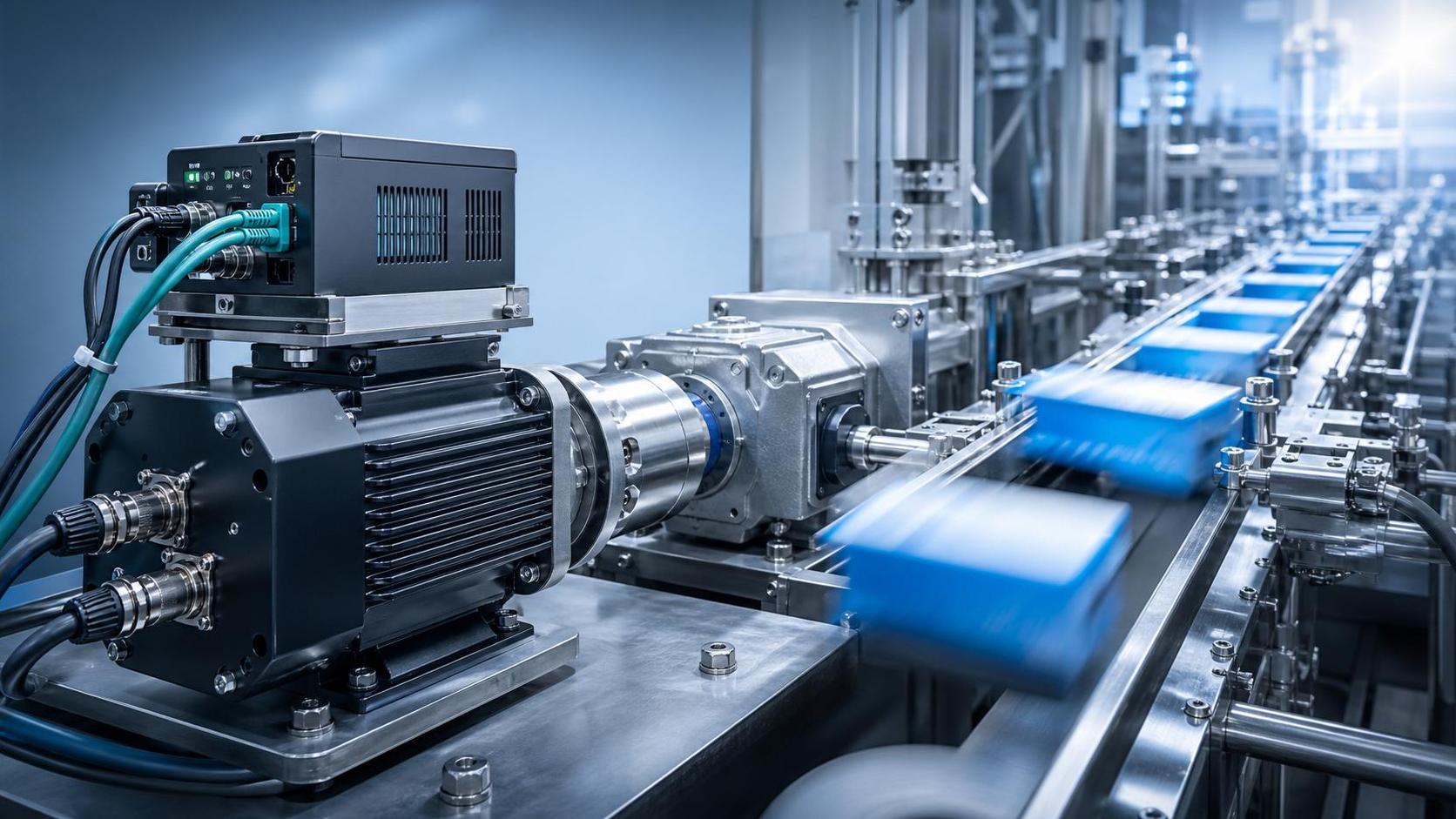
In packaging and light assembly, the motion profile is usually fast and repetitive. Here, servo motor selection should focus on acceleration response, overshoot control, and braking behavior. A motor that is stable at medium speed may still become a fault source if it cannot recover quickly between cycles.
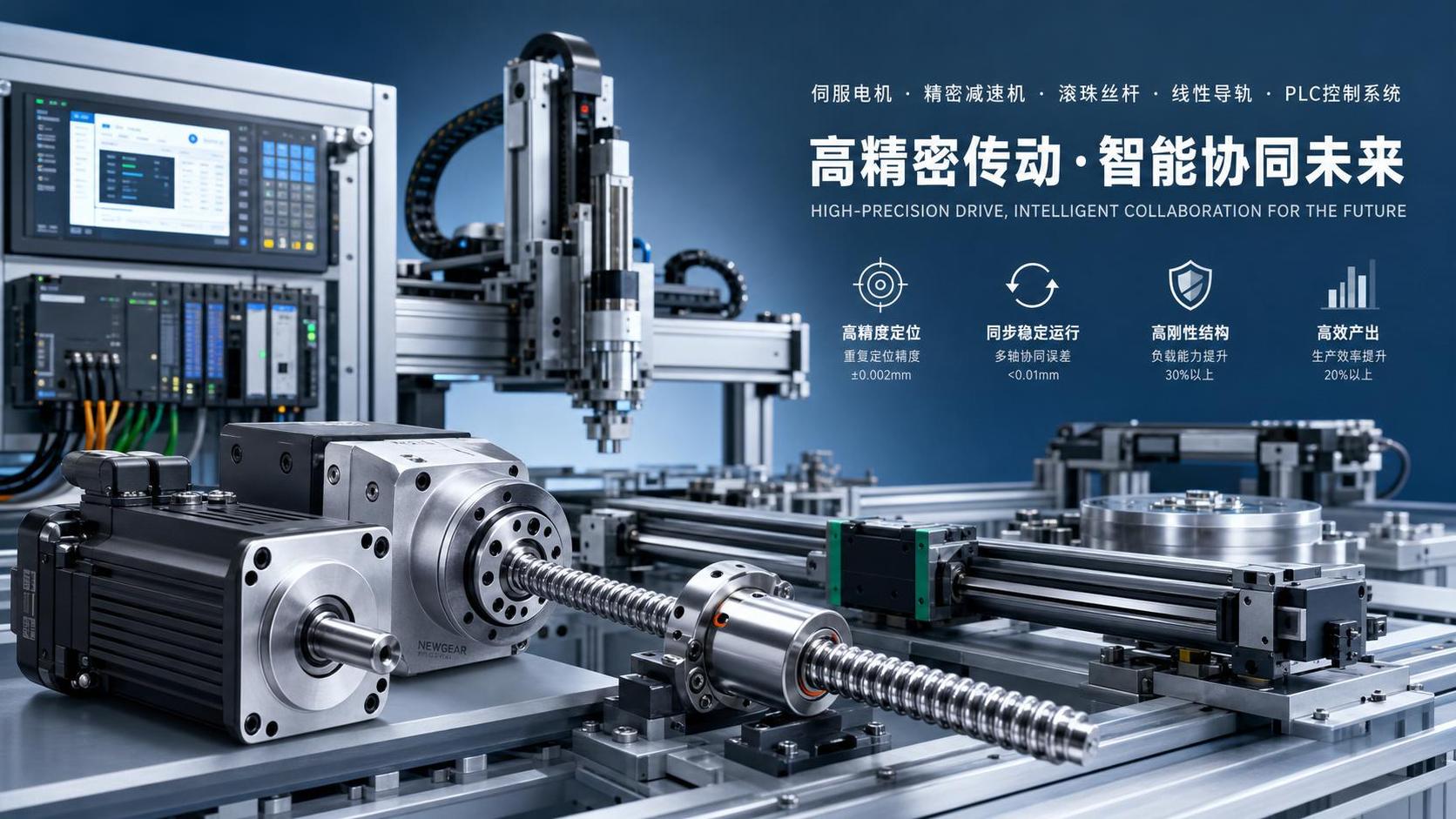
In CNC and precision linear motion, the priority shifts. Positioning accuracy, low-speed smoothness, and vibration suppression matter more than raw output. The selection must also fit the ball screw or guide load, because mechanical resonance can amplify small mismatches into visible positioning errors.
In robot joints and reducer-driven axes, inertia matching becomes critical. The motor and reducer work as one dynamic system. If servo motor selection ignores the reducer ratio or backlash behavior, the axis may hunt, oscillate, or trip under sudden direction changes.
In continuous process equipment, the scene is different again. Long runtime, higher cabinet temperature, and steady torque demand make thermal margin more important than peak acceleration. A motor that looks oversized at startup may actually be the safer choice if uptime is the main target.
How to read the right motor faster during replacement
During replacement work, the fastest path is not to search by frame size alone. It is to rebuild the operating profile from the machine behavior. Confirm peak torque, continuous torque, duty cycle, speed range, and feedback format first. Then check mounting, shaft type, brake, and cable route. This order reduces false matches.
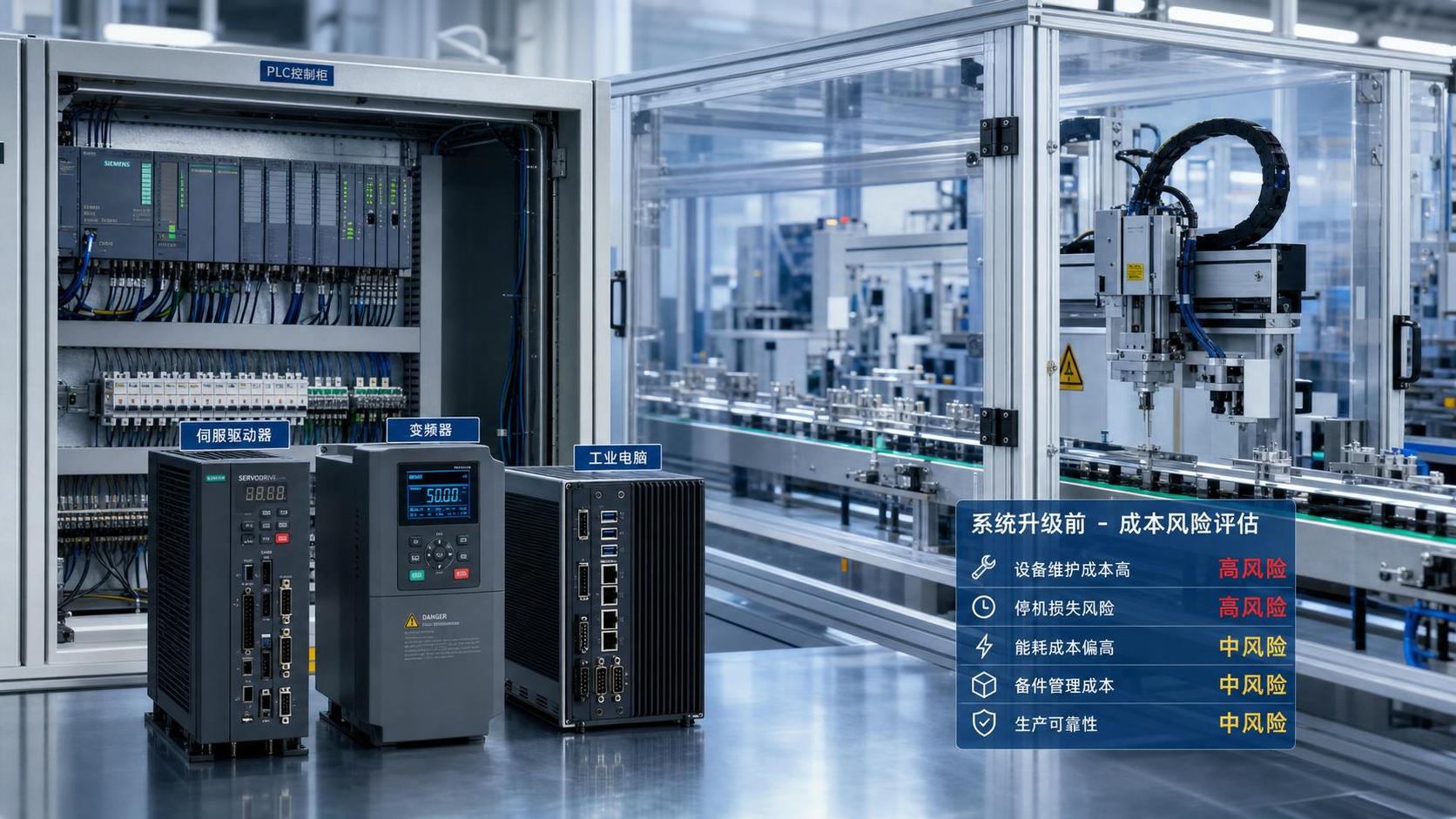
A practical servo motor selection review should also compare the drive side. If the existing inverter or servo amplifier is limited in current, pulse input, or network protocol, a technically correct motor may still fail to integrate cleanly. In IAMC’s motion-control context, this is where servo motor selection intersects with PLC/DCS timing and industrial edge diagnostics.
For upgrade projects, the mistake is often to chase higher speed without rechecking mechanical transmission limits. A stronger motor can expose weak reducers, worn couplings, or loose guides. The safer approach is to align the new motor with the full axis chain, not just the original label.
What is usually missed until downtime appears
One overlooked point is environmental stress. Dust, oil mist, humidity, and vibration can turn an adequate servo motor into a maintenance burden. Another is long-term drift. A motor may run well after installation but fail once bearings age, the load increases, or the control cycle changes.
Many teams also underestimate the cost of repeated partial fixes. A quick motor swap may restore motion for a short period, but if the root mismatch remains, the same fault returns. That is why servo motor selection should always include the machine’s real duty pattern and future operating plan.
A more reliable way to set the standard
The most reliable method is to define servo motor selection by scene, not by habit. Start with load curve and speed profile, then verify encoder and drive compatibility, and finally test thermal margin under actual production conditions. If a machine has already shown repeat faults, compare the motor with the reducer, guide, screw, and control logic together.
For complex production lines, it helps to build a simple internal checklist: operating scene, motion frequency, ambient condition, control interface, and maintenance access. That small discipline often prevents the hidden errors that create downtime later. In practice, the best servo motor selection is the one that fits the machine as a system, not a single specification line.
If the next step is a replacement or upgrade, revisit the actual motion data, confirm the mechanical limits, and compare several motor options under the same duty assumptions. That is usually the fastest way to lower downtime risk before the next fault becomes visible.
Related Recommendations
 Servo Motor Selection Mistakes That Raise Downtime RiskTime : Jun 26, 2026
- Flexible Manufacturing Solutions for Faster Line ChangeoversTime : Jun 26, 2026
- Servo Motor Selection: 7 Key Checks Before BuyingTime : Jun 26, 2026
- Industrial Automation Solutions: Hidden Integration Costs to Check FirstTime : Jun 25, 2026
- Industrial Control Electronics: Cost Risks Before System UpgradeTime : Jun 23, 2026
- Precision Engineering Solutions: When Higher Tolerance Pays OffTime : Jun 22, 2026