High Precision Manufacturing: What Drives Yield Gains

High Precision Manufacturing is the hidden driver behind higher yield, safer operations, and more consistent product quality. For modern production systems, tiny errors in servo control, PLC scan timing, mechanical transmission, or industrial edge computing can quickly become scrap, rework, downtime, or audit exposure. The strongest yield gains rarely come from one machine upgrade alone. They come from controlling motion, logic, load, data, and process variation as one precision system.
Why a Checklist Matters in High Precision Manufacturing
High Precision Manufacturing involves many linked variables. A line may pass static inspection yet still lose yield under speed, heat, vibration, or shift changes. A checklist prevents teams from focusing only on visible defects while missing timing drift, backlash growth, or unstable feedback signals.
This matters across the broader industrial landscape. In electronics, packaging, robotics, metalworking, battery assembly, and process automation, precision determines whether throughput scales safely. A structured review also supports better root cause isolation, faster corrective action, and more stable flexible manufacturing.
Core Checklist: What Drives Yield Gains
Use the following checklist to evaluate High Precision Manufacturing performance at equipment, cell, and line level.
- Verify servo tuning under real load, not only during empty-run commissioning, and confirm acceleration, settling time, overshoot, and resonance margins remain stable across production speeds.
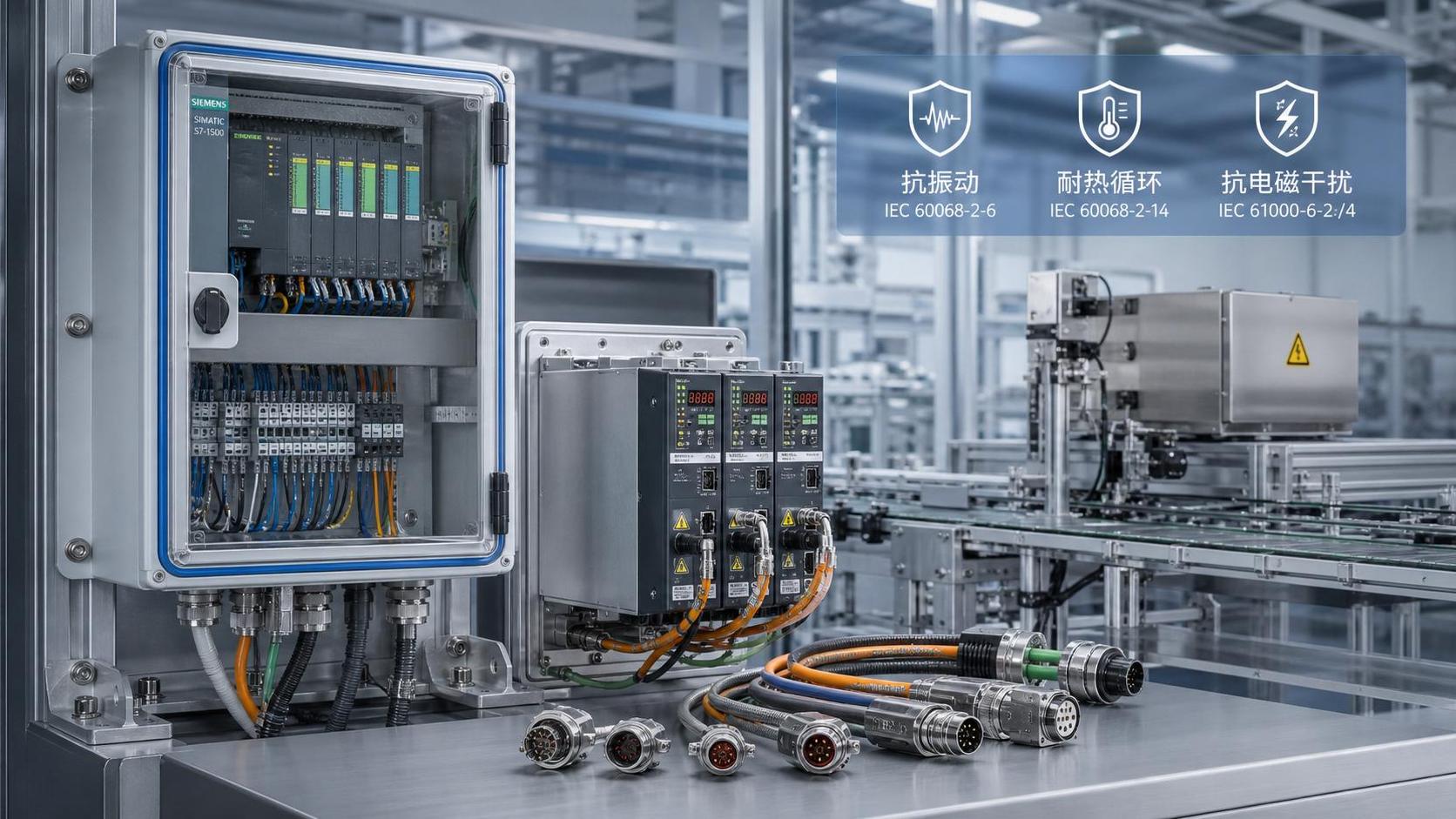
- Measure encoder quality and feedback integrity, including noise immunity, resolution consistency, cable shielding, and signal loss during vibration, temperature change, and electromagnetic interference.
- Check PLC or DCS scan cycle stability, task priority, communication latency, and jitter, especially where coordinated motion, interlocks, and inspection triggers must stay synchronized.
- Inspect reducers, ball screws, couplings, and linear guides for backlash, preload loss, lubrication failure, mounting misalignment, and fatigue patterns that slowly erode positioning repeatability.
- Validate mechanical rigidity across frames, fixtures, and toolheads, because structural deflection can offset even the best control algorithms and create speed-dependent dimensional errors.
- Stabilize thermal conditions by tracking motor heat, spindle growth, cabinet temperature, and ambient fluctuation, then applying compensation models where expansion affects tolerance windows.
- Calibrate sensors and machine vision against traceable standards, and confirm that trigger timing, field of view, illumination, and edge processing support repeatable pass-fail decisions.
- Audit inverter settings and power quality for harmonics, voltage imbalance, and transient events that reduce motor smoothness, stress components, and disturb repeatable motion output.
- Connect industrial IPC or edge computing data with machine states, so anomalies in torque, current, vibration, and cycle time are detected before they become yield loss.
- Standardize maintenance intervals, spare part tolerances, and change-control rules, because uncontrolled substitutions often degrade High Precision Manufacturing without immediate alarms.
The Technical Drivers Behind High Precision Manufacturing
Servo response and motion quality
In High Precision Manufacturing, motion quality is not just about reaching a target position. It is about reaching it with repeatable speed, low settling error, and predictable force. Poorly tuned current, velocity, or position loops create oscillation, edge defects, and unstable cycle time.
High-performance AC servo systems support yield gains when feedback resolution, loop bandwidth, and notch filtering are aligned with real machine dynamics. Precision improves further when resonance suppression is based on measured frequency behavior rather than default parameter libraries.
Control timing and deterministic logic
Many precision losses are timing losses. A delayed trigger between PLC logic, vision inspection, and actuator movement can shift cut position, dispense volume, or placement accuracy. These errors may remain intermittent, making them harder to diagnose than obvious mechanical faults.
Deterministic control requires stable scan cycles, predictable fieldbus performance, and disciplined task scheduling. In High Precision Manufacturing, microsecond-level timing confidence often protects millimeter-level or even micron-level product consistency.
Transmission accuracy and mechanical integrity
Mechanical transmission converts control intent into physical output. If harmonic reducers, RV reducers, linear guides, or ball screws degrade, no software layer can fully recover lost rigidity or excessive backlash. Yield problems then appear as drift, chatter, or dimensional variation.
The strongest High Precision Manufacturing systems treat mechanical health as a live variable. Wear trend analysis, preload verification, lubrication control, and mounting inspection are essential to maintaining the link between command and motion.
Application Scenarios Where Precision Directly Raises Yield
Discrete assembly and robotics
In robotic assembly, tiny errors stack quickly across pick, align, insert, and fasten operations. High Precision Manufacturing improves first-pass yield by tightening reducer backlash, synchronizing multi-axis motion, and validating end-effector stiffness under dynamic load.
This is especially relevant in electronics, medical devices, and compact consumer products, where tolerance windows are narrow and product variation can change insertion force or alignment behavior.
CNC, cutting, and material processing
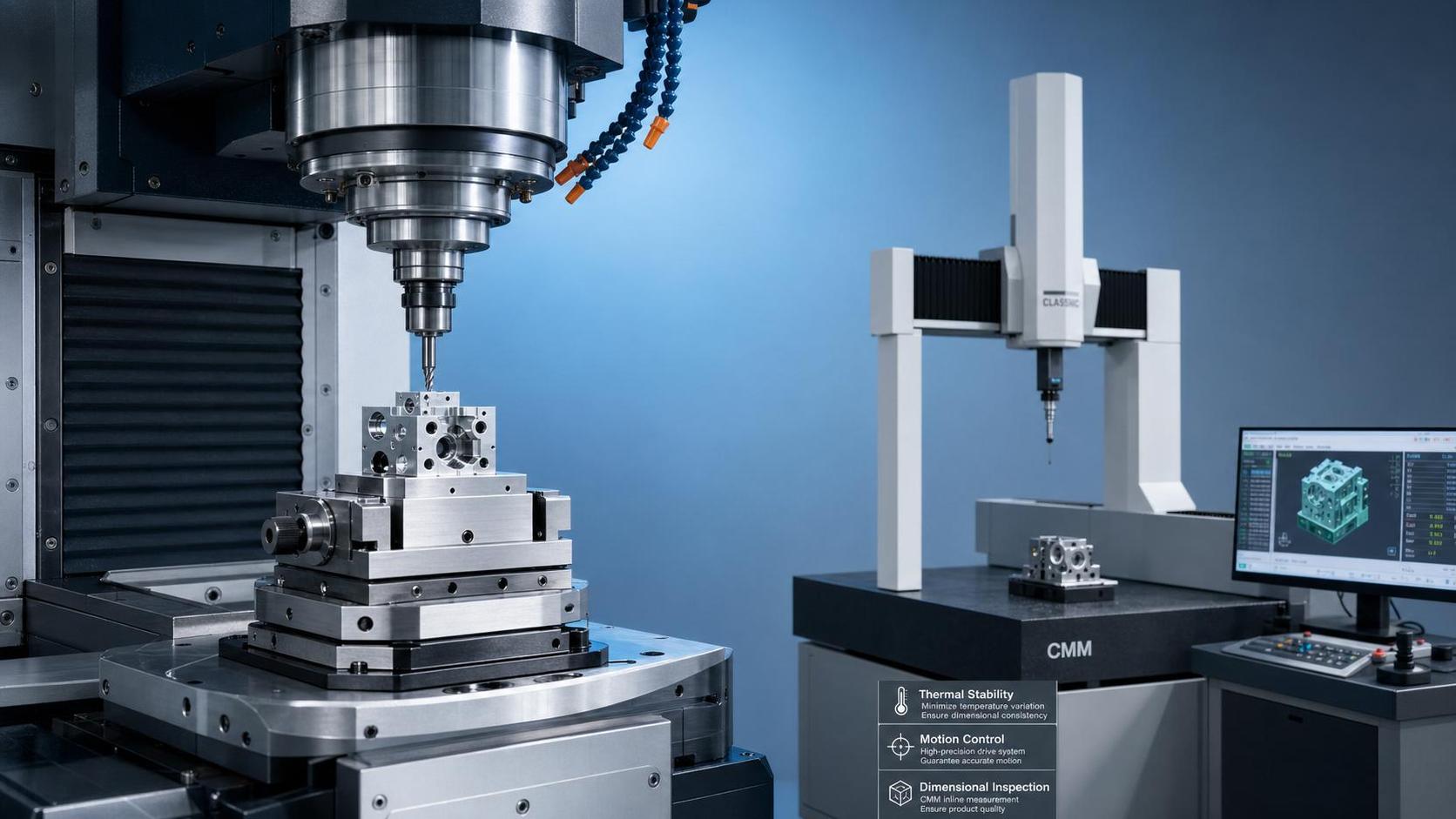
For machining and cutting systems, High Precision Manufacturing depends on guideway rigidity, spindle thermal control, feed smoothness, and stable interpolation. If any element drifts, surface finish, hole location, and edge geometry deteriorate before alarm thresholds react.
Yield gains often come from combining better motion control with real-time condition monitoring. Vibration signatures, servo load curves, and thermal compensation can reveal hidden process instability early.
Continuous and hybrid process lines
Packaging, coating, converting, and battery production rely on precision even when output is continuous. Web tension, synchronized drive speed, inspection timing, and edge analytics all shape defect rates. In these settings, High Precision Manufacturing means maintaining uniformity over long runs, not just during startup.
Integrated inverter control, PLC coordination, and industrial IPC data processing help sustain that uniformity while enabling faster changeovers and more resilient flexible manufacturing.
Commonly Missed Risks That Undermine Yield
One common mistake is assuming repeatability equals accuracy. A machine may repeat the same wrong motion due to fixture shift, thermal expansion, or calibration offset. High Precision Manufacturing requires both repeatable behavior and verified reference alignment.
Another overlooked risk is partial optimization. Upgrading a servo motor without checking reducer stiffness, cable routing, or PLC timing often moves the bottleneck rather than removing it. Precision is systemic.
Data gaps also create false confidence. If edge devices do not capture transient overloads, micro-stoppages, or communication jitter, teams may only see final defects and miss the upstream conditions that caused them.
Finally, maintenance drift damages High Precision Manufacturing slowly. Incorrect grease type, uncontrolled spare substitutions, and undocumented parameter changes can reduce yield for weeks before anyone links the trend to precision loss.
Practical Execution Steps
- Baseline current capability using Cp, Cpk, scrap categories, motion traces, and thermal maps, then identify the top precision losses by frequency and cost.
- Instrument key assets with encoder diagnostics, vibration sensing, current monitoring, and timestamped event logs from PLC, drives, and IPC layers.
- Run controlled tests at multiple speeds, loads, and temperatures, because High Precision Manufacturing failures often appear only outside nominal conditions.
- Prioritize fixes that improve system alignment first, including timing synchronization, backlash control, fixture rigidity, and calibration discipline.
- Lock improvements with documented parameters, maintenance standards, and change approval rules to prevent precision regression after optimization.
Conclusion and Next Action
High Precision Manufacturing drives yield gains when electrical control, deterministic logic, mechanical transmission, and industrial edge intelligence work as one coordinated architecture. Better output is rarely the result of isolated tuning. It comes from reducing variation at every motion and decision point.
Start with a structured checklist, verify performance under real operating conditions, and close the loop between machine data and physical process behavior. That approach turns precision from a technical claim into measurable yield, safer operation, and durable production resilience.
Related Recommendations
 Rugged Automation Components: When IP Ratings Fail to Predict Field ReliabilityTime : Jul 05, 2026
- Automation Spare Parts Planning: How to Reduce Downtime Without OverstockingTime : Jul 05, 2026
- How to Evaluate an Industrial Control Electronics ManufacturerTime : Jul 04, 2026
- Micron-Tolerance Components: What Really Affects CNC AccuracyTime : Jul 03, 2026
- How ISO-Certified CNC Motion Components Reduce Supply RiskTime : Jul 03, 2026
- When Motion Control Solutions Fail: Common Integration Gaps to FixTime : Jul 02, 2026